Why Bitcoin's Dust Limit Holds Even Though It's Only Policy

This article was translated from Japanese with AI. Read the original (日本語) · Report a translation issue
Over the past six months, a proposal to relax the OP_RETURN policy rule has sparked (utterly unproductive) debate among Bitcoiners. Two reasons are given for relaxing it. First, the limit is already being bypassed regardless of the policy default. Second, the infrastructure used to bypass it distorts Bitcoin's fairness (it leads to mining centralization) and hurts usability (it undermines the accuracy of fee estimation). On this basis, most Bitcoin Core developers have concluded that it is better to relax it.
💡
Even if it is relaxed, the impact is expected to be minor, since there are cheaper ways than OP_RETURN to record large amounts of data. In that sense too, it really is a pointless debate.
There are many policy rules, and one of them is the dust limit. It sets a "minimum amount" for transaction outputs for each address type. The premise is that a UTXO worth less than the fee needed to spend it is uneconomical and has no legitimate use. (Trying to spend it would actually leave you worse off!)
| Address format | Dust limit (sats) |
|---|---|
| P2PKH (1…) | 546 |
| P2SH (3…) | 540 |
| P2WPKH (bc1q…) | 294 |
| P2WSH (bc1q…) | 330 |
| P2TR (bc1p…) | 330 |
In practice, transactions with amounts below the dust limit, such as UTXOs of 0 or 1 sat, are quite rare. Granted, 1-sat UTXOs do exist in connection with Ordinals, but 0-sat UTXOs appear to number only about 15,000, according to an article in which Shigeyuki Azuchi looked into this in December 2023.
レイヤー2プロトコルの実装に役立つ「Pay to Anchor(P2A)」とは?
最近はビットコインの手数料相場が低めで推移しているため、送金が詰まってしまったという方は少ないかもしれません。しかし、ギリギリの送金手数料でトランザクションを配信した後、手数料相場が上昇してしまって送金が取り残されるという経験をしたことがあるビットコイナーは多いはずです。 個人の送金であれば、同じトランザクションの手数料を増やして再配信することができます。このReplace-by-feeという挙動が既定になって数年が経ちました。 Bitcoin Core 24.0からのFull RBF既定化についての議論まとめこの1週間ほど世間の話題はFTXの信用不安問題で持ちきりですが、ビットコイン開発者の多くは全然違う論争に巻き込まれていました。Bitcoin Coreの次期リリースである24.0において、ノードのポリシーとしてFull RBF (mempoolfullrbf)というものが導入される予定のところ、これに反対する意見が出たためです。 結果的には導入継続という流れになりましたが、このように誰でも意見・議論できることがビットコイン開発における健全性維持の1つの仕組みです。 それでは議
 加藤 規新

Pay to Anchor is a development that treats 0-sat outputs as valid under policy rules, on the condition that they are spent by the next transaction submitted together with them as a package
So why do massive OP_RETURN outputs exist in decent numbers, while sub-dust UTXOs, which also violate policy rules, are rare? Today I'll consider the reasons, and ask whether this rule, which can be bypassed just like the OP_RETURN limit, should also be relaxed.
• A "zeroth gate" more powerful than consensus rules or policy rules
• Why the dust limit exists, and how it relates to OP_RETURN
• I have a feeling this one will divide developers more
A "zeroth gate" more powerful than consensus rules or policy rules
Let's review consensus rules and policy rules, the two sets of rules that determine whether a Bitcoin transaction is valid.
Consensus rules define the format of transactions and blocks that may be included in the blockchain. Every Bitcoin node checks each newly broadcast block and all the transactions in it. If a block or transaction violates the consensus rules, it is invalid and the node does not add it to the blockchain.
💡
Incidentally, a node validates transactions when it receives them from peers and adds them to its mempool, so when a new block is found, validation is quick if the block is filled with transactions the node already knows. Conversely, if the block contains many transactions the node is seeing for the first time, validation takes longer.
Policy rules are rules that each Bitcoin node sets for itself (though each node implementation has defaults), and they apply to transactions before they are included in a block. If a transaction relayed from a peer doesn't match your node's policy rules, your node discards it and doesn't relay it to other nodes. However, once that transaction is added to the blockchain, the node validates it again and stores it, as long as it doesn't violate the consensus rules.
💡
Relaxing the OP_RETURN limit is a question about policy rules.
From here on, this is my own opinion. Why are sub-dust UTXOs, which are restricted by policy rules rather than consensus rules, so rare? I suspect the biggest reason is that "wallets don't support them" (wallets have their own validation built in).
The same applies to OP_RETURN: most users don't use their own node. In other words, when they create a transaction, they use some wallet other than the one built into a node, and most wallets won't let you create nonstandard transactions (transactions that violate the default policy rules)! For example, I suspect you could count on one hand the wallets that even let you create an OP_RETURN output yourself. The same goes for sub-dust UTXOs.
So nonstandard transactions don't proliferate unless there is a wallet built to create them deliberately. For OP_RETURN, that was Counterparty, and for enormous witness data, it was wallets supporting Ordinals inscriptions. For sub-dust transactions, there simply hasn't been that kind of demand (speculative demand) so far, I suppose. Depending on how you look at it, "wallet support" may be the biggest gate of all.
Why the dust limit exists, and how it relates to OP_RETURN
The purpose of the dust limit is clear: it exists to prevent DoS attacks that would blow up Bitcoin's UTXO set. If you could create any number of 0-sat UTXOs, you could create an unlimited number of UTXOs simply by paying on-chain fees!
The UTXO set currently holds only about 100 million UTXOs, yet even so, its growth is already a significant operational burden for low-powered Bitcoin nodes. For example, the Raspberry Pi 4, which was popular for a while, is now only barely capable of syncing a Bitcoin node.
Ideally, a rule like this should be a consensus rule, because as long as they collect on-chain fees, miners will happily mine even a block containing nothing but 0-sat UTXOs. You could say this was a misstep on Satoshi's part, splitting consensus and policy only halfway.
But I digress. The dust limit is a barrier that exists to prevent the creation of unnecessary UTXOs. And the OP_RETURN relaxation now under discussion is likewise meant to move us closer to an environment where unnecessary UTXOs don't have to be created. The difference is that relaxing the dust limit could increase the risk of an explosion in unnecessary UTXOs. Or rather, that risk already exists even without relaxing it.
I have a feeling this one will divide developers more
The question of whether the OP_RETURN relaxation was necessary also stirred up heated debate, but suppose a similar debate erupted over what to do about, say, the dust limit. My personal impression is that many developers don't see the OP_RETURN relaxation (bringing policy rules closer to consensus rules) as a very big issue. But if we were to bring policy and consensus closer together on the dust limit, I suspect opinions would split over which way to align them.
Based on the explanation so far, you might be tempted to enforce the dust limit through consensus rules to prevent the risk of UTXO set bloat, but that approach has some surprising downsides and conflicts with the current direction of development.
For example, if the price of bitcoin rose 100x from here, a dust limit of several hundred sats might become an inconveniently large unit. In fact, one recent policy relaxation lowered the minimum transaction fee rate from 1 sat/vbyte to 0.1 sat/vbyte. Fixing the dust limit in place would run counter to that direction.
オンチェーンの送金手数料がさらに安くなった理由とその影響は?
最近mempool.spaceをご覧になった方は気づいているかもしれませんが、ビットコインの手数料相場がこれまでより1桁安くなっていることが出てきました。従来であればトランザクション手数料の下限は1 sat/vbyteだったので、どれだけトランザクション需要が少ないタイミングでもそれだけ手数料を払う必要がありました。しかし、最近では0.1 sat/vbyteのトランザクションすら見られます! 今日はこの変更がどういう経緯で行われたのか、そしてどういう影響が見込まれるかを解説します。 ・Bitcoin Core 30において規定値が変更予定。それに先立ち対応するマイナーも ・1 sat/vbyteが手数料相場の「下限」だった理由と、制限緩和のメリットデメリット ・前もって対応しているマイナーは損をしているのではないか?
加藤 規新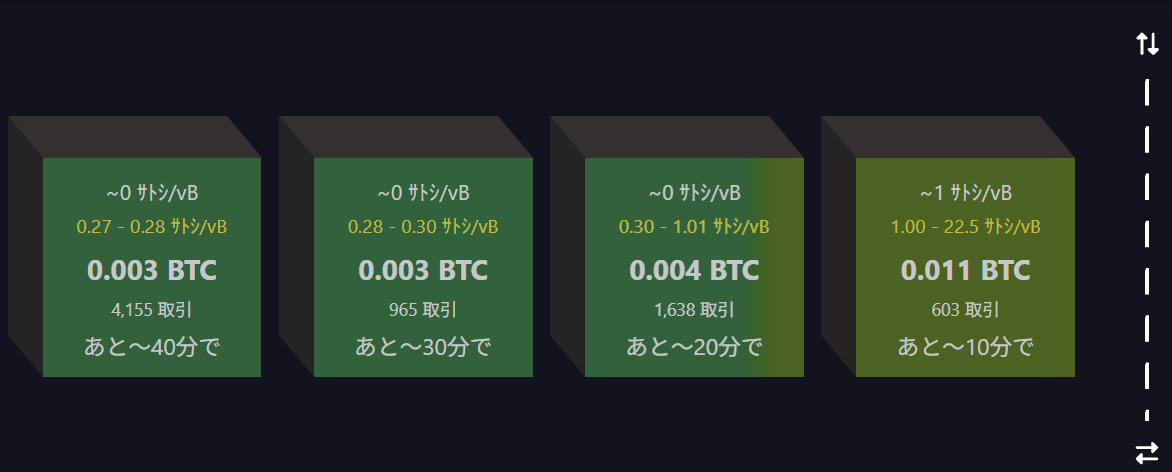
Also, as mentioned at the start, in cases like Pay to Anchor, 0-sat outputs can be very useful in Layer 2 designs. Enforcing the dust limit through consensus rules might nip new uses of Bitcoin in the bud. (Of course, you could exempt only Pay to Anchor, which doesn't lead to UTXO set bloat.)
Should we enforce it through consensus rules to reliably prevent UTXO set bloat? Should we treat the status quo (which, as with OP_RETURN, has its drawbacks) as a problem and relax the restriction? Or should we keep things as they are? I don't know whether it will even come up for discussion, but I think it's an extremely difficult problem.