Electrum Vulnerability Let Servers Swap Signed Transactions

This article was translated from Japanese with AI. Read the original (日本語) · Report a translation issue
On October 24, 2026, a vulnerability was disclosed in the Electrum client (library) that lightweight Bitcoin wallets use to query Electrum servers for their balances. It could allow the transaction a user signs to be swapped out for a different one.
CVE-2026-117601 - GitHub Advisory Database
Electrum: Malicious server can replace a just-broadcast tx and try to trick user into RBF-ing it


Malicious Electrum servers have actually carried out this attack. The Electrum development team learned of it from users who were nearly victimized and from users who did lose funds, and responded by releasing a fix and disclosing the bug.
• Which characteristics of Electrum-dependent lightweight wallets did attackers combine with this vulnerability to exploit it?
• What weaknesses specific to Electrum remain even after this fix?
• Finally, what mindset can Bitcoin users adopt to take additional precautions?
This article answers these three questions.
Overview of the Electrum vulnerability that lets the signed transaction be swapped
To understand the vulnerability fixed in Electrum 4.8.3, you need to understand how much lightweight wallets trust Electrum servers.
Block headers can be verified, so confirmed transactions are safe
Under Electrum's SPV protocol (Simple Payment Verification, the transaction verification protocol for lightweight wallets), the wallet can verify two things:
• The chain of block headers
• That a given confirmed transaction has been included in the blockchain
That's it.
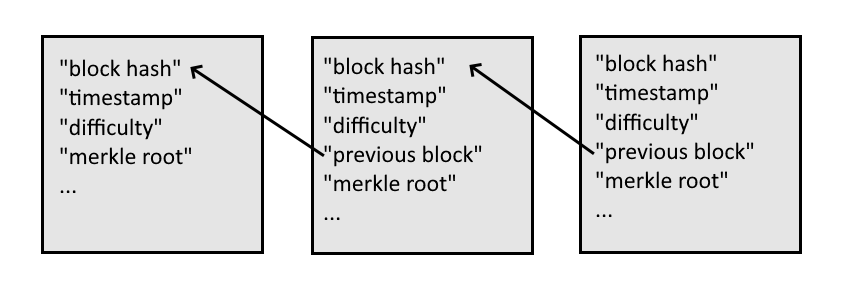
The first is achieved by downloading the 80-byte block header that exists for every Bitcoin block, and verifying that each block header's hash meets the difficulty target and links to the previous block. These are the same block headers as in the actual Bitcoin chain.
Next, when an Electrum server sends a confirmed transaction, it attaches what's called a Merkle branch: information proving that the transaction is one of the components of the Merkle root in the block header, the hash that commits to every transaction in the block. Verifying this confirms that the transaction really is included in that block.
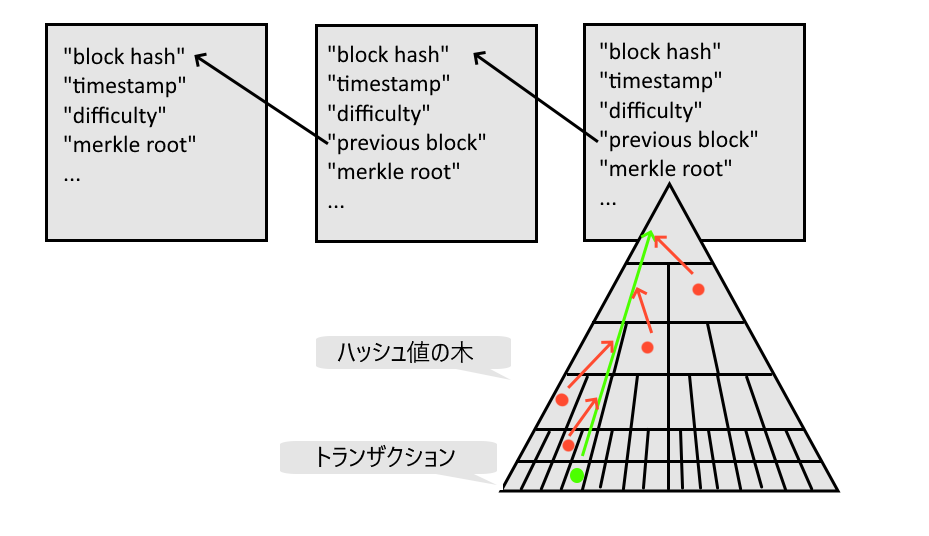
So in the Electrum protocol, the existence of a confirmed Bitcoin transaction can be verified without having to trust the server.
However, block headers alone don't tell you whether a block contains transactions relevant to your wallet, so things like detecting incoming funds depend on the Electrum server telling you those transactions exist. What you can verify is only that the transactions you've been told about are actually included in a block.
Nothing is guaranteed about unconfirmed transactions
Conversely, unconfirmed transactions have no block header behind them, so when an Electrum server sends one, the wallet has no way of telling whether it really exists. It might be fake, or it might be a genuine transaction that has already been replaced. You are trusting the Electrum server completely.
Broadcasting transactions also relies on the Electrum server
In most cases, the step of broadcasting a transaction created and signed in the wallet to the Bitcoin network also relies on the Electrum server, which means the server can simply suppress it.
Overview of the Electrum vulnerability
The vulnerability in question was this:
• When a transaction was broadcast via an Electrum server, the wallet did not verify the contents of the unconfirmed transaction (the one in question) that the Electrum server reported as having been seen on the network
People looking to exploit this vulnerability came up with the following steps.
① The user signs a transaction and sends it to the Electrum server to be broadcast to the Bitcoin network.
② The Electrum server pretends to broadcast the transaction. Specifically, instead of broadcasting the transaction it was supposed to, it discards it and prepares a version with the destination (output) changed to its own address. (Because it has been altered, the signature becomes invalid.)
③ The server notifies the user's wallet of the altered transaction as "a transaction seen in the mempool." If the transaction hadn't been altered, this would be normal behavior, so the user notices nothing odd. Because of this vulnerability, the wallet fails to notice that the signature is invalid. (That said, a user who looks closely can see that the destination address has been changed.)
④ Naturally, no valid transaction exists on the Bitcoin network, so the transaction never confirms. The frustrated user uses RBF (Replace-by-fee) to add a fee to the transaction shown in the wallet, signs it again and sends it. But what's in the wallet is the transaction the Electrum server swapped in at step ②, so the bitcoin goes to the attacker. (This, too, can be prevented if the user notices that the address has changed.)
Put simply, it was hard for the wallet to notice when the Electrum server swapped out a transaction.
What weaknesses specific to Electrum remain after the fix?
This fix adds a verification step: "For any transaction sent by the Electrum server that spends UTXOs in your own wallet as inputs (is_mine), check that it is properly signed." A transaction swapped in using the steps above will now be detected as having an invalid signature when it is received.
This check is very effective against attacks that swap out a transaction after you've signed it. Against other kinds of attacks, however, vulnerabilities stemming from Electrum's fundamental design remain.
The risk of being shown funds that never arrived
It is technically possible for an Electrum server to send you a payment addressed to you that doesn't actually exist, and the wallet cannot rule this out.
The fix above checks the transaction's signature, but when the parent of an unconfirmed transaction is itself unconfirmed, even a valid signature can't prove that "the parent transaction also exists and is known to the Bitcoin network (and will eventually be mined)."
And even if it could, unconfirmed transactions can be replaced through legitimate means, so you shouldn't treat a payment as settled until it's included in the blockchain anyway.
The risk of not being told about real transactions
There is a risk that the server won't send you confirmed transactions, leaving you unaware of on-chain transactions indefinitely.
If the only consequence were not being able to confirm that you've received funds, you might feel this is unlikely to cause major problems.
The problem becomes more serious when you use a Lightning node that depends on an Electrum server, such as the Lightning wallet bundled with Electrum Wallet. To prevent fraud, a Lightning node needs to watch for whether a Lightning channel has been force closed on-chain. If the Electrum server doesn't tell you about a fraudulent channel close, your money could be stolen.
One countermeasure is to use a watchtower. By enlisting the help of a third party that doesn't depend on the same Electrum server, you can defend against an attack without trouble and penalize the attacker. That said, this is a general point, since watchtowers may not be available in Electrum Wallet.
詳解Watchtower: Lightning Networkノードの守り方
今回の記事では、「Watchtowerがどのように暗号化したトランザクションデータを保管し、違反発見時に公開するのか」や「ユーザーのバランスやトランザクションの中身を把握しないWatchtowerによる監視保護の実現方法」について詳しく解説します。
 押川 拓夢

For more on watchtowers, see this detailed article by Oshikawa.
💡
The same applies to many self-custodial Lightning nodes that depend on a single LSP, such as Phoenix Wallet and Breez. Perhaps it's a type of risk the industry has more or less accepted.
Recommended countermeasures
Below are several countermeasures and habits, listed from easiest to hardest. If you use a wallet that is still under active development, simply updating it will protect you against this particular attack. Consider the other "countermeasures" as things that are useful beyond this case.
Update your app
First and foremost, update your wallet app once a fixed release using Electrum 4.8.3 is available. Other security-related updates may also be included, so it's a good idea to update regularly.
If you want to be even more cautious, consider the risk that the version on Google Play or the App Store has been hit by a supply chain attack, or that the developers' social media or GitHub accounts have been compromised. Depending on how urgent the update is, it's a good habit to hold off for a few days after a release, check whether anything seems off on social media, and otherwise consult multiple sources of information.
If the wallet is open source and you're technically inclined, it's also worth comparing the changelog with the actual code changes. If anything, you should consider wallets that aren't open source to be dangerous.
Don't treat zero-conf payments as received
A lightweight wallet that relies on an Electrum server for transaction information can't judge whether an unconfirmed transaction is genuine. In other words, even for a payment shown as "received," you can't know whether it was a real transaction until it is actually included in the blockchain. You may be looking at fake incoming funds.
That said, exploiting this in an ordinary transaction would require the payer to collude with the recipient's Electrum server, so it may not be very likely to happen.
More fundamentally, accepting unconfirmed transactions, so-called zero-conf (0-conf), is a flawed, outdated business practice of treating an on-chain payment as settled and handing over goods before it is included in the blockchain. Even if the transaction is genuine, it can be overwritten with another transaction and the funds clawed back before it's included in the blockchain, so don't assume you've received bitcoin while it's still at zero confirmations.
Bitcoin Core 24.0からのFull RBF既定化についての議論まとめ
この1週間ほど世間の話題はFTXの信用不安問題で持ちきりですが、ビットコイン開発者の多くは全然違う論争に巻き込まれていました。Bitcoin Coreの次期リリースである24.0において、ノードのポリシーとしてFull RBF (mempoolfullrbf)というものが導入される予定のところ、これに反対する意見が出たためです。 結果的には導入継続という流れになりましたが、このように誰でも意見・議論できることがビットコイン開発における健全性維持の1つの仕組みです。 それでは議論の内容を見ていきましょう。 RBFとは RBFとはReplace-by-Feeの略で、配信したがまだブロックに取り込まれていないトランザクションを、より高い手数料を払って置換することをいいます。トランザクション作成時にそのトランザクションにRBF有効のフラグが立てられている場合、同じコインを使用する別のトランザクション、つまり相反するトランザクションを配信して古いものを置き換えることができます。(置換されるトランザクションより手数料が高いこと、置換されるトランザクションがまだブロックに取り込まれていない
 加藤 規新

For more on the relationship between zero-conf and RBF, see this article from four years ago.
Check the address carefully even when using RBF
Whenever you sign any transaction, check the address and amount carefully and thoroughly. This is the golden rule of sending bitcoin. Make it second nature.
If your wallet shows that confirmation screen for ordinary sends but skips it when you use RBF, that's a flaw in the wallet, so switch to a different wallet or get the developers to fix it right away.
Use a hardware wallet
To take the measures above even further, using a hardware wallet is effective, especially one with its own screen that lets you review the transaction details on the device itself. This makes it easier to build the habit of consciously checking the address every time.
This attack, for example, swapped the transaction being signed for a malicious one. If you use a hardware wallet, even an RBF requires you to sign the transaction on the hardware wallet, so as long as you checked the destination address at that point, as you always do and without getting complacent, you would not have fallen victim to this incident. (In fact, the person who first discovered it was a 2-of-3 multisig user who noticed before sending and avoided any loss.)
Practice using your hardware wallet as many times as it takes. As a bonus, signing with a hardware wallet takes a bit of effort, and personally I think this has the side effect of making you less inclined to skip the address check after going to all that trouble.
ビットコイン研究所
 加藤 規新

Search Bitcoin Research Lab and you'll find plenty of articles about hardware wallets.
💡
Supply chain attacks on hardware wallets have been in the news these past few months, and a hardware wallet is pointless if the one in your hands isn't actually secure. There are many approaches, such as using a SeedSigner built from general-purpose parts, taking your hardware wallet apart, or running an old smartphone offline, so don't give up and keep at it. I still think this is the most secure way to use Bitcoin.
Run your own Bitcoin node and Electrum server
The last option is the most luxurious: even if you use a lightweight wallet, run your own Bitcoin node and Electrum server at home or elsewhere. It's the way of using Bitcoin that best embodies self-custody.
The downside is probably that, especially now with memory and storage prices soaring, it's hard to get hold of a machine capable of running a Bitcoin node. An Electrum server needs the history of every past Bitcoin transaction, so together with the Bitcoin node you'll need around 1 TB of storage. Let's hope the supply crunch eases soon.
If you buy something like an Umbrel, you'll need almost no skills to set it up and run it.
ビットコインエコシステムの新星:Umbrel
皆さんはご自身のビットコインノード、ライトニングノードを持っていらっしゃるでしょうか。ノードの管理や、ビットコイン関連の様々なオープンソースソフトウェアの利用は敷居が高いイメージがあるかもしれません。しかし、そこにUmbrelというソリューションが昨年の夏頃に登場し、急速に人気を集めています。今日はUmbrelについての紹介と、業界にどのような影響を与える可能性があるかについて触れていきます。Umbrel: https://getumbrel.com/ UMBRELとは Umbrelはラズベリーパイや古いPC、NUCなどに簡単にインストールできる、ビットコインノードとライトニングノードおよび周辺機能をまとめたソフトウェアです。Umbrel自体もオープンソースで無料なので、必要なのは動かすためのハードウェア (PCやラズベリーパイなど)だけです。UIがわかりやすく、設定が一箇所にまとまっているUmbrelを使うことで、ユーザーはビットコインウォレットを自分自身のノードに接続して使ったり、ノンカストディアルなライトニングウォレットを使用することがこれまで以上に簡単にできます。また、Um
 加藤 規新

Here's an introductory article on Umbrel from when it first came out. It was originally very much a solution for running a Lightning node, but it has since moved toward being a more polished home server.