Teaching Bitcoin in High School: A Japanese Teacher's Story

This article was translated from Japanese with AI. Read the original (日本語) · Report a translation issue
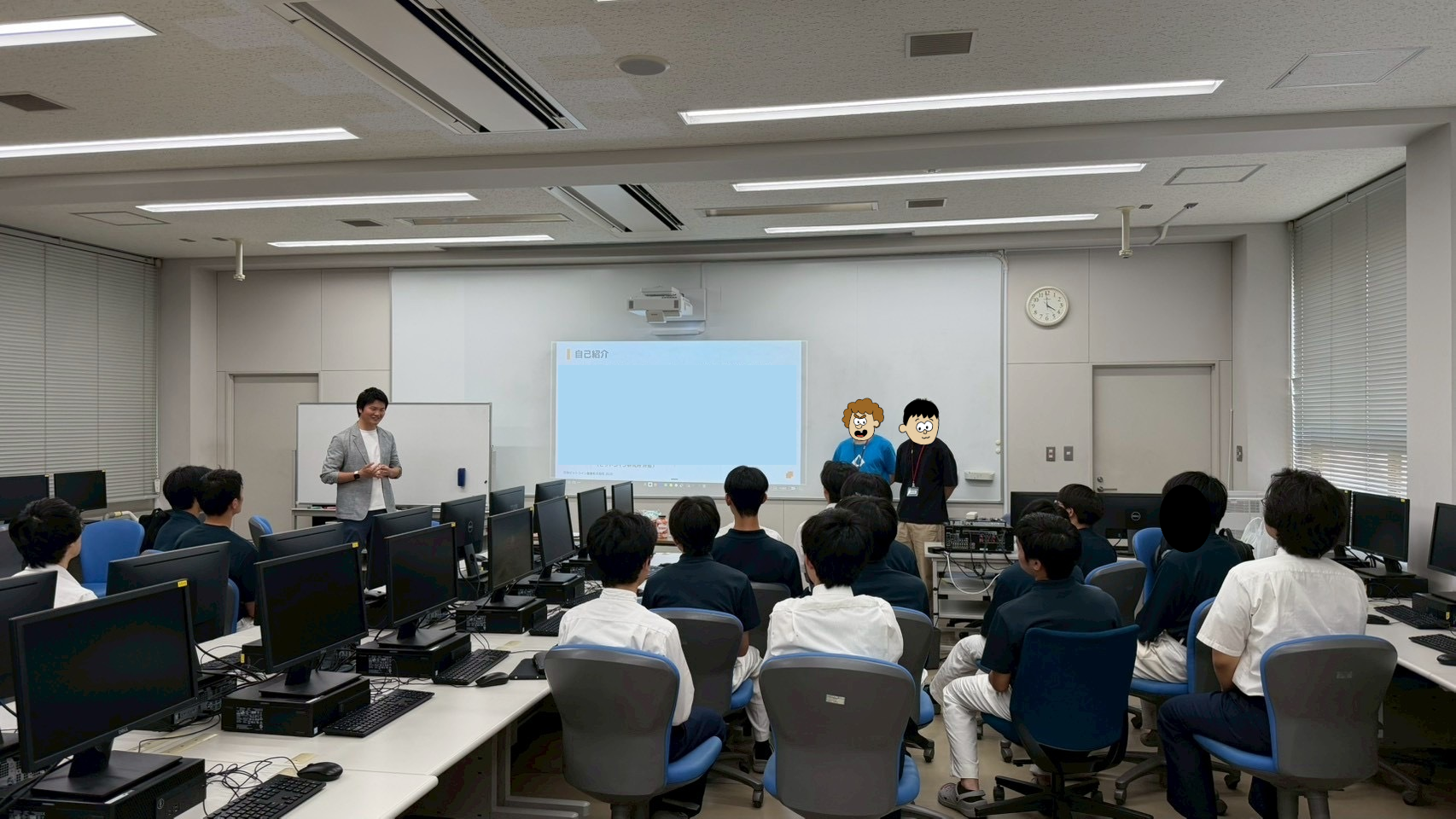
On June 30, 2026, Japan Bitcoin Industry Inc. was invited to give a guest lecture in "Bitcoin Studies," a seminar course at Hiroshima Gakuin Junior and Senior High School. The course has been taught for five years by Keiichi Shakuda, who teaches math at the school.
We covered the class itself in detail in the article below.
高校の「Bitcoin学」ゼミで出張授業を行いました
ビットコイン研究所 / イベントの記事:高校の「Bitcoin学」ゼミで出張授業を行いました

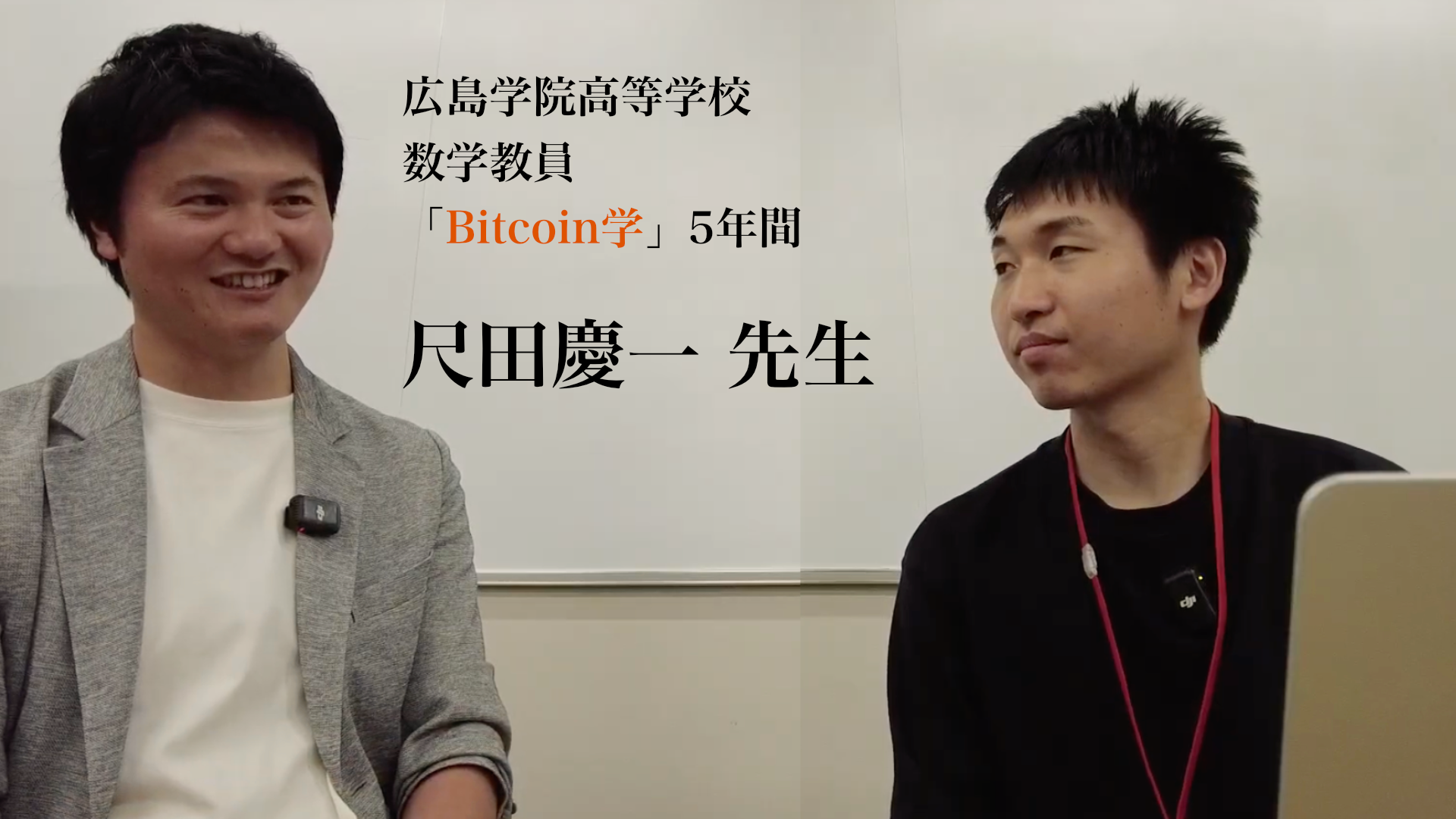
After the lecture, Moriya, director of Bitcoin Research Lab, sat down with Mr. Shakuda for an interview. Here is a closer look at "Bitcoin Studies," the course that connects high school students with Bitcoin.
The interview is also available as a video, so if you're interested, check it out on YouTube.
It started with a New Year's gift for a baby
Moriya: First of all, how did you come across Bitcoin?
Shakuda: How I first heard about it was probably the same as most people. During the crypto bubble, I saw on the news that some people had made money, and back then my reaction was just, "Huh, okay."
Shakuda: I really got into it in 2020. My child had been born, and it was our first New Year together, so I wanted to give otoshidama, the cash gift Japanese children receive at New Year. A baby wouldn't understand what a banknote was anyway, so I thought I might as well give something different, and what I landed on was Bitcoin.
Shakuda: At first I just bought it as a New Year's gift, but the more I looked into it, the more fascinating it became, and I couldn't stop. The fact that no one controls it, and its nature as money—in so many ways, it feels like something that has never existed before.
"Bitcoin Studies": an inquiry class, one period a week
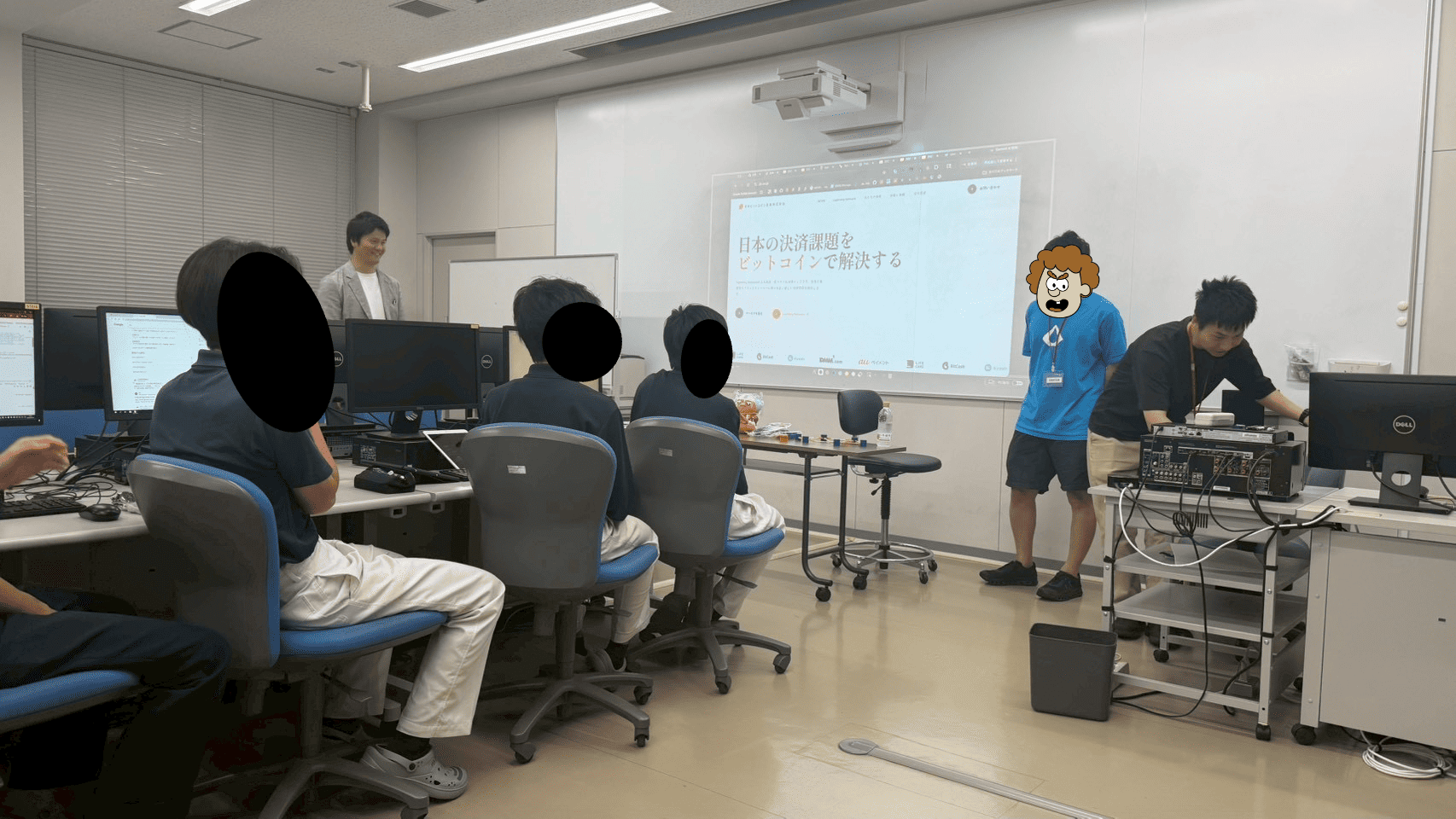
At Hiroshima Gakuin High School, second-year students choose one topic they want to explore and work on it for about a year. Teachers also bring in topics they themselves are interested in, and courses on decommissioning nuclear power plants and tracing the Battle of Okinawa are reportedly offered alongside it.
Moriya: What do you teach in the class?
Shakuda: People tend to assume that "Bitcoin Studies" means systematic, specialized content, but in reality it's much looser. We cover the basics, like how Bitcoin works and why it matters, and beyond that we read and interpret the news. There's been more and more crypto-related news lately, including on stablecoins, so I treat it as a study group for learning to make sense of that news correctly.
In the first half of the course, Mr. Shakuda does most of the talking, but in the second half he hands things over to the students. Each student picks one news story that caught their interest or one technology used in Bitcoin and gives a presentation, and Mr. Shakuda asks questions and offers comments as if he were one of the students. Recent presentation topics reportedly included JPYC, a yen stablecoin, and calculating SHA-256, the hash function widely used in Bitcoin, by hand.
Enrollment has fluctuated over the five years. Around 2021, during the crypto bubble, the course was extremely popular and heavily oversubscribed (about 50 applicants), while today it has settled at around eight students.
Shakuda: I think this reflects a difference in Bitcoin's impact. It used to hit hard as something strange and unfamiliar, but now it has become familiar to students too, so maybe it's no longer such a stimulating topic. I actually think that's a good thing in itself.
Teaching that puts the big picture ahead of rigor
Saying that he is not an engineer himself, Mr. Shakuda explained how he tries to make things easy for high school students to understand.
Shakuda: There are inevitably parts where I have to cut out the details. I prioritize a rough overall picture over rigor. For example, when talking about the Lightning Network, I skip details like the mechanism that prevents funds from being stolen along the payment route, and stop at "your money can't be taken."
He says the topics students respond to best are the ones involving big sums of money.
Shakuda: Stories involving huge amounts, like NFTs (JPEG images selling for millions of dollars), really grab them. When the story is flashy, they're genuinely amazed.
On the other hand, he finds it difficult to convey why Bitcoin is needed in the first place.
Shakuda: Part of it may be that Japan is just too peaceful, but I'm not very confident that I've been able to make them really feel that there are situations where Bitcoin is truly needed.
Moriya: Since they haven't experienced it firsthand, I think their understanding inevitably stays somewhat abstract. Creating more real experiences in Japan, like paying with Lightning, is something we at Japan Bitcoin Industry believe we need to do.
Something "strange" in a student's take on crypto
Asked about a memorable episode from the past five years, Mr. Shakuda pointed to a remark a student made about altcoins, dapps, and other projects.
Shakuda: Crypto projects other than Bitcoin have a controlling party, like a founder, and are designed with a lot of thought. There are probably some good ones, but even over just these five years, my students and I have watched projects fail and fade away. At one point, a student reflected, "Everyone working on projects other than Bitcoin must have put so much effort into the design, but in the end they all fell apart," and hearing that, I also found it strange.
Moriya: Sometimes hard work just doesn't pay off.
Starting from "it's not something to be taught," and why it still matters
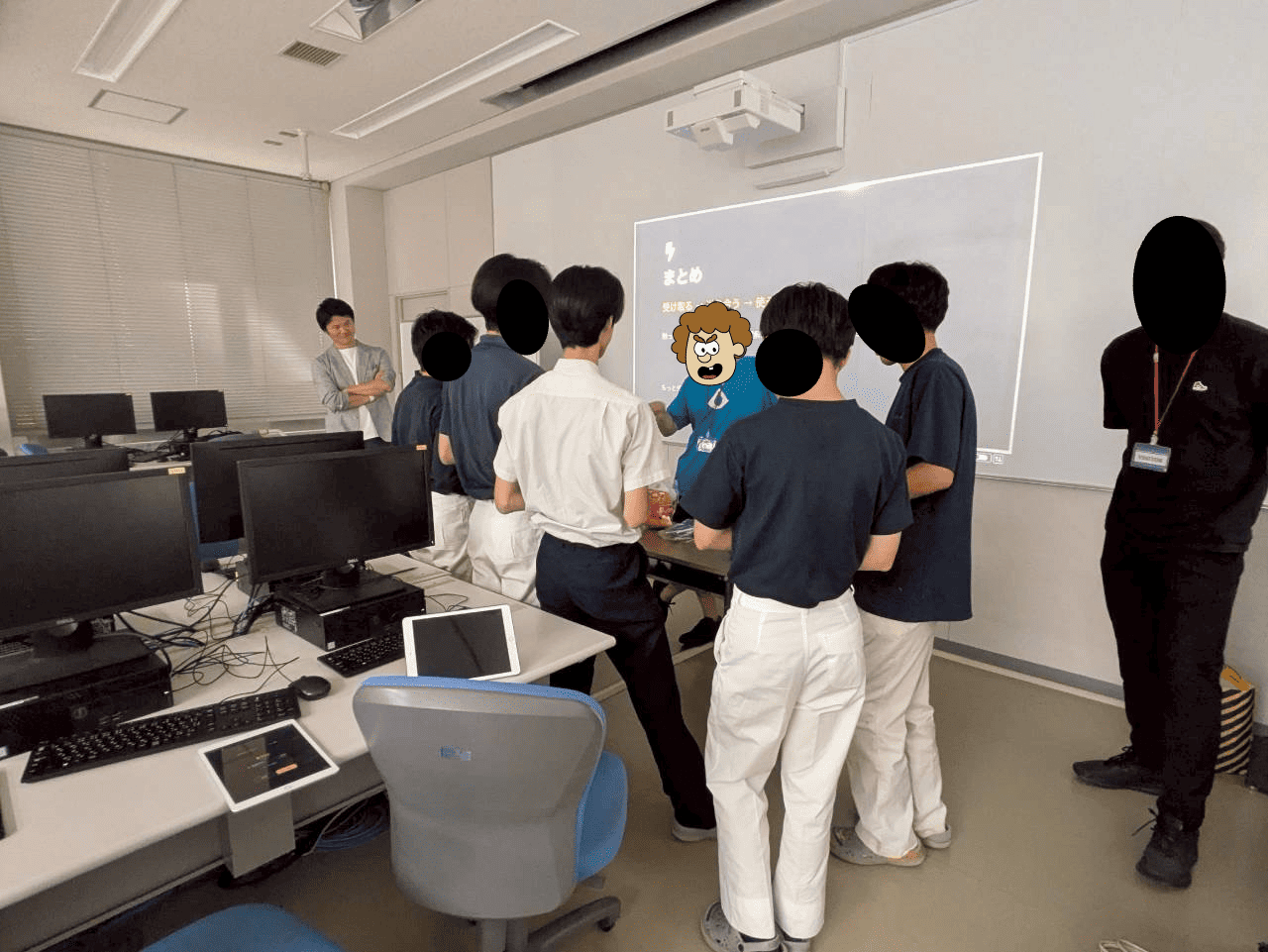
On the value of teaching Bitcoin at school, Mr. Shakuda described a distinctive sense of distance.
Shakuda: I think about this every day: I don't believe Bitcoin is something to be taught. It's very much something you research and learn on your own, and the idea of "Don't Trust, Verify" fundamentally doesn't fit well with a teacher teaching. At a school, the person standing at the front talking will always end up looking like someone who knows everything.
With that in mind, he explained why he continues the course.
Shakuda: Still, I think it's important for students to have the chance to encounter it. Especially around 2020, searching online brought up nothing but dubious information and pitches for investment sites. If it's hard to research properly, I thought it might be okay to provide some guidance, and that was one of the reasons I started this class.
As for why he invited Japan Bitcoin Industry for a guest lecture this time, he says he was concerned that students might take what they heard as "just Mr. Shakuda's opinion."
Shakuda: I think it's important to show that it's not just me—there are other people who love Bitcoin too. Going forward, I want to involve many more people in the class.
Traveling to Tokyo for a place to use Lightning
Mr. Shakuda also talked about visiting Tokyo Bitcoin Base (TBB) and buying coffee beans with a Lightning payment.
Shakuda: Even though I knew Lightning existed, there are hardly any places in Hiroshima where you can actually use it. I wanted to try making a payment for real, so I went all the way to TBB to buy coffee beans. After TBB opened, I started seeing more event announcements on X, and my feeling of "that looks great" kept growing. This guest lecture also came about through a TBB event announcement email.
The distance between school education and Bitcoin
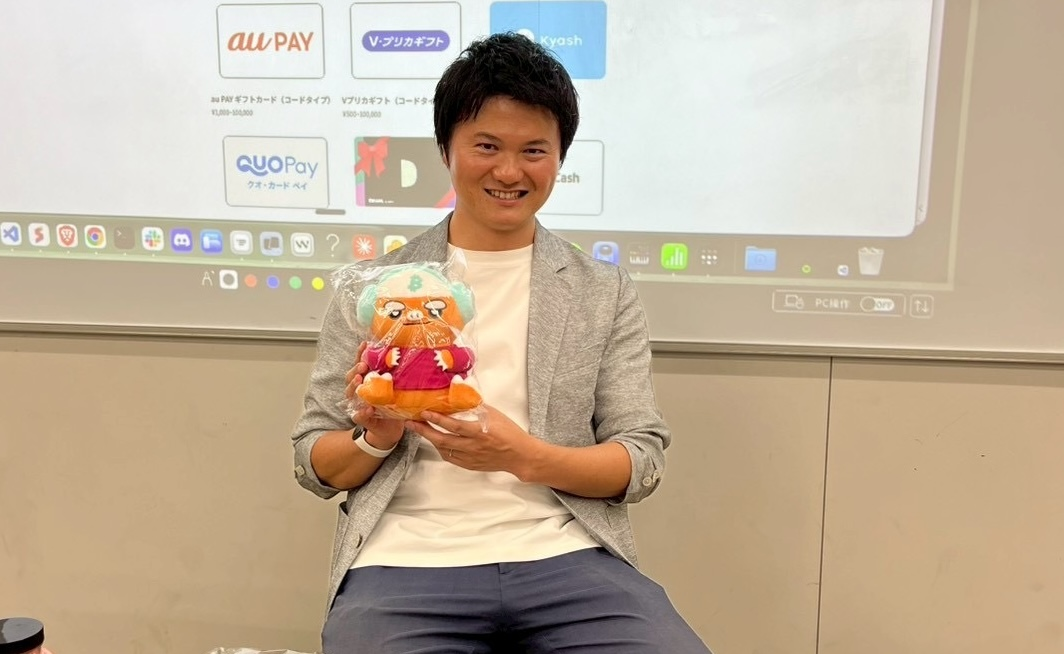
The word "blockchain" now appears in information technology textbooks, but he says it is treated only in a limited way.
Shakuda: It shows up as little more than a wrong answer choice, like "Blockchain is a system with a controlling party that enables fast transfers." There's some technical material, but almost nothing that goes deeper into questions like what value is.
Shakuda: The IT textbooks describe it as a "new technology," and since that phrase has no negative ring to it, it can make it look like something that will solve every problem, which I don't think is good. But there isn't enough class time to explain it properly.
Moriya: I suspect the people writing the textbooks may not understand it that deeply either. It's a difficult issue, but I think the "Bitcoin Studies" class gives students a chance to understand Bitcoin more deeply.
A starting point for thinking about "what value is"
Asked what kind of shift in values he hopes students will take away from the class, Mr. Shakuda answered:
Shakuda: Without an opportunity like this, there's rarely a moment to think about the question of what gives things value. I hope I can provide that starting point.
Moriya: I think it's extremely valuable to have this kind of opportunity in high school. Finally, is there anything you'd like to add?
Shakuda: I've been doing this alone in my classroom all this time, so I'm happy to be able to connect with people through Bitcoin. Thank you.
Closing: Bitcoin Studies continues
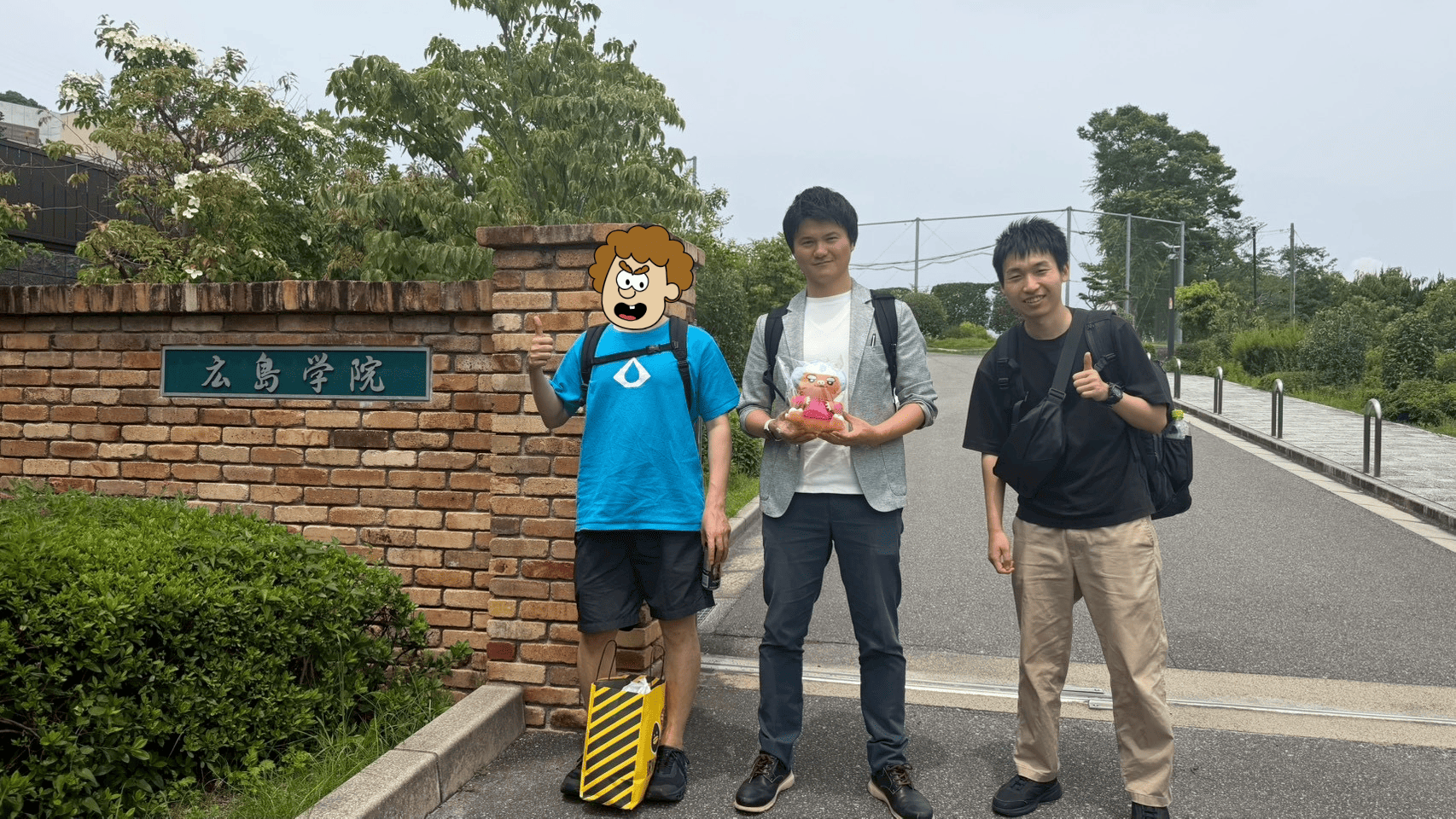
In this article, we interviewed Mr. Shakuda, who has taught Bitcoin Studies to second-year high school students at Hiroshima Gakuin Junior and Senior High School for five years.
Personally, I think the very existence of elective seminar courses is a wonderful opportunity to broaden students' horizons. On top of that, I'm quite envious that they get to explore Bitcoin, a topic many adults know nothing about and one that will matter in the world to come.
I also think a class format that doesn't limit itself to Bitcoin but also touches on crypto and stablecoins, with frank opinions and discussion between teacher and students, gives students a chance to think critically for themselves. As for Mr. Shakuda's concern that "the class itself isn't Don't Trust, Verify," I suspect the class may actually be instilling the "Don't Trust, Verify" mindset in the students.
If you are an educator or anyone else interested in Mr. Shakuda's Bitcoin Studies, please contact us through the Bitcoin Research Lab inquiry form, and we can put you in touch.
Bitcoin Research Lab and Japan Bitcoin Industry Inc. will continue working to help more people learn about and use Bitcoin.