Lightning Network: How Bitcoin Became Practical for Payments

This article was translated from Japanese with AI. Read the original (日本語) · Report a translation issue
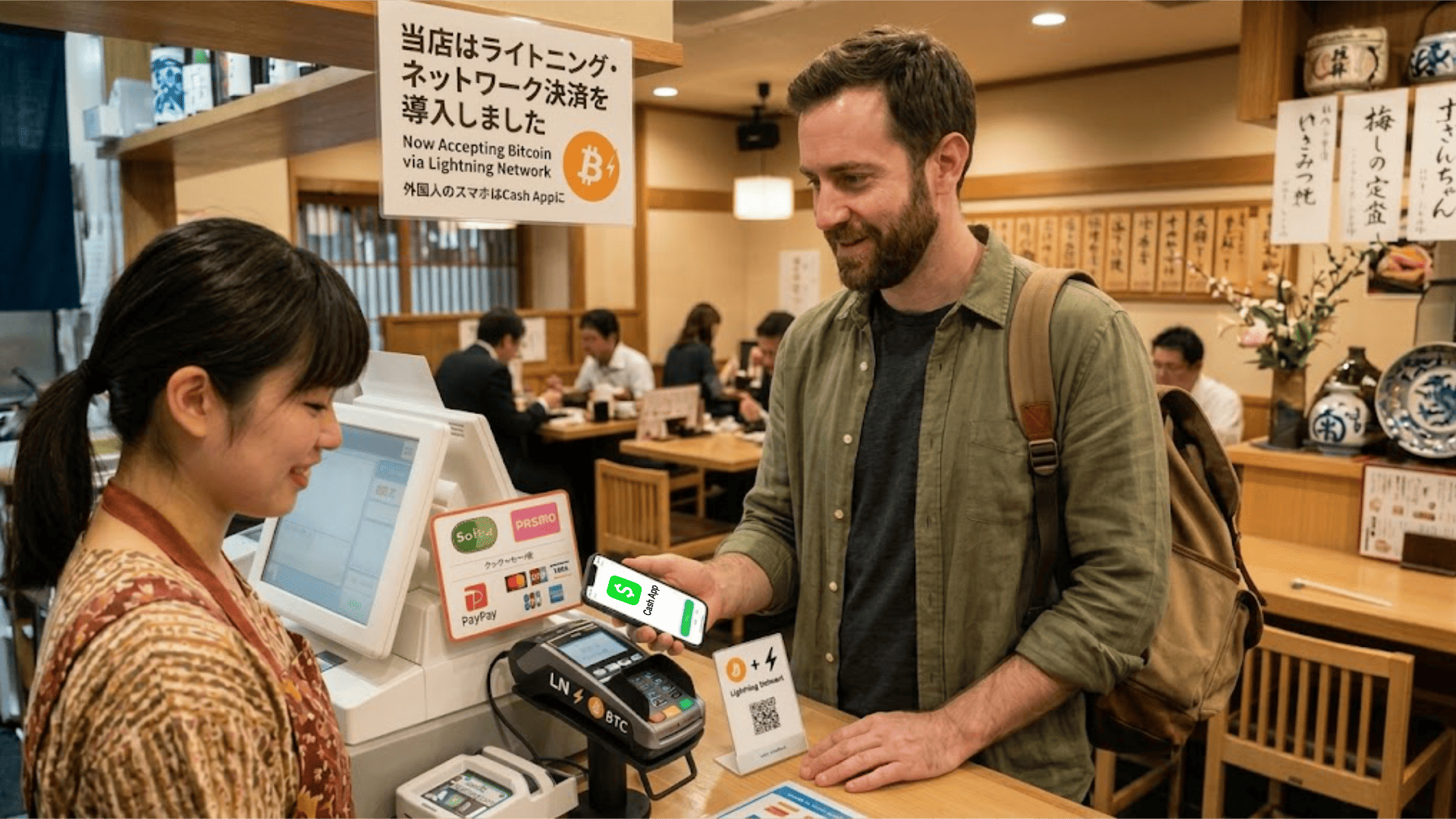
Did you know that Bitcoin payments have been gaining momentum around the world in recent years?
For various reasons, Bitcoin payments long struggled to catch on. Now a technology called the "Lightning Network," which dramatically improves the reliability, speed and cost of Bitcoin transfers, has matured, and Bitcoin payments are being taken seriously again as a practical option and are gradually spreading worldwide.
Most recently, for example, the major point-of-sale payments company Square announced that it would enable Bitcoin payments for all of its merchants in the US.
Square Begins Automatic Bitcoin Payment Rollout To Millions
Square began automatically enabling bitcoin payments for eligible U.S. sellers today.
 Micah Zimmerman

It may not be very familiar in Japan yet, but there are dozens of Lightning-compatible wallets, and many of the world's major exchanges support deposits and withdrawals over the Lightning Network. Taken together, it has become a payment and transfer method available to hundreds of millions of users.
In fact, according to estimates by River, the total monthly value of payments and transfers on the Lightning Network reached $1.17 billion as of November 2025, or roughly 185 billion yen.
In this article, let's learn about the Lightning Network, which has made Bitcoin far more practical, and update the belief that "Bitcoin isn't suited for payments," an idea that has been overturned over the past few years.
Four problems that have held back Bitcoin payments
In fact, about ten years ago the potential of Bitcoin payments was drawing attention in Japan too, and many experiments were underway. For example, Bic Camera, a major Japanese electronics retailer, introduced Bitcoin payments at all of its stores in April 2017. At the time, the appeal may have been the low fees and the convenience for foreign tourists visiting Japan. (Have you ever been unable to use your credit card while traveling abroad?)
ビックカメラ、仮想通貨を店頭で利用開始 - 日本経済新聞
ビックカメラは2017年4月7日、ビックカメラ有楽町店とビックロ ビックカメラ新宿東口店で仮想通貨のビットコインによる決済を試験導入した。ビットコイン取引所の国内最大手であるbitFlyerが提供する決済サービスを採用。来店者はビットコインを量販店の店頭で利用できる。 午前10時の開店と同時に、各フロアに用意したビットコインの決済端末で支払えるようにした。決済額は最大で10万円相当までで、決済
 日本経済新聞社

Unfortunately, due to circumstances at bitFlyer, the company that provides Bic Camera's payment service, paying with a regular Bitcoin transfer apparently hasn't been possible since 2023; instead, payments are debited from a bitFlyer account. That means foreign tourists can't use it.
Going back to 2017: Bitcoin was expected to become a new means of payment, but with the technology of the time it faced a number of problems. Here are four of them:
Problem 1: Payment time
The first is how long a payment takes. It takes an average of 10 minutes for a Bitcoin transfer to be included in the blockchain, and sometimes several tens of minutes or more.
Depending on the payment amount, you might also have to wait an additional period of time, so buying something with Bitcoin could mean standing next to the register for over an hour. That might be tolerable for online shopping at home, but at a physical store it's a major inconvenience.
Problem 2: Price fluctuations (volatility)
The longer it takes for funds to arrive, the more the price is likely to move in the meantime. For example, if the price drops 10% before the funds arrive, the revenue will be 10% less than expected even if you rush to sell right away. (Of course, it could also go up by 10%.)
Price volatility was especially high in 2017 compared with today, so this problem may have made a particularly strong impression.
Problem 3: Soaring transaction fees
Then there's the issue of the transaction fees themselves. It's true that they are fairly cheap in normal times, but in the second half of 2017 in particular, Bitcoin transaction fees soared to the equivalent of several thousand yen.
Credit card payments cost merchants a fee of at least about 3%, but if a Bitcoin transaction fee were 10,000 yen, a single payment would have to be roughly 330,000 yen or more for Bitcoin to come out ahead on fees. On top of that, with Bitcoin it's the buyer who pays the fee, so unless the store offers a discount to offset it, the buyer may feel they're losing out by exactly as much as the store gains.
The fee for a transfer on the Bitcoin blockchain changes with demand for transfers, so it's essentially "market price," which means it depends heavily on when you make the payment.
Problem 4: Scalability
To preserve its decentralization, Bitcoin deliberately limits processing capacity at the blockchain layer. As a result, when demand for transfers surges beyond a certain point, it easily falls into the triple bind described above: fees soar, payments take longer, and businesses accepting payments are exposed to price risk for longer.
This challenge of increasing transaction throughput without sacrificing decentralization is known as the scalability problem.
The Lightning Network solves the problems of Bitcoin payments
With these problems unresolved, using Bitcoin for payments is quite difficult. Fortunately, thanks to a new technology called the Lightning Network, which appeared in early 2018, and the practical know-how accumulated over the eight years since, the scalability problem has improved greatly, and Bitcoin transfers can now be made in large volumes, quickly and cheaply.
What is the Lightning Network?
The Lightning Network is a new Bitcoin technology that uses capabilities already built into Bitcoin to carry out large numbers of transactions off the blockchain and record only the final result, raising Bitcoin's transaction capacity to an entirely new level.
Strictly speaking, this technology forms a payment network among users, and it is that network itself that is called the Lightning Network.
💡
The Lightning Network handles only bitcoin; there is no Lightning Network token or anything of the sort. And because it is a fully decentralized system, there is no operator either. I've added this because it's important.
Why the problems of Bitcoin payments have been solved
All of the problems above stemmed from trying to write large numbers of transfers to the Bitcoin blockchain. So what if you could safely make transactions without writing them to the blockchain? That idea is what gave rise to the Lightning Network.
By depositing bitcoin into what's called a "Lightning channel," transfers within that channel can be made safely without waiting for blockchain confirmations. As a result, payments complete in under a second. Since funds arrive instantly, they can also be sold instantly, which solves the price volatility problem as well.
Because you don't have to pay a blockchain fee every time, small transfers in particular are cheap. (These fees are also set by the market, so it's hard to generalize, but the median is reportedly around 0.003% of the amount sent.)
A welcome side effect is that, compared with on-chain transfers, Lightning is considered to offer better privacy, since transfer details aren't published to the entire world. It depends on the wallet you use, but when you buy something, not having the seller be able to see your holdings and other purchases from your address is important for using Bitcoin for payments.
💡
Some of you may feel uneasy hearing that transfers happen off the blockchain, but transfers on the Lightning Network can be broadcast to the blockchain whenever you choose, and there is also a mechanism that confiscates the balance of anyone who cheats, so you can use it with confidence. I'll explain the technical details in a separate article.
Lightning Network adoption and use cases
There are several countries and regions around the world where Bitcoin payments are taking off. In those places, since around 2020 it has already been a given that Bitcoin payments mean using the Lightning Network.
There's still the problem that relatively few consumers can pay with Lightning, but compared with traditional payment methods such as cards and QR codes, it offers many advantages: lower fees, no handling of personal information, and none of the problems that come with international use.
Saving on payment fees through nationwide adoption
The country furthest ahead in adopting Bitcoin payments is probably the United States.
As mentioned at the beginning, in 2026 the major payment terminal provider Square began rolling out Bitcoin payments at 4 million stores in the US. Stores don't need to do anything special: the buyer sends bitcoin over the Lightning Network, and Square converts it into dollars and credits it to the store's sales. If the store wishes, it can also receive some or all of its sales in bitcoin.
The payment fee borne by the store is 0–1%, making it the cheapest payment method after cash, and it is expected to offer significant benefits in low-margin industries such as restaurants.
Accepting payments from around the world, with instant, trouble-free settlement
Accepting Bitcoin payments also brings major benefits for online shopping. Card payments, for example, suffer not only from trouble handling foreign-issued cards but also from rampant chargebacks due to fraud. With Bitcoin payments, revenue that has come in can't be unilaterally taken back by a credit card company, so it's an option that is not only cheaper in fees but also lower in risk for merchants.
What's more, since there are no chargebacks to deal with, revenue is available immediately rather than after 30 days or so, and you don't need to hold customers' personal information. For example, at Nada nada and UseBitcoin, which sell VPNs and eSIMs, you can shop with no risk of your personal information being leaked. Bitcoin payments may be better suited to today's internet than credit card payments, which require personal information.
💡
A chargeback is when, after fraudulent use is discovered, the revenue from that fraudulent transaction is taken back from the merchant. If the merchant has already shipped the goods by then, from its point of view both the goods and the revenue have been stolen, and it takes a loss. Fraudulent card use in Japan is said to cost more than 54 billion yen a year, and a significant share of that ends up as losses for merchants.
Branding benefits
There are also cases where Bitcoin payments have led to higher sales. The burger chain Steak 'n Shake introduced Bitcoin payments via Lightning and made heavy use of Bitcoin in its branding. As a result, not only did it pay half the payment fees on Bitcoin sales, but its sales themselves grew by more than 10% in a year.
Steak ’n Shakeのビットコイン戦略|ビットコイン決済導入から財務活用まで
Steak ’n Shakeが全米約400店舗で導入したビットコイン決済。その後の売上増加、手数料削減、企業トレジャリーへの組み込み、従業員ボーナス制度まで、企業におけるビットコイン活用事例を解説します。
 守屋 彰眞

And since there are still few places where Bitcoin payments are widespread at the municipal level, there are cases where they've been used to revitalize local communities.
El Salvador made Bitcoin a national policy, attracting investment and new residents from Europe and North America, while the city of Lugano in Switzerland made Bitcoin usable not only for payments but also for paying taxes, helping it attract Bitcoin-related companies. There is surely still plenty of room around the world to use Bitcoin for community revitalization, with places like Bitcoin Beach and Tokyo Bitcoin Base at the center.
The potential for Bitcoin payments in Japan
Among developed countries, Japan lags relatively far behind in the adoption of Bitcoin payments. According to BTC Map, where volunteers add shops that accept Bitcoin to a map, there are only 68 physical stores in Japan that accept Bitcoin.
Of course, Bitcoin payments aren't limited to physical stores, but the relatively small number of people who hold their own bitcoin and try it out as a new payment method may be because there is little sense of a problem with existing payment methods. Indeed, Japanese people living in Japan rarely have trouble finding a way to pay for things in the country.
Even in Japan, though, there are use cases where adopting Bitcoin payments via the Lightning Network could bring benefits.
Expanding into overseas markets for digital content
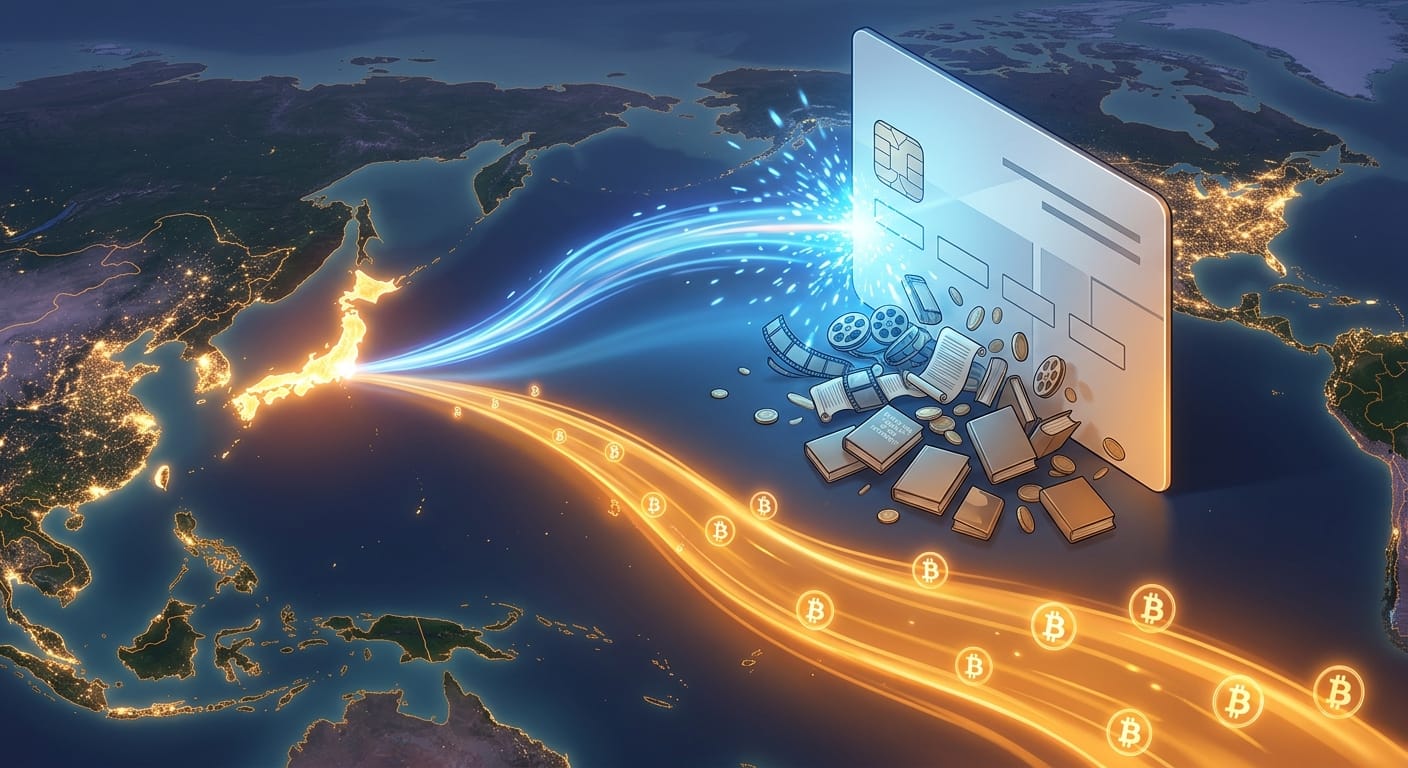
Japan has a great many companies with strengths in digital content, but they haven't always succeeded in expanding into overseas markets. They face a variety of challenges when going abroad, and some of those are challenges related to payment methods.
For example, the sales lost because foreign-issued cards can't be used on Japanese online stores may be larger than you'd imagine. Depending on the content, companies sometimes have to alter it at the request of networks such as Visa and Mastercard, or give up on selling it altogether.
With Bitcoin payments, it may be possible to accept payments from overseas markets broadly without taking on fraud risk and the like. Now that the population with access to the Lightning Network has reached the hundreds of millions, isn't there all the more room for growth?
Two-way payments with customers and users (rewards)
Are you stuck on the assumption that online payments only flow one way, from customer to business? With credit card payments, paying money to customers was difficult. With Bitcoin, though, you can easily reverse the direction of a payment.
For example, you could build a system that lets users convert points or miles into bitcoin, or perhaps even bring bitcoin into a user-to-user marketplace.
Bitcoin payments over the Lightning Network have the potential to offer new customer experiences that previous payment methods couldn't deliver.
💡
In an app called Yap Island, users can earn small amounts of bitcoin by answering quizzes about Bitcoin. Being able to withdraw bitcoin to your own wallet starting from small amounts is a feature made possible only by the Lightning Network.
Summary
As we've seen, with the arrival of the Lightning Network, Bitcoin has gained practical performance for payments as well, and its usefulness is gradually being recognized around the world. In Japan this trend has only just begun, but I expect that, here too, the unique value of Bitcoin payments can be realized through cross-border commerce and new payment and reward experiences.
At Japan Bitcoin Industry Inc., home to engineers who specialize in the Lightning Network, we offer support for adopting Bitcoin payments and consultations on developing businesses that use Bitcoin. Feel free to get in touch.