Payment Sovereignty: Why Japan's Content Exports Need Bitcoin

This article was translated from Japanese with AI. Read the original (日本語) · Report a translation issue
Japanese digital content is popular around the world, and overseas demand for it is strong. Anime, games, manga, doujinshi (self-published fan works): as long as it's digital, content faces no physical constraints and can reach buyers anywhere with an internet connection.
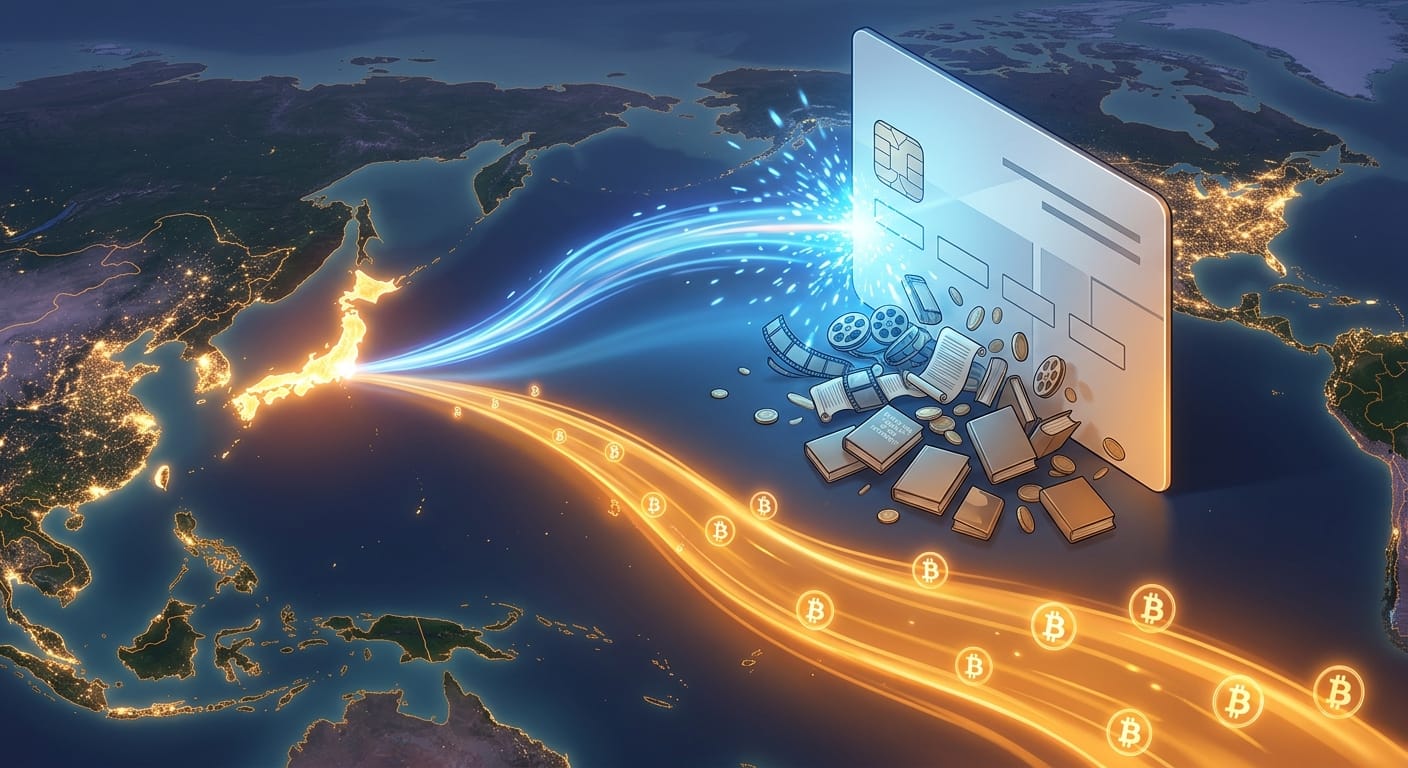
Yet even though the content originates in Japan, the reality is that Japan does not hold "payment sovereignty," the authority over how money changes hands.
The gatekeepers controlling these money flows are foreign companies, led by Visa and Mastercard, and I believe this structure creates serious problems for Japan's digital content exports. In this article, I lay out the issues from the perspective of Japan's payment sovereignty and consider why Bitcoin is the way to win it back.
Credit cards are the main payment method in cross-border e-commerce
Let's start by looking at where e-commerce payments stand today.
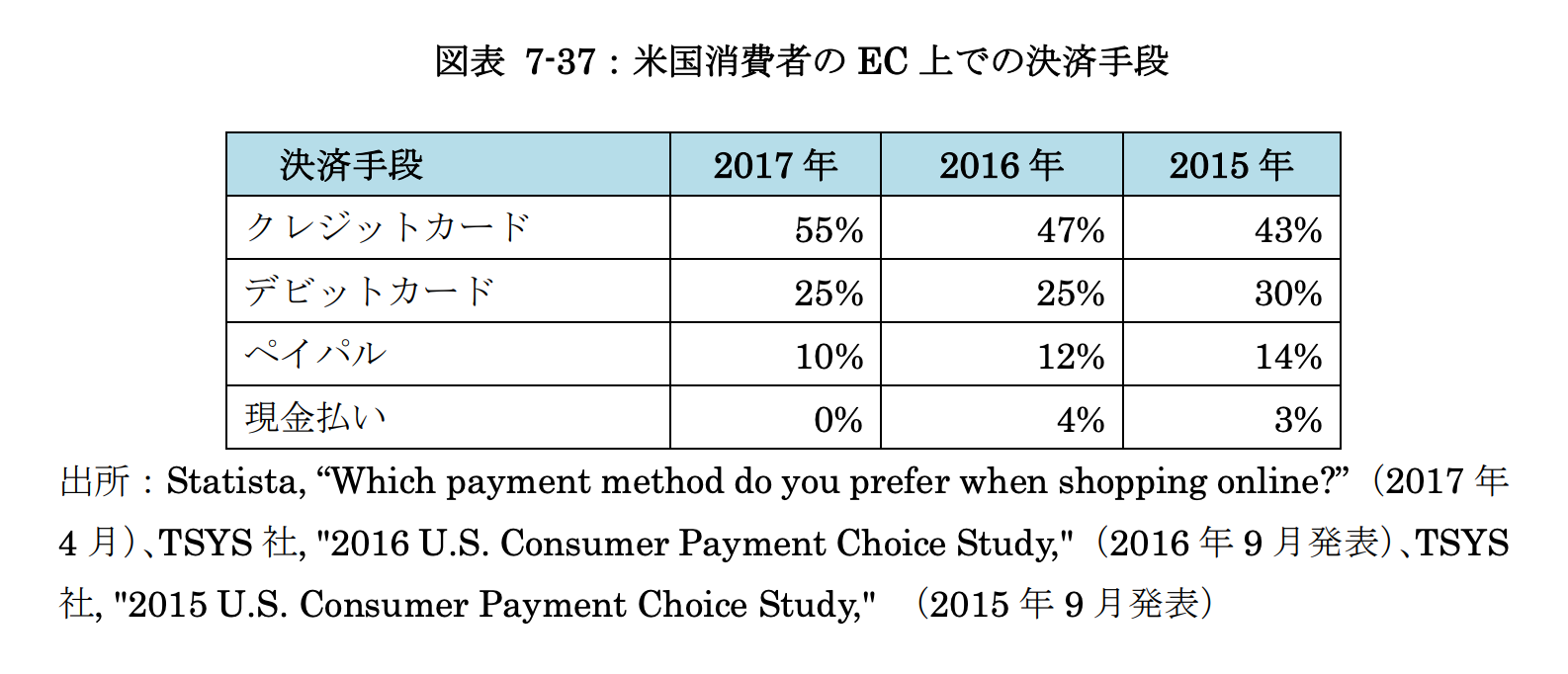
Across all e-commerce, not just cross-border, 55% of American consumers paid by credit card as of 2017. The data is a bit dated, but it's reasonable to assume credit cards still account for roughly half or more today.
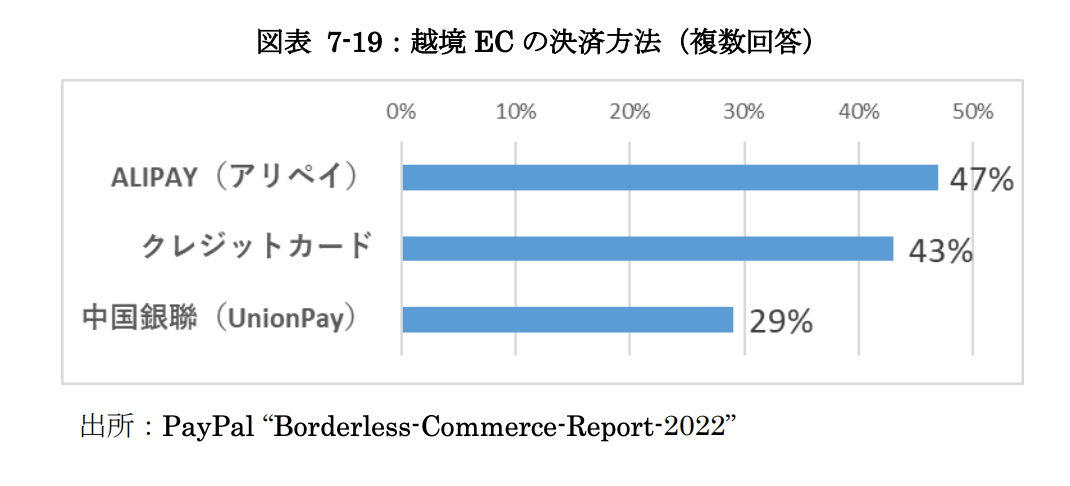
In China, the leading payment methods for cross-border e-commerce are Alipay, credit cards and UnionPay. Credit cards are the dominant payment method in cross-border e-commerce, and the others, such as Alipay, are also payment methods under the jurisdiction of other countries.
As for credit cards, the leading payment method in cross-border e-commerce, the top three brands, Visa, UnionPay and Mastercard, hold about 97% of the market (first half of 2024, source). That leaves JCB, Japan's domestic brand, with less than 3%, and given how few places accept it in the US, JCB users overseas are likely even fewer. In practice, then, a credit card payment almost always runs through the payment networks of American or Chinese companies.
Today, the main payment method in cross-border e-commerce is the credit card, and the brands are controlled by foreign companies. It's fair to say Japan has already lost its payment sovereignty.
Credit card companies set the rules unilaterally
Credit card networks have the power to change the rules for merchants unilaterally and, in some cases, cut off their access entirely. That power has harmed and constrained Japan's digital content industry.
In 2022, in a case in a California federal court involving MindGeek, the parent company of the adult site Pornhub, Visa's motion to dismiss was denied. The court found that Visa may have helped monetize illegal content. In response, Visa and Mastercard moved swiftly to suspend services and tightened their grip on adult content e-commerce. (Source: CNBC)
The crackdown reached legitimate businesses in Japan as well. Several platforms handling doujinshi and adult content saw card payments suspended one after another, and in some cases JCB is still the only credit card they can accept.
Even when something is legal under Japanese law, the internal decisions of American companies determine whether Japanese businesses keep their revenue. For now, the restrictions mainly target adult content, but the possibility that future lawsuits, rulings or compliance pressure will extend card suspensions to other categories can't be ruled out.
Beyond adult content, Visa and Mastercard were completely suspended in Cuba in June 2026 after the US tightened sanctions. It's a clear example of how payment infrastructure can also be cut off for geopolitical reasons. (Source: ITmedia)
A structure in which American payment companies can restrict what services are offered and to whom shows that the loss of payment sovereignty is a real problem.
Chargebacks: a risk merchants are forced to bear alone
For merchants, the problems with credit cards don't stop at suspensions. There is also a risk built into the system itself, known as the "chargeback." A chargeback lets a cardholder dispute a transaction and have the payment forcibly reversed through the card company.
One way chargebacks get abused is known as "friendly fraud."
This is when a legitimate cardholder, after making a purchase, falsely tells the card company they don't recognize the charge and files a dispute (a chargeback), keeping the goods or service while avoiding payment. In some cases, people falsely claim a family member used the card without permission.
Digital content is especially vulnerable to friendly fraud. With physical goods, delivery records serve as evidence, but with digital content, if a buyer claims they "couldn't access it," it's hard for the merchant to prove otherwise. In cross-border transactions, language barriers and differences in jurisdiction add to the difficulty, and it's not uncommon for merchants to lose both the content and the revenue.
In a chargeback, the final say over the payment rests with the buyer and the card company. Even when Japanese merchants dispute it, overturning the decision is difficult in practice. The risk of credit card fraud ends up pushed onto merchants.
Relying on JCB doesn't change the structure
Since JCB is an international brand that originated in Japan, some argue that "if JCB becomes widespread, Japan can regain its payment sovereignty." I don't think JCB is a fundamental solution either.
There are two main reasons.
1. JCB can be subject to the same outside pressure
As an international brand, JCB is unlikely to be immune to the same kinds of compliance and other outside pressure. In fact, in 2025, the Australian nonprofit Collective Shout named JCB in an open letter calling for restrictions on card companies (Source: Yahoo News). Even if JCB became widely adopted, the problem of rules being set at JCB's sole discretion would remain.
2. The brand share problem
As mentioned above, the top three brands, Visa, UnionPay and Mastercard, hold about 97% of the market. Getting overseas users to carry a JCB card, which is the same kind of card-based payment as Visa and Mastercard, would take considerable cost and time. And the number of stores that accept it overseas is limited.
On top of that, JCB has the same currency conversion fee problem as Visa and Mastercard. Even if JCB became widespread, it would not be a fundamental fix, because payment sovereignty would still be entrusted to a single outside company.
Stablecoins can't restore payment sovereignty
Some might ask, "Why not just use stablecoins?" It's true that USDT and USDC don't go through card companies. But I believe stablecoins don't solve the payment sovereignty problem either.
Tether, which issues USDT, and Circle, which issues USDC, both have the power to freeze specific addresses. They don't just have the power; there are many cases where they have actually used it. According to stables.rip, a service that tracks stablecoin freezes, about $3.6 billion in stablecoins had been frozen as of June 2026.
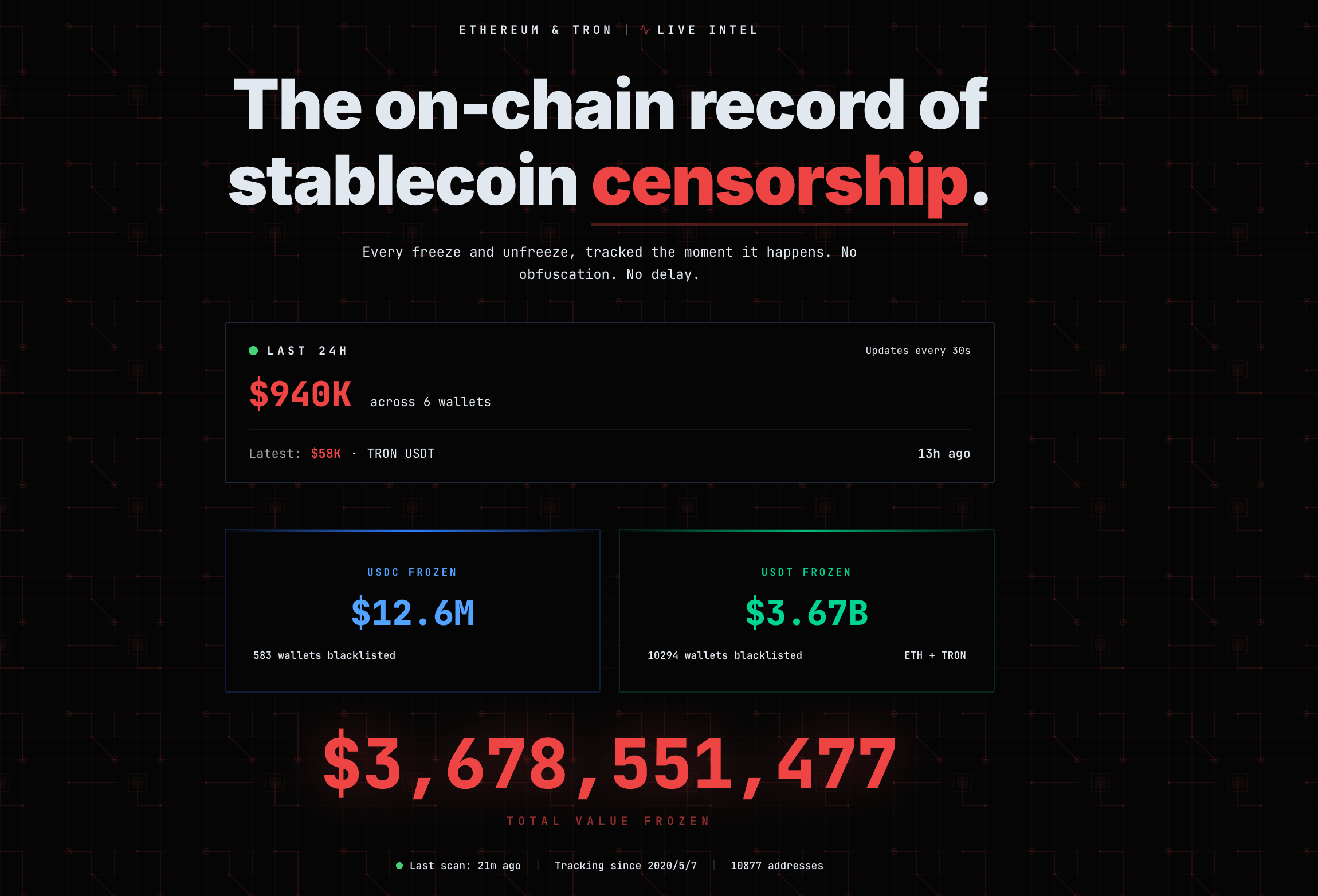
Stablecoins also face practical problems in cross-border e-commerce. As of June 2026, USDT can't be traded on Japanese exchanges. USDC is supported by only a few exchanges, and few people hold it. And overseas customers have little reason to hold a yen-denominated stablecoin like JPYC.
Every stablecoin has a "specific issuer." As long as there is a specific issuer, it holds the power to block payments, and the payment sovereignty problem persists, including rule changes driven by regulatory and compliance pressure.
Bitcoin: the option for reclaiming payment sovereignty
If you ask what it actually takes to regain payment sovereignty, the answer is "the absence of any specific gatekeeper." And I believe the only way to regain payment sovereignty in cross-border e-commerce and digital content exports is Bitcoin.
Bitcoin is a protocol with no central administrator. If you run your own node, there is no specific organization that approves or rejects your transfers or payment acceptance. And of course, anyone can start at any time without permission. There are no chargebacks, the bitcoin arrives instantly, and it belongs to the merchant right away, which also makes for efficient use of funds.
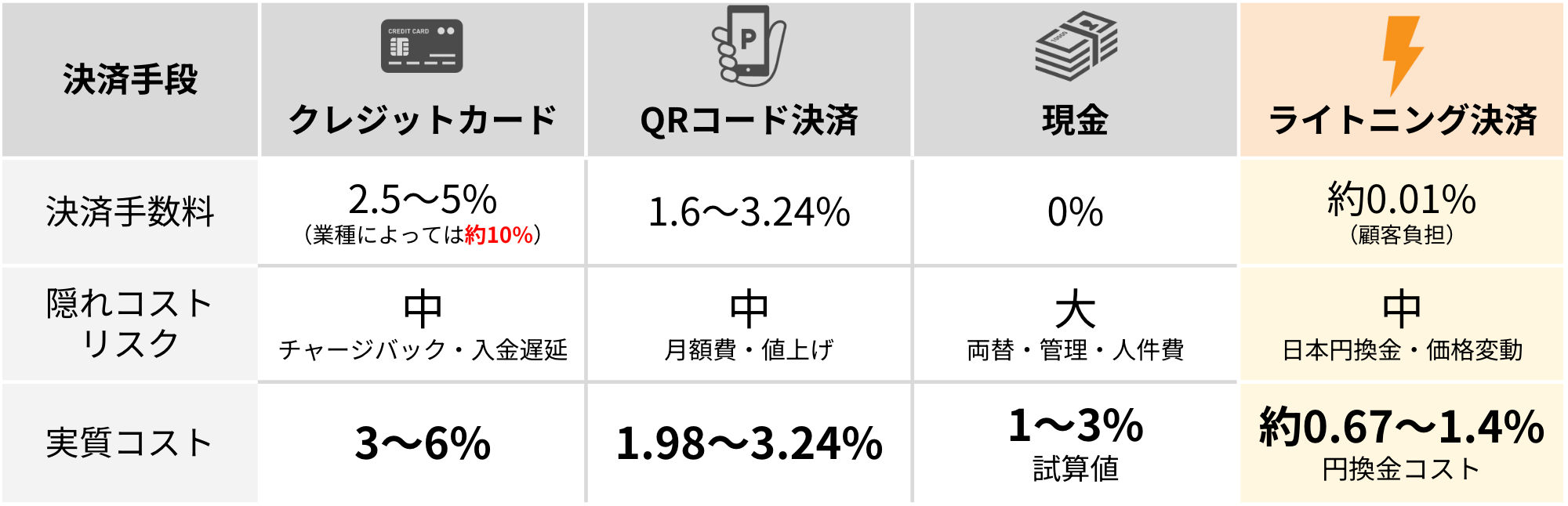
As for fees, compared with the fees of several percent to several tens of percent that credit cards charge merchants, Bitcoin payment fees are lower by orders of magnitude.
The chart below compares fees for domestic payments, not cross-border e-commerce. Once you add cross-border sales and exports, further costs pile on, such as currency conversion fees for users and a higher likelihood of friendly fraud.
ビットコイン決済の手数料はクレジットカード・QR決済・現金より安いのか?
脱キャッシュレスが広がる中、クレジットカード・QRコード決済・現金・ライトニング決済の手数料を実質コストで比較します。現金の隠れコストや換金コストも含めた試算から、事業者にとって最も低コストな決済手段を考察します。
 守屋 彰眞

Accepting Bitcoin payments doesn't just restore payment sovereignty. It also lowers fees and improves the efficiency of funds, which has a positive impact on the business itself.
Three questions about Bitcoin payments
That said, Bitcoin is an unknown quantity for many businesses, and some may find it hard to believe it can be used for payments at all.
And since payment companies like Square are rolling out Bitcoin payments to stores in the US, doubts may arise about whether payment sovereignty is really achieved. Here I address three questions about Bitcoin payments as they relate to this article.
Question 1: Aren't Bitcoin payments slow and hard to use?
Some people may have the impression that "Bitcoin isn't suited to payments." It's true that a Bitcoin transfer takes 10 minutes on average and sometimes tens of minutes or more. Fees can also rise; in late 2017 they reached the equivalent of several thousand yen. However, this view dates from around 2017.
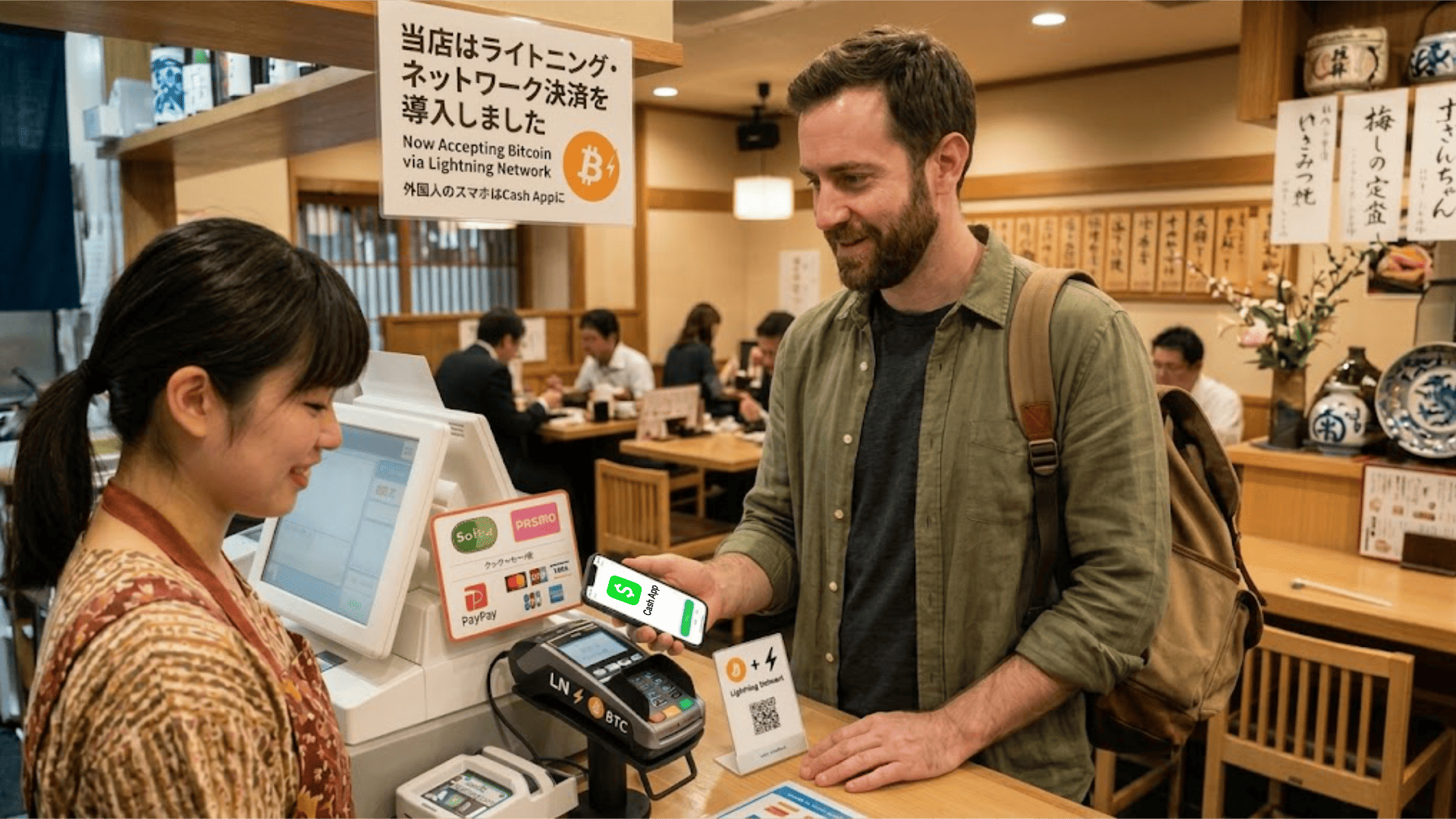
Today, a technology called the "Lightning Network" (Lightning for short) is in practical use, enabling instant transfers and small payments in bitcoin. "Instant" means a few seconds, and fees are low, around 0.01%. For users, the payment experience is on par with existing QR code payments. That holds for in-person payments, and for remote payments like cross-border e-commerce the experience is no different.
Generally, Bitcoin payments use Lightning. For expensive items (say, several hundred thousand yen or more per item), payments are sometimes made on the Bitcoin blockchain itself (on-chain payments). Digital content tends to be low-priced and requires immediate payment, so I think Lightning is the better fit.
In terms of payment sovereignty, on-chain and Lightning are roughly equivalent, though Lightning can sometimes involve slightly more reliance on third parties. I'll address this in Question 3.
For more on Lightning payments, see the article below.
「ビットコインは決済に使えない」はもう古い!ライトニングネットワークで高速決済を実現
ビットコイン決済が抱えていた「遅い」「高い」「価格変動リスクがある」といった問題を解決し、ビットコインを決済手段として実用的なレベルまで引き上げたライトニングネットワークについて紹介します。世界中でのいくつかの導入事例を紹介し、日本企業がどのように活用したらよいかについてもご提案します。
加藤 規新
Question 2: Will anyone actually want to pay in bitcoin?
Paying with bitcoin may not be something many people in Japan picture, but internationally, the volume of Bitcoin payments is growing. Europe, North America and South America in particular have many users and merchants.
As the chart below shows, monthly payment and transfer volume on Lightning, mentioned above, reached $1.17 billion as of November 2025, or about 185 billion yen. The chart on the left shows it growing year after year.
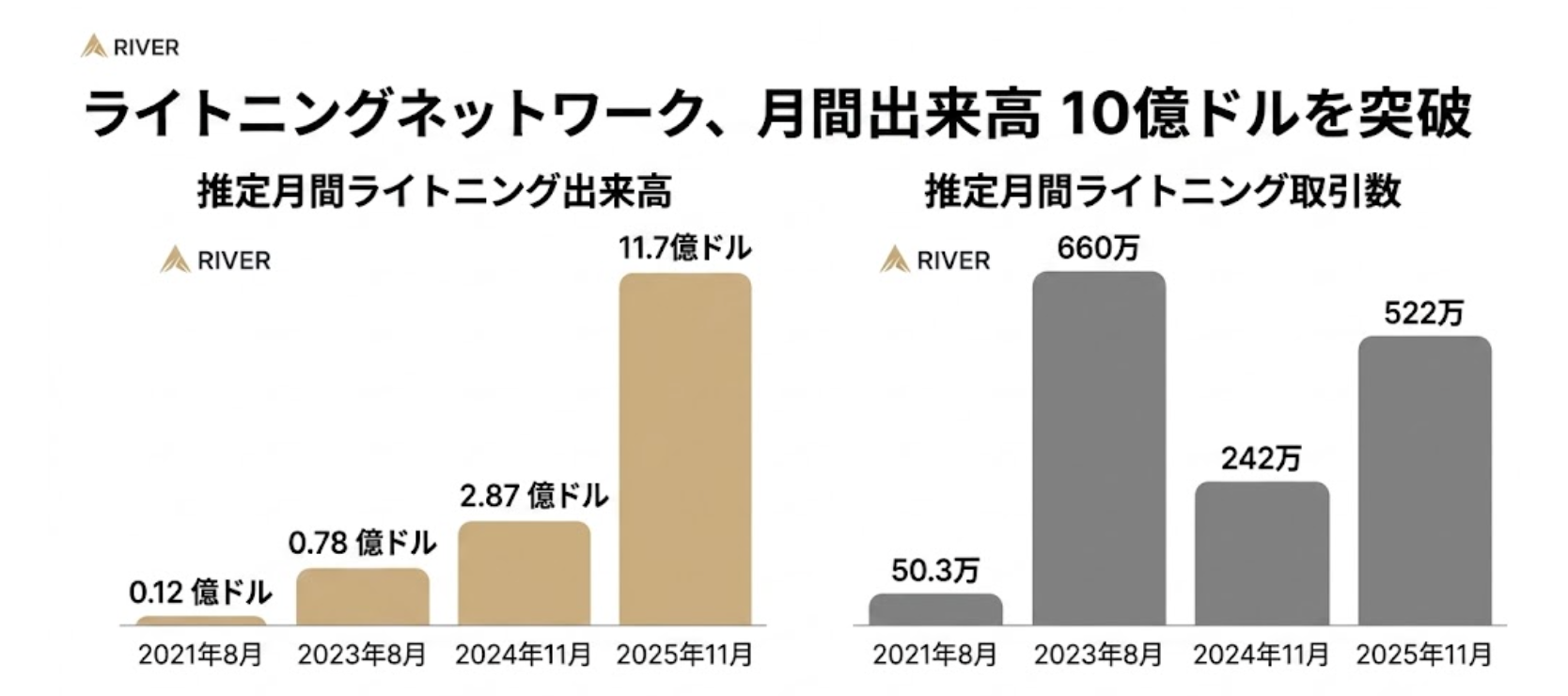
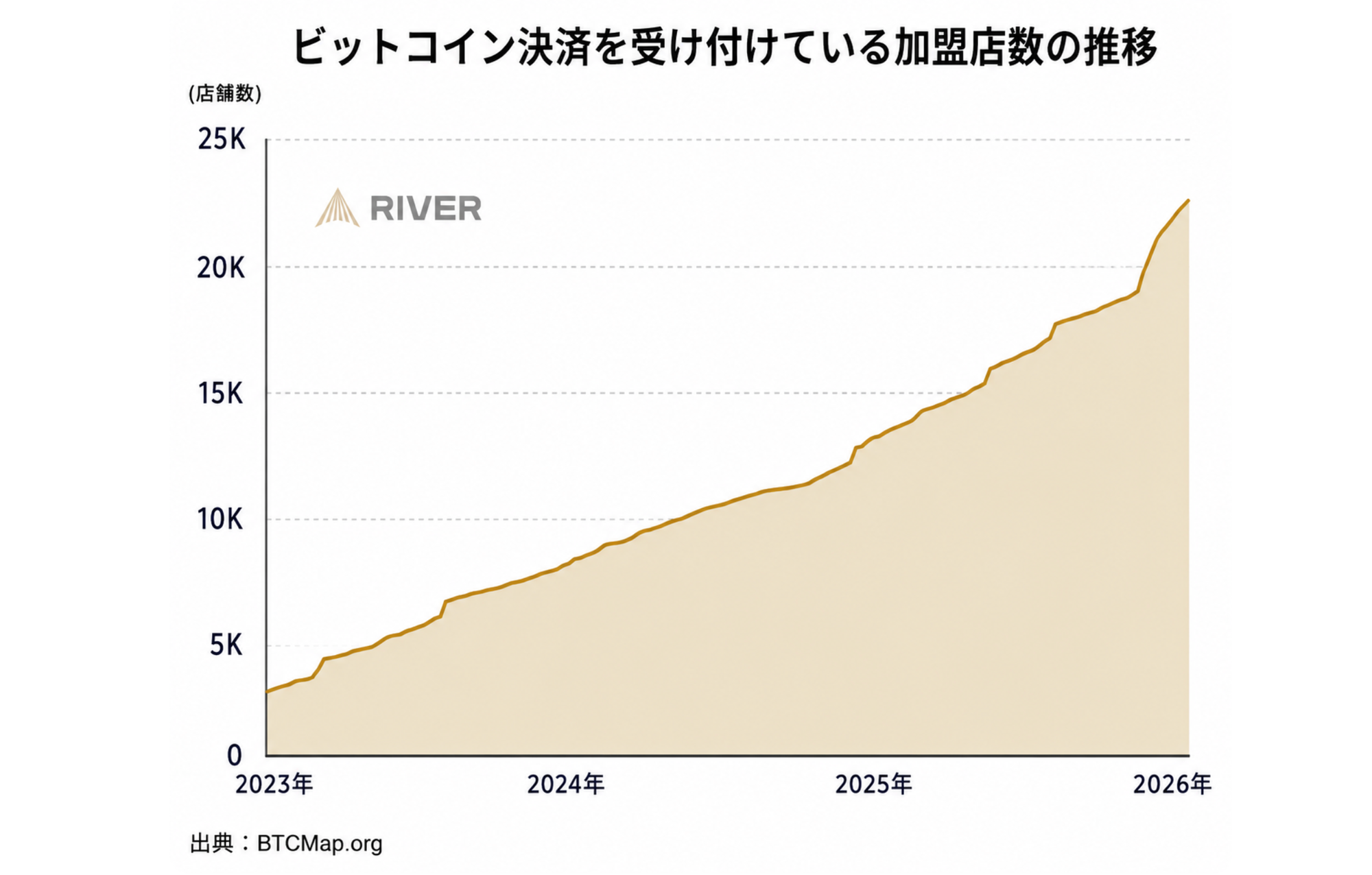
It's not just users and transfer volume that are growing; the number of merchants and services accepting Bitcoin payments is growing too.
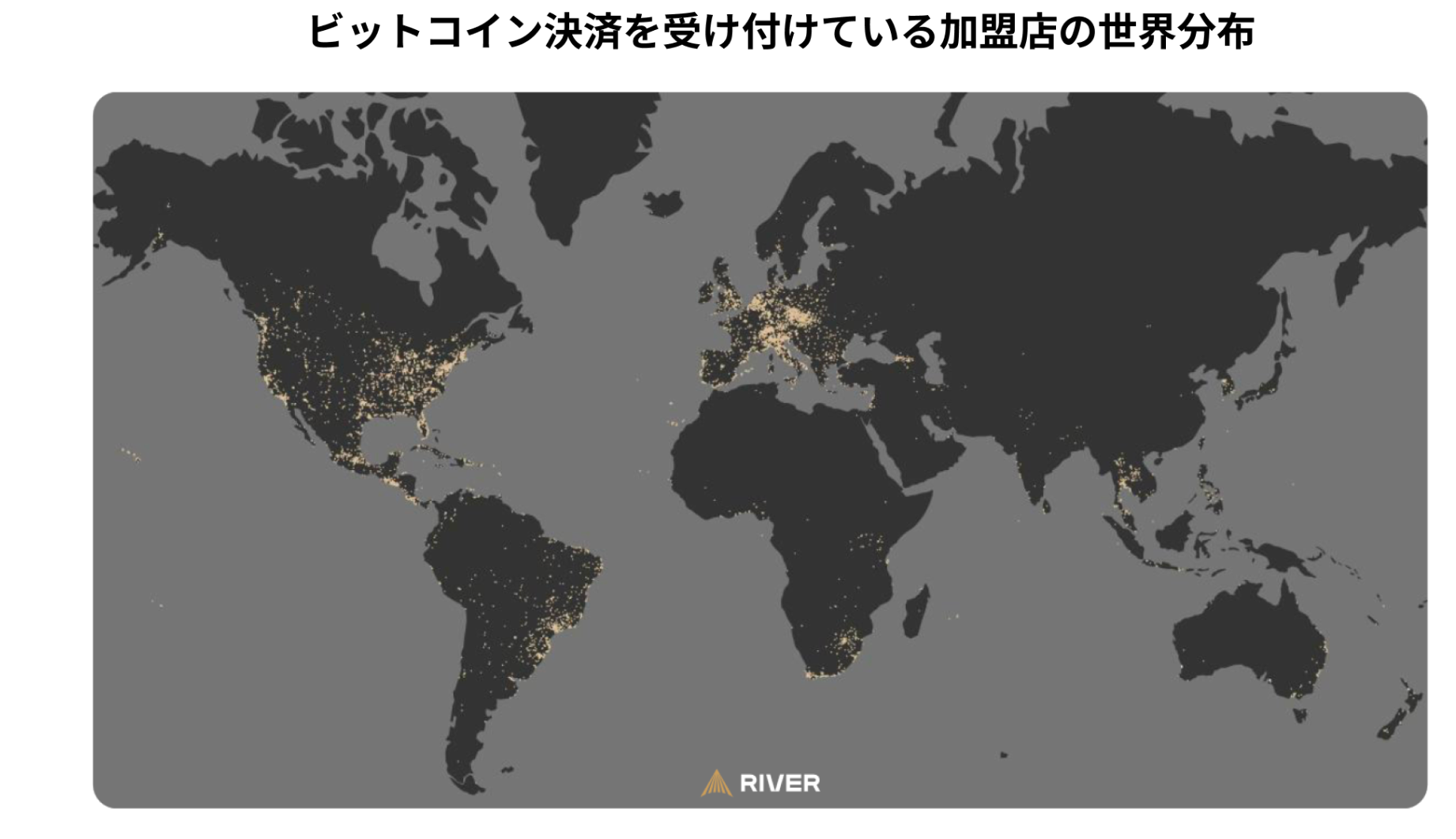
As noted earlier, Europe, North America and South America are especially active, with more than 5,000 merchants accepting Bitcoin payments in each region.
The River data shown is from 2025. In 2026, Square, a subsidiary of Block, has been automatically enabling Bitcoin payments for its US merchants, and they are already available at more than 800,000 locations. (Source)
Realistically, Bitcoin payment users and merchants are still few in Japan, so expectations there are modest for now. However, when it comes to cross-border e-commerce and digital content exports, the target is overseas users, so there may be a significant revenue opportunity.
From the user's perspective, reasons to prefer Bitcoin payments include avoiding currency conversion fees and protecting against fraud from entering card details. Globally, Bitcoin is already functioning as a means of payment.
Question 3: Won't Bitcoin payment services end up taking payment sovereignty anyway?
If you manage your own node, you can accept Bitcoin payments without relying on any third party. However, this requires technical know-how, and it's not realistic for every merchant to run their own, so in practice the use of Bitcoin payment services like Square may spread.
It's natural, then, to ask, "Won't the service providers end up holding payment sovereignty anyway?"
But compared with credit cards, the structural difference is clear.
Launching a new credit card brand requires licenses in each country, regulatory compliance, and competing against the enormous network effects of Visa and Mastercard, so the barriers to entry are extremely high. In effect, the world's payment infrastructure is concentrated in a handful of brands.
Bitcoin, by contrast, is an open source protocol, and anyone can build a payment service on it without permission. Because it doesn't depend on any particular country or jurisdiction, it's structurally hard for a single company to keep a monopoly on the market, and competition works naturally. And of course, if payment services emerge in Japan, payment sovereignty comes even closer.
Even if a single company did come to dominate the market to the point of threatening payment sovereignty, other players would likely offer similar services in pursuit of revenue, and market share would fragment.
Even when you use a payment service, no one controls the Bitcoin protocol itself. Without the high barriers to entry created by licensing, I believe it is fundamentally different from existing credit card infrastructure.
Conclusion: Bitcoin can restore payment sovereignty
The problem facing Japan's digital content exports and cross-border e-commerce isn't just high fees.
The final authority in the payment flow belongs to foreign credit card companies like Visa and Mastercard, which Japanese law doesn't directly reach. And it's Japanese businesses that suffer from chargebacks and friendly fraud.
Neither JCB nor stablecoins are a fundamental solution. As long as a specific issuer or administrator exists, someone holds the power to cut you off, and there's no escaping it.
Japan's digital content industry is popular worldwide, and having it constrained by payment systems can be seen as a lost opportunity at the national level.
In the context of payment sovereignty, Bitcoin has the potential to solve this structural problem. Not only is it permissionless and open to every business, but with the number of users growing overseas, it may also simply lead to more revenue opportunities.
At Bitcoin Research Lab, we believe that expanding the adoption of Bitcoin payments in Japan is key to establishing Japan's payment sovereignty in the future. If you're interested in adopting Bitcoin payments, please feel free to contact us.
お問い合わせ
ビットコイン研究所に関するお問い合わせフォームとなります。ビットコインに関する事業、メディアに関するご相談はこちらからお問い合わせください。
運営