Bitcoin Wrench Attacks: Trends and How to Protect Yourself
This article was translated from Japanese with AI. Read the original (日本語) · Report a translation issue
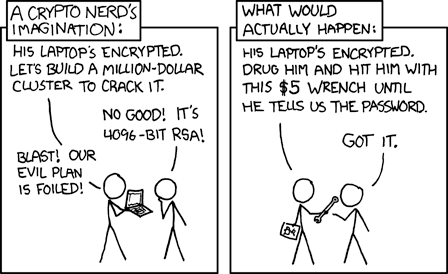
Have you heard of the term "wrench attack" (or "$5 wrench attack")? A cold wallet is a very powerful way to protect your bitcoin from online threats like hacking, but even technical defenses that seem airtight are useless against physical violence. "Wrench attack" means stealing cryptocurrency through direct violence, and the name comes from a famous two-panel comic that makes exactly that point.
Wrench attacks have been rising worldwide over the past few years. According to figures compiled by self-custody expert Jameson Lopp, wrench attacks this year are up 169% compared with 2024. France in particular seems to see a shocking kidnapping almost every month, including the abduction of one of Ledger's founders.
Notable cryptocurrency-related kidnapping and confinement cases in France in 2025
The first half of 2025 stood out for brutal cases directed by a mastermind in Morocco, reminiscent of Japan's "yami baito" crimes, in which ringleaders recruit people online to carry out robberies
| Date | Victim | Summary | Outcome |
|---|---|---|---|
| January 1 | Father of a Dubai-based crypto influencer | Mother and daughter held captive at home; father abducted, doused in gasoline and locked in a car trunk | When police stopped to question them at a gas station, the perpetrators fled; the father was rescued from the trunk |
| January 21 | Ledger co-founder David Balland and his wife | Taken to separate locations and held captive. Ransom demanded from a fellow co-founder. Balland had a finger cut off | Freed by special forces after the ransom was paid. Ransom recovered and perpetrators arrested. Mastermind later arrested in Morocco (☆) |
| May 1 | Father of a crypto millionaire | Forced into a van and kidnapped by four men in Paris; ransom of about 1 billion yen demanded from his son. Had a finger cut off | Police located him, rescued him and arrested the perpetrators. Mastermind later arrested in Morocco (same person as ☆) |
| May 13 | Daughter and grandchild of a crypto company CEO | Three men tried to force them into a van in Paris | She and her husband fought back; the attackers fled and the attempt failed |
| May 26 | Crypto entrepreneur | Ten men in balaclavas, split between two cars, were watching the target in preparation for a kidnapping | Arrested by police before they could act. Mastermind later arrested in Morocco (same person as ☆) |
| June 13 | Trader active on TikTok | Kidnapped by four men on the way home; ransom demanded | The kidnappers made him open his wallet, found the balance was small, and released him |
| December 1 | Father of a Dubai-based crypto entrepreneur | Kidnapped on the street by four men; ransom demanded | Released by the kidnappers. Whether a ransom was paid has not been disclosed |
The xkcd comic above has a point. When you're actually facing violence, your life comes first, so you may have no choice but to hand over your bitcoin. And this isn't limited to self-custodied bitcoin: you can also be forced to withdraw from an exchange, so it's a problem every bitcoin holder needs to think about.
In this article, I'll use the available data to get a picture of wrench attack trends, then go through the measures bitcoin holders can take to protect both their assets and their lives. The more Bitcoiners adopt these measures, the more they'll act as a deterrent, so even if you don't consider yourself especially high-risk, it's important to take whatever measures you reasonably can.
💡
That said, it's important to keep in mind that wrench attacks stick in the memory because they're so shocking, but they're extremely rare compared with phishing, malware infections and exchanges going bust (getting "GOXed"), and you should prioritize defending against those first. On top of the advice in the article our columnist Toshihide Hara wrote at the end of last year, "Security Measures You Should Take When Using Crypto Exchanges," use a hardware wallet with a screen for self-custody, and never type your seed phrase in anywhere or store it electronically.
• Wrench attack trends: What situations are you most likely to face?
• The most effective ways to protect both your life and your assets
• Will wrench attacks keep increasing?
About the data
Several sites collect data on wrench attacks, so this article draws on the data they provide. Here they are:
GitHub - jlopp/physical-bitcoin-attacks: A list of known attacks against Bitcoin / crypto asset owning entities that occurred in meatspace.
A list of known attacks against Bitcoin / crypto asset owning entities that occurred in meatspace. - jlopp/physical-bitcoin-attacks
 jlopp
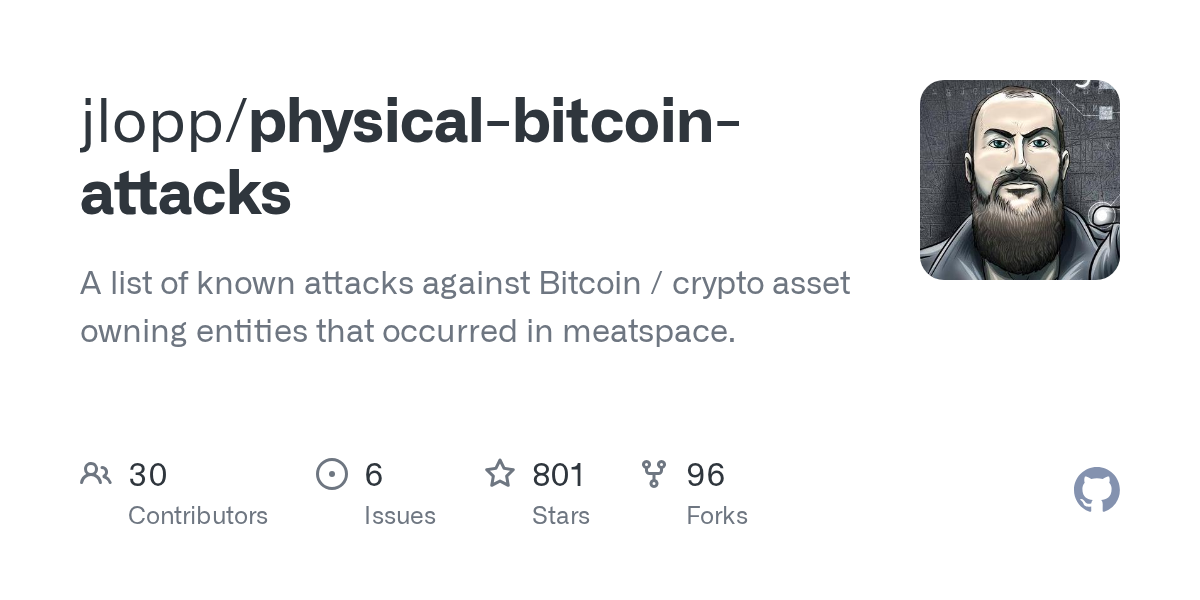
A list of incidents compiled on GitHub by self-custody expert Jameson Lopp
Physical Violence In Crypto - GLOK Stats Dashboard
The most comprehensive database tracking physical violence in cryptocurrency. Visualizing known attacks across the globe with detailed scenario breakdowns.

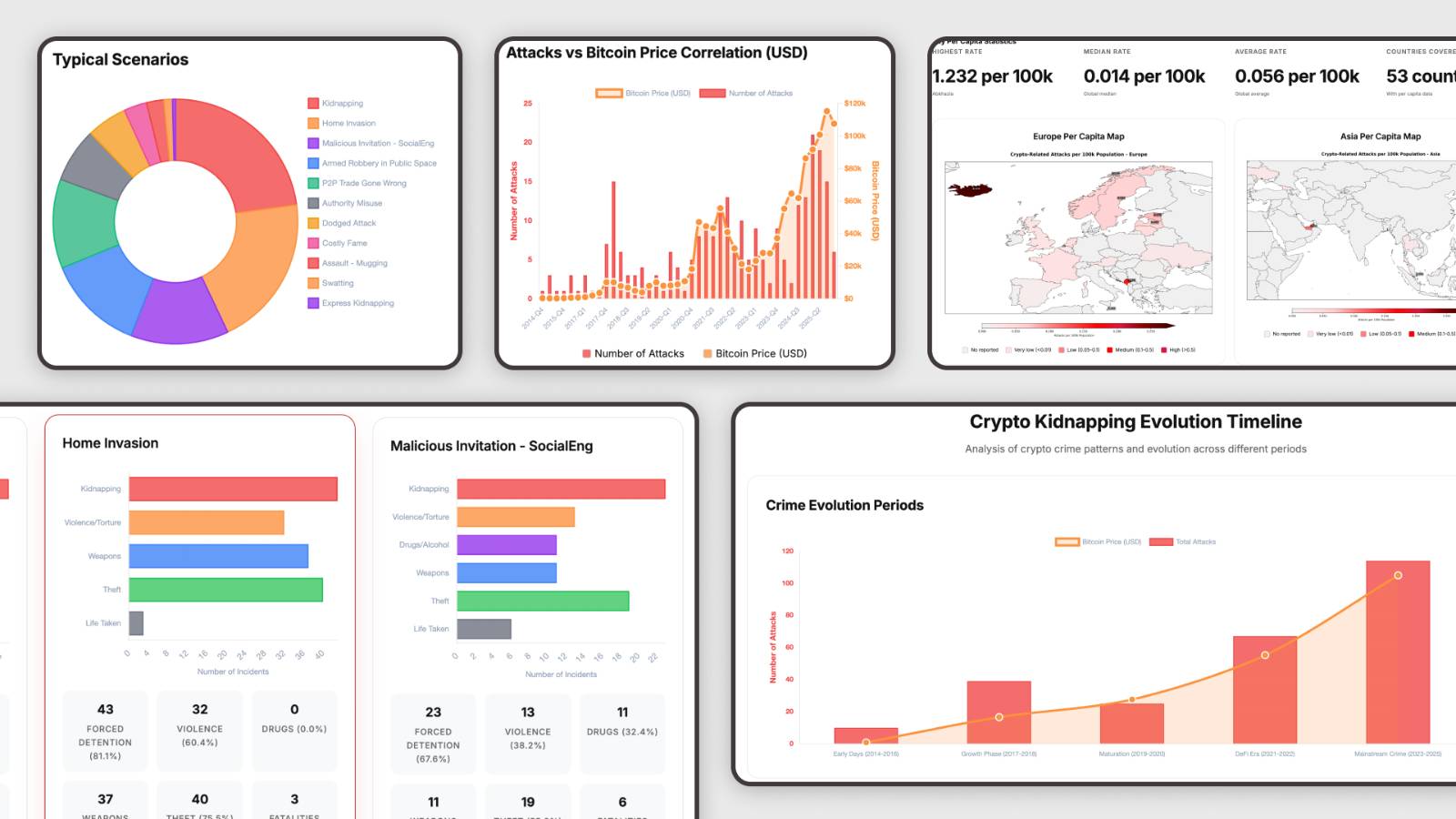
Glok.me, a site that visualizes data on known wrench attack cases
Note that this data is gathered mainly from news reports, and since the reporting is often incomplete, the data is fragmentary as well. In addition, a 2024 paper that analyzed interviews, forum posts and the data above suggests that fewer than half of wrench attacks are reported to the police. The reasons given include "what's stolen won't come back," "I don't want an official record, for privacy reasons," "I don't trust the police," "the police won't take it seriously," "the amount is small," and "I don't want questions about where the money came from."
Kidnappings and killings or injuries are also more likely to make the news, so their actual share is probably lower.
physical-bitcoin-attacks/Wrench_Attacks_Research.pdf at master · jlopp/physical-bitcoin-attacks
A list of known attacks against Bitcoin / crypto asset owning entities that occurred in meatspace. - jlopp/physical-bitcoin-attacks
jloppThis paper was also very helpful
Wrench attack trends: What situations are you most likely to face?
Wrench attacks tend to rise in years when the Bitcoin market heats up and in the year that follows, and they are trending upward along with Bitcoin's adoption and price.
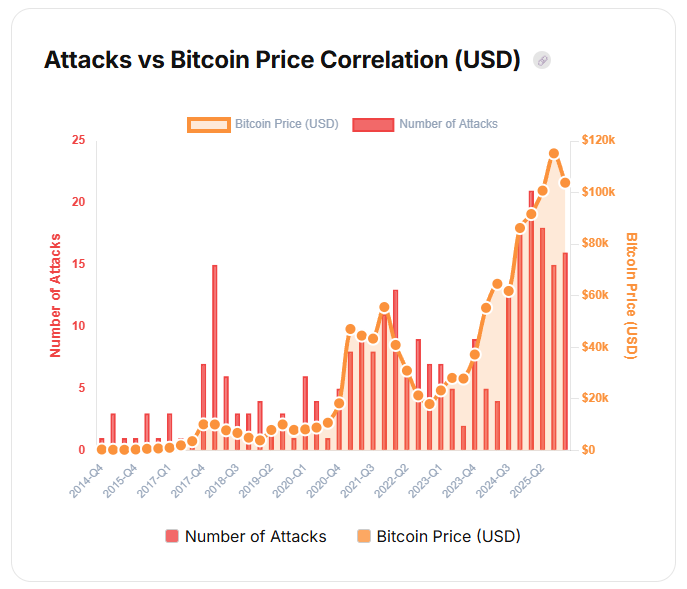
Patterns may differ by country, but worldwide the most common types are reportedly 1. kidnapping, 2. home invasion robbery, 3. street robbery, 4. social engineering and ambushes, and 5. incidents during P2P trades. (These appear to be tags, so a single incident can fall under more than one.)
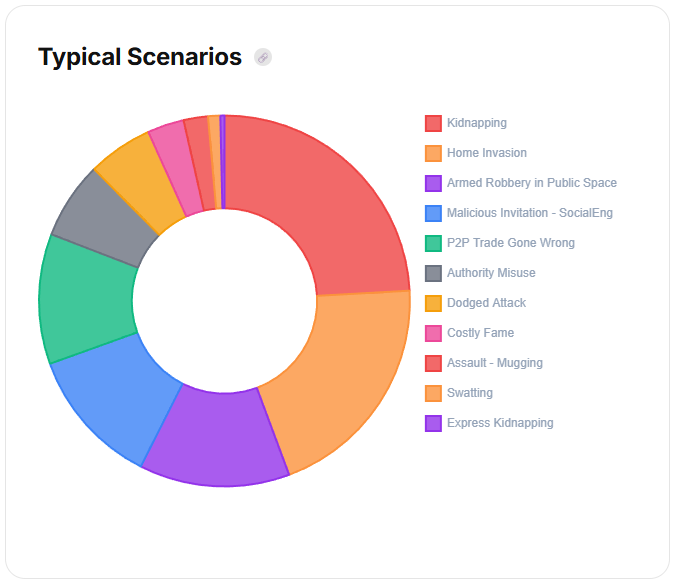
I'll leave the rest to the Glok.me website, but the situations above seem to be the main ones to prepare for.
News reports rarely distinguish between targeted attacks aimed at a specific person and indiscriminate ones, but in the interview cases in the paper mentioned above, 100% were targeted. An attacker can't go after someone's cryptocurrency without being confident they hold some, so it's reasonable to infer that most wrench attacks are targeted. In fact, many incidents involve luring the victim to a P2P trade and attacking them, going after people who bragged about being crypto-rich, or using KYC data leaked from exchanges and other services.
Family members are often targeted too, so ideally your whole family should know what follows.
Kidnapping, home invasion and street robbery
Even among targeted attacks, kidnapping takes planning, people and time, so it's unlikely to be attempted unless the criminals expect a big enough payoff. In other words, the main countermeasures are ones that raise the risks and costs from the attacker's point of view.
• Home security and your surroundings
An early call to the police is a big risk for criminals. In Japan, for example, police reportedly arrive an average of 7–8 minutes after a call, so if someone calls the moment the house is broken into, the intruders will struggle to buy enough time. That makes it important to raise the chance of an early call, for instance by installing a home security system or getting to know your neighbors. It's also important not to open the door to delivery people you weren't expecting.
You should also do what you can to keep your address from leaking, for example by using swap services that don't require KYC or setting up a separate address to use for KYC.
💡
Exchange KYC, for instance, is one source of address leaks, and kidnappings and robberies really are being carried out using this information. Some Bitcoiners highlight this risk by saying "KYC = Kill Your Customer," but for now society at large doesn't seem to see it as a problem.
Getting a guard dog is also a good idea. These measures work against home invasion robbery as well.
• Precautions when you're out
When you're out, it's important to stay alert to your surroundings and to avoid announcing your movements so no one can lie in wait for you. On social media, make a habit of posting after the fact. And, obviously, don't keep a lot of bitcoin on the devices you carry around.
There are professionals who specialize in kidnapping prevention, so taking one of their courses might be worthwhile. There's also kidnap and ransom insurance; I imagine the premiums are high, but if you fall into a particularly high-risk category, it may be worth considering.
コールド保管しているビットコインに保険をかける方法
ビットコインをコールドウォレットで保管すればサイバー攻撃からは強固に守ることができます。しかし、災害や強盗などから守るにはそれでは足りず、ビットコイナーの中にはマルチシグの活用や保管場所の分散などによって対処しているケースが少なくありません。ビットコインはいつの間にか価値が増加してきたため、今以上に貴重になっても守り抜ける保管方法が必要になります。 一部のカストディアンには保険が付属します。例えば最近リテール向けのカストディ事業を始めたBitGoは、保管している資金について2.5億ドル相当までが保険の対象となっています。(BitGoの規模からすると小さい金額ではありますが。)日本の取引所もホットウォレットの内容について規制によって弁済可能な形で自己勘定で保有することを義務化されており、保険のような何かとみなすこともできるでしょう。(こちらも資金の大半があるコールドウォレットの中身は対象外ですが。) 様々なリスクがあるビットコインの保管に保険を簡単に提供してくれる会社はありません。自分で保有するビットコインに保険をかけようと思ったらどのようにしたら良いのでしょうか?今日はいくつかのア
 加藤 規新
Ambushes and P2P trading incidents
• Avoid in-person P2P trades, or be very careful
A sizable share of incidents involve people being robbed or kidnapped when they meet in person for a P2P trade. A few years ago there was a case like this in Osaka:
大阪「タワマン」強盗“居住者”含む5人逮捕で残る謎…犯行グループの “関係性”は? | 弁護士JPニュース
「金を出せ!!」――。7月18日、午後2時25分ごろ。大阪の中心地・南海難波駅に直結した複合商業施設、『なんばパークス』敷地内のタワーマンションで仮想通貨の取引の商談中だった60代男性が襲われ、約7000万円が強取された。事件の捜査を続けていた大阪府警は…
 弁護士JPニュース編集部
This is obviously a high-risk situation, and cases of people being attacked abroad by their own compatriots stand out (Russians attacked by Russians in Thailand, for example). Don't trust someone just because they're Japanese.
If you do trade P2P, the key precautions are: don't trade with people you don't know well, don't bring more money than you need, start small and build trust gradually, meet in busy public places, don't go into closed rooms, and don't eat or drink anything.
• Don't make enemies
In 10–20% of wrench attack cases, the attacker and the victim know each other. The cases most likely to end in murder are those where a scammer is attacked by one of their victims. It goes without saying, but don't make enemies, and, once again, don't go around telling people you have money.
💡
Because such incidents are rarely reported at all, the pie chart above shows only one case, but swatting is when someone makes a false report to get a SWAT team sent after a person. It's a dangerous form of harassment, particularly in the US, and that one case is actually Hal Finney, the first person other than Satoshi to run a Bitcoin node, who was targeted in 2014.
The most effective ways to protect both your life and your assets
So, to make yourself less of a target, you need to "keep a low profile" and "raise the attacker's costs and risks," but there's more you should do. Why are bitcoin holders said to be more likely to be targeted than other kinds of wealthy people in the first place?
The likely reason is that two key characteristics:
• large sums can be moved in a short time
• stolen funds can't be frozen
make bitcoin look attractive to attackers.
With bank deposits, for example, there's a cap on how much you can transfer online, transfers can be reversed, and withdrawing stolen money without leaving a trail is a real hassle. Credit cards have limits and get frozen as soon as fraud is suspected. Brokerages check the name on the bank account you withdraw to. In this way, these assets have a kind of "inconvenience" that bitcoin doesn't, and it serves as a barrier to theft.
💡
The attack that ran rampant at Japanese brokerages this year, where accounts were hijacked through phishing and then used to buy junk Chinese stocks, was groundbreaking in that it could effectively shift large sums into another account in a short time. With bitcoin, criminals can easily take everything without going to such lengths.
So what can you do? The answer is to impose the same kind of restriction ordinary assets have: use technical means to cap how much even you, the holder, can send.
For example, some services built on a 2-of-3 multisig between "the user," "the user's backup (at a remote location, in a safe deposit box, etc.)" and "the service provider" let the provider enforce a maximum amount that can be sent every 24 hours. Bitkey lets you set a 24-hour limit on how much can be spent without the hardware wallet. Frostsnap has a similar feature, and wallets like these are becoming more common.
Bitkey Bitcoin Wallet | Secure Wallets | Bitkey
A bitcoin wallet to own your private keys. Bitkey includes an app, hardware wallet, and recovery tools in case you lose your phone, or hardware, or both.
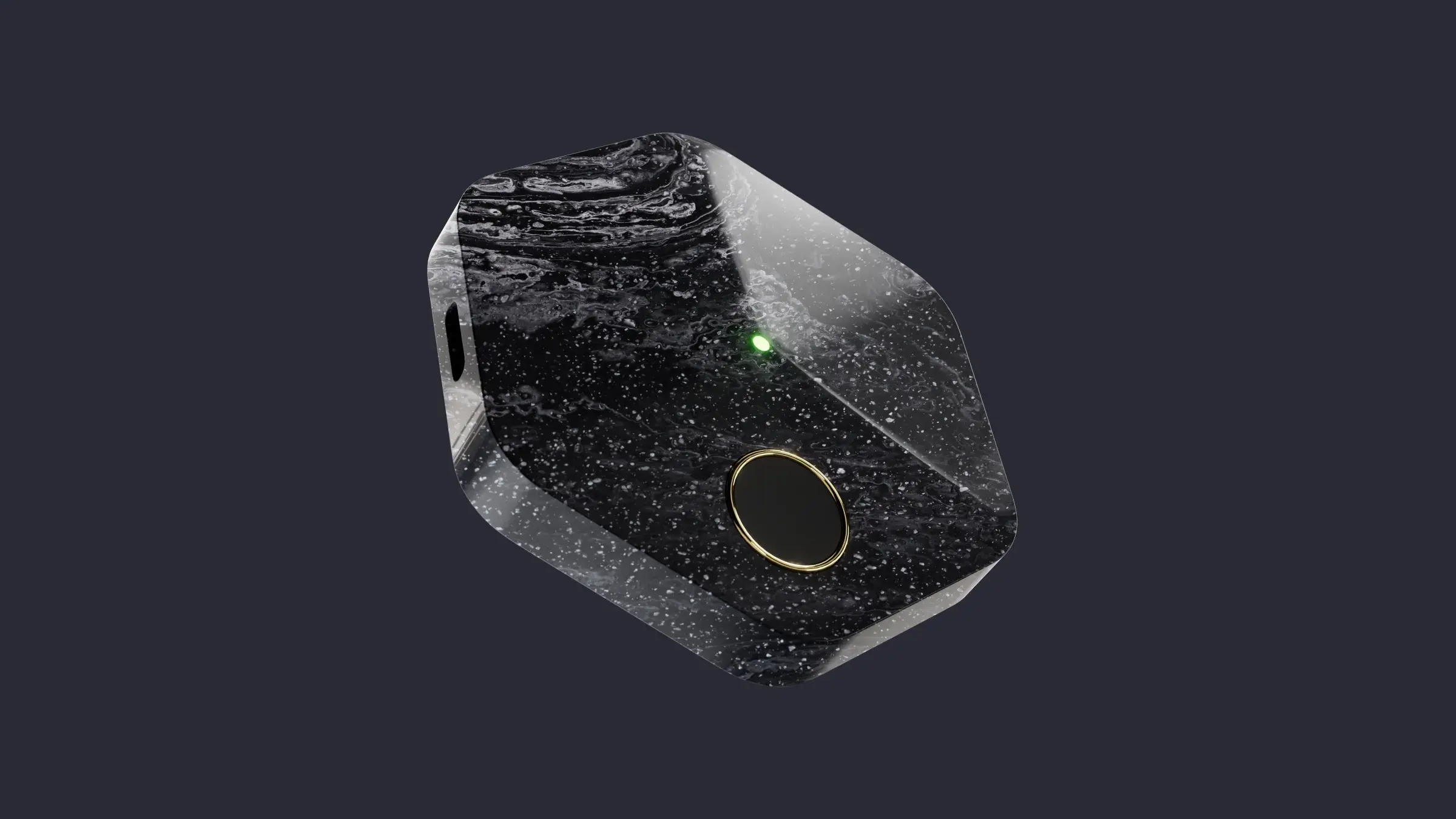
In that case, of course, it's important to keep the Bitkey device itself, which can bypass the limit, somewhere else and only fetch it when you need it. There are other approaches too, such as setting up a geographically distributed multisig so your main wallet can't be used without traveling. If you create a situation where you "can't move most of your funds on your own right away," you won't have to risk lying to criminals in a dangerous situation.
In that case, using something like a staffed safe deposit box, so that moving funds always means meeting other people, makes it less likely that criminals will take you there by force, and is more secure.
For more on how Bitcoiners can make use of safe deposit boxes, see our earlier article.
ビットコイナーは貸金庫とどう付き合うべきか
三菱UFJ銀行の練馬支店と玉川支店における行員による貸金庫の中身の窃盗事件が話題になっています。 三菱UFJ銀行元行員 貸金庫予備鍵で10数億円相当窃取か|NHK 首都圏のニュース【NHK】三菱UFJ銀行の行員が支店の貸金庫から10数億円相当の金品を盗み取っていた問題で、この行員は顧客用の鍵のスペアキーを使って貸金庫を開けてい…NHK NEWS WEB日本放送協会 貸金庫というサービスはマルチシグの鍵を保管したり、シードフレーズのバックアップを保管するためにビットコイナーなら利用を検討したことがある方も少なくないと思います。その貸金庫に対する信頼が今回の事件で揺らいでいますが、ビットコイナーが貸金庫を利用する上での注意点を考えていきましょう。 ・貸金庫のセキュリティは様々 ・内容物が見られる可能性は低いが、常にある ・ビットコイナーが自衛する方法
加藤 規新
💡
Exchanges may let you set something like withdrawal limits, but those are meaningless if a physical attacker takes your email account and 2FA methods along with everything else, so keeping large sums on an ordinary exchange isn't a countermeasure. If anything, it can lead to longer captivity and a greater risk of harm.
About decoy wallets
A decoy wallet is a "dummy wallet you can open by deliberately making a 'mistake'" when you're being forced to open your wallet. The idea is that by keeping a small amount of bitcoin in it, you can hide your main wallet. You open it by, for example, entering a different passphrase from the usual one.
The problem with decoy wallets is that in a targeted attack you don't know how much the attacker knows about your holdings, so if they see through it you risk enraging them. It might succeed in protecting your main wallet, but to go back to the xkcd comic, this is a first-panel kind of defense, so I don't recommend it. If you're interested, the article below explains it in detail.
デコイウォレットは本当に危機回避に役立つのか?
保管しているビットコインを守る方法として地理分散マルチシグ、マルチシグ支援サービス、取引所に分散させての保管、ホームセキュリティの強化やプライバシーの維持など、様々な試みを行っているビットコイナーがいます。その目的は多くの場合、デジタルな脅威の他に、昨年多発して世の中を騒がせた強盗事件のような物理的な脅威にも対抗することを見据えています。 上で挙げた対策例以外に「デコイウォレット」(Decoy WalletあるいはDuress Wallet)と呼ばれる機能があり、これを搭載したウォレットがいくつかあります。例えば人気ハードウェアウォレットのColdcardにおいては、ウォレットをアンロックするときに実際のPINコードの代わりに「デコイ用PINコード」を入力することで別のウォレットを開くことができます。仮に強盗などに遭った場合、このウォレットに入った資金を強盗に渡して本丸を守る、という戦略に使う想定です。スマホで広く利用されているBluewalletなどにも“Fake Wallet”として同様の機能が搭載されています。 しかし実際のところデコイウォレットは盗難対策として役立つのでしょ
加藤 規新
Will wrench attacks keep increasing?
As the chart earlier shows, wrench attacks are increasing along with Bitcoin's price and adoption. The serial kidnappings in France were organized crimes much like Japan's yami baito cases, and the fact that stolen funds can easily be sent to a mastermind abroad can make for the worst possible combination with this new kind of organized crime.
So what would stop wrench attacks from increasing? The key is to make them less lucrative for criminals.
For example, if the "storage that can't be moved freely" described above becomes common, attacking bitcoin holders won't pay off much, and robbing them will no longer offer an attractive risk-reward ratio compared with other assets. More cases of bitcoin holders arming themselves and fighting off robbers would probably act as a deterrent too.
In March of this year, for example, after a well-known streamer publicly said she held over 200 BTC on Coinbase, three armed men came to rob her home in the US, and her husband fought them off with a gun, a case that drew a lot of attention.
I don't necessarily recommend getting a weapon, since it increases the risk of harm for criminals and victims alike, but if attacking bitcoin holders became meaningfully dangerous, there would likely be fewer incidents.
Low-risk, high-return cases like "shook someone down for 10 BTC, easy" raise the risk for every bitcoin holder, so the best countermeasure of all is for as many holders as possible to tighten their security and to set things up so that even they can't send funds in a short time.
Summary
• Wrench attacks are on the rise. As Bitcoin's price climbs and public awareness grows, crimes targeting bitcoin holders may keep increasing
• Common countermeasures include home security, privacy, staying alert when you're out and avoiding in-person P2P trades
• One reason bitcoin holders are targeted is that large sums can be sent in a short time, so it's important to create a situation where you "couldn't move your funds quickly even if you wanted to," by using wallets that cap how much can be sent within a set period and keeping large holdings in a geographically distributed multisig combined with safe deposit boxes or similar
• If measures like these become common, bitcoin holders could become less attractive targets than they are today