Why Electrum Rejects BIP39 and How Its Seed Phrases Work

This article was translated from Japanese with AI. Read the original (日本語) · Report a translation issue
A seed phrase is generally a sequence of 12 or 24 words used as a backup for a wallet. The specification that defines it is BIP39.
bips/bip-0039.mediawiki at master · bitcoin/bips
Bitcoin Improvement Proposals. Contribute to bitcoin/bips development by creating an account on GitHub.
 bitcoin
BIP39 was proposed primarily by SatoshiLabs, and today many wallets follow it to turn their wallet backups into human-readable seed phrases.
But did you know there is a wallet called Electrum that goes against this standard and derives seed phrases its own way?
Electrum Bitcoin Wallet
Electrum is one of the most popular Bitcoin wallets, in continuous development since 2011. Fast, secure and open source, for Windows, macOS, Linux and Android.
 Electrum Technologies GmbH

💡
Don't download it from the link above. Instead, download it from a source such as the official GitHub and verify the GPG signature (which confirms that the executable hasn't been tampered with).
Electrum is a software wallet announced by Thomas Voegtlin on November 5, 2011, and it runs on Linux, Windows, macOS and Android.
Its defining feature is that it is a "light client" that can be used without syncing the entire blockchain. It receives the information it needs from Electrum servers and verifies transactions by checking them against block headers.
Electrum has a distinctive design philosophy that in many places gives up compatibility with other wallets, and it remains enduringly popular among longtime Bitcoiners.
This article explains why Electrum criticizes BIP39 and derives seed phrases using its own standard, and how that derivation works.
Note that this article does not try to decide whether Electrum's standard or BIP39 is better. It focuses on the differences in their design philosophies.
Why Electrum's developer criticizes BIP39
First, to avoid any misunderstanding, here is the timeline: Electrum's seed phrase derivation was implemented about two years before BIP39 was written. In other words, Electrum standardized seed phrase derivation first. Electrum's implementation was later used as a reference when BIP39 was being drafted.
However, Electrum's developer, Voegtlin, pointed out that BIP39 had the same flaws as early versions of Electrum, and those flaws were never fixed.
That is why Electrum derives seed phrases in its own way, incompatible with BIP39. So what were the flaws Voegtlin pointed out? Below, I break his criticism of BIP39 down into two reasons.
Reason 1: "Wordlist independence" is only half implemented
Background: what a wordlist is
First, a quick explanation of wordlists. If you already know this, feel free to skip ahead to the next section. For a more detailed explanation, see Kishin Kato's article.
セルフカストディは最初が肝心|サイコロ・トランプで安全なシードフレーズを生成する実践ガイド
Coldcardの乱数生成における脆弱性を受けて関心が集まっている、サイコロやトランプによるBIP39シードフレーズの生成について、その安全性の根拠となる数学とともに、実際の生成手順を紹介します。その上で、機械に生成させたエントロピーと比較したトレードオフについても解説します。
 加藤 規新

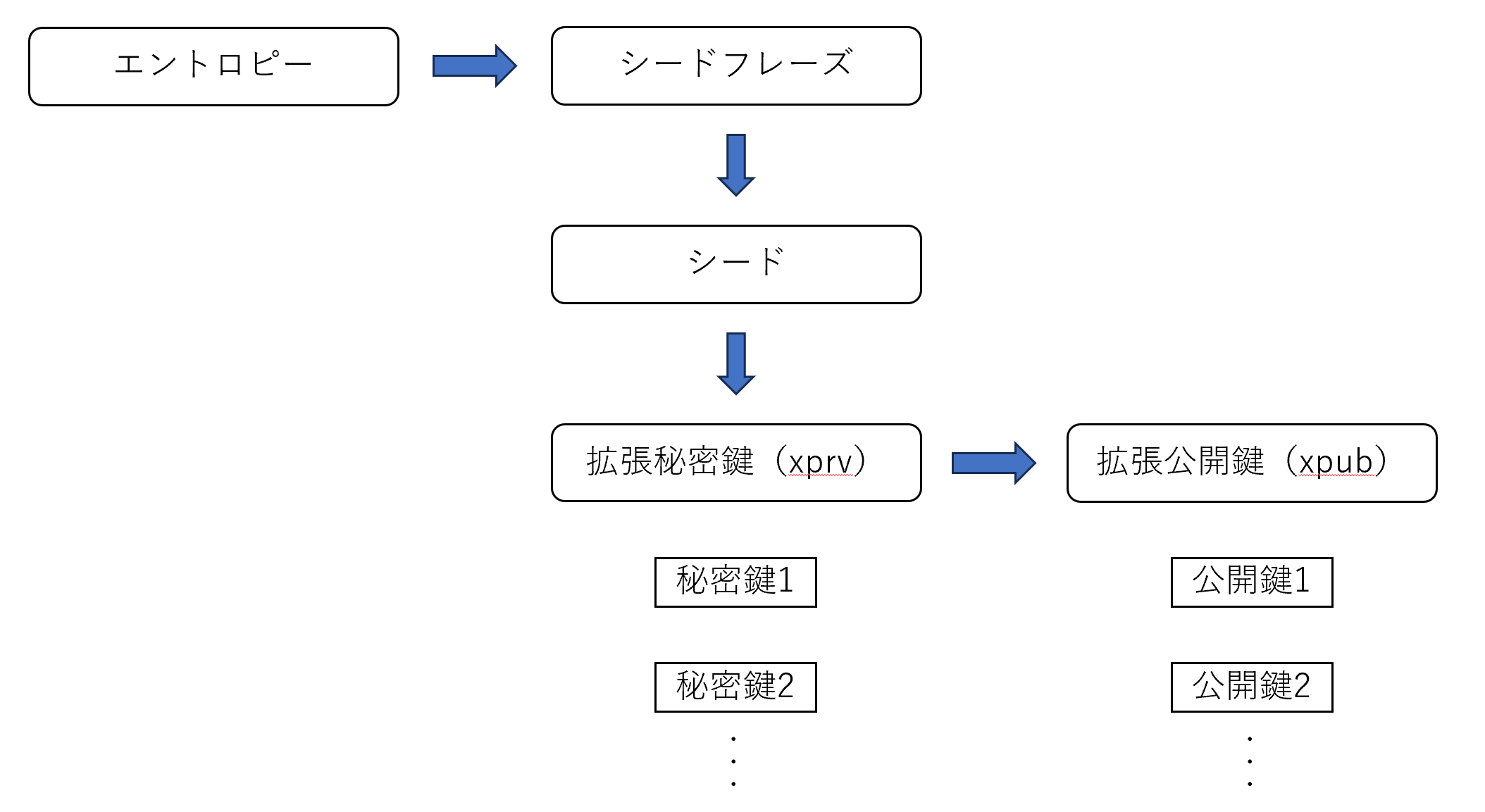
In Bitcoin, public keys, private keys and addresses are derived from a random number (entropy) generated by a person or a wallet. If you lose this random number (entropy), you lose access to your bitcoin, so it has to be stored carefully.
However, the random number (entropy) is expressed as a binary number of 128–256 bits, which makes it hard for people to handle. So the random number is split into 11-bit chunks, and each number is mapped to a word. That mapping is the "wordlist."
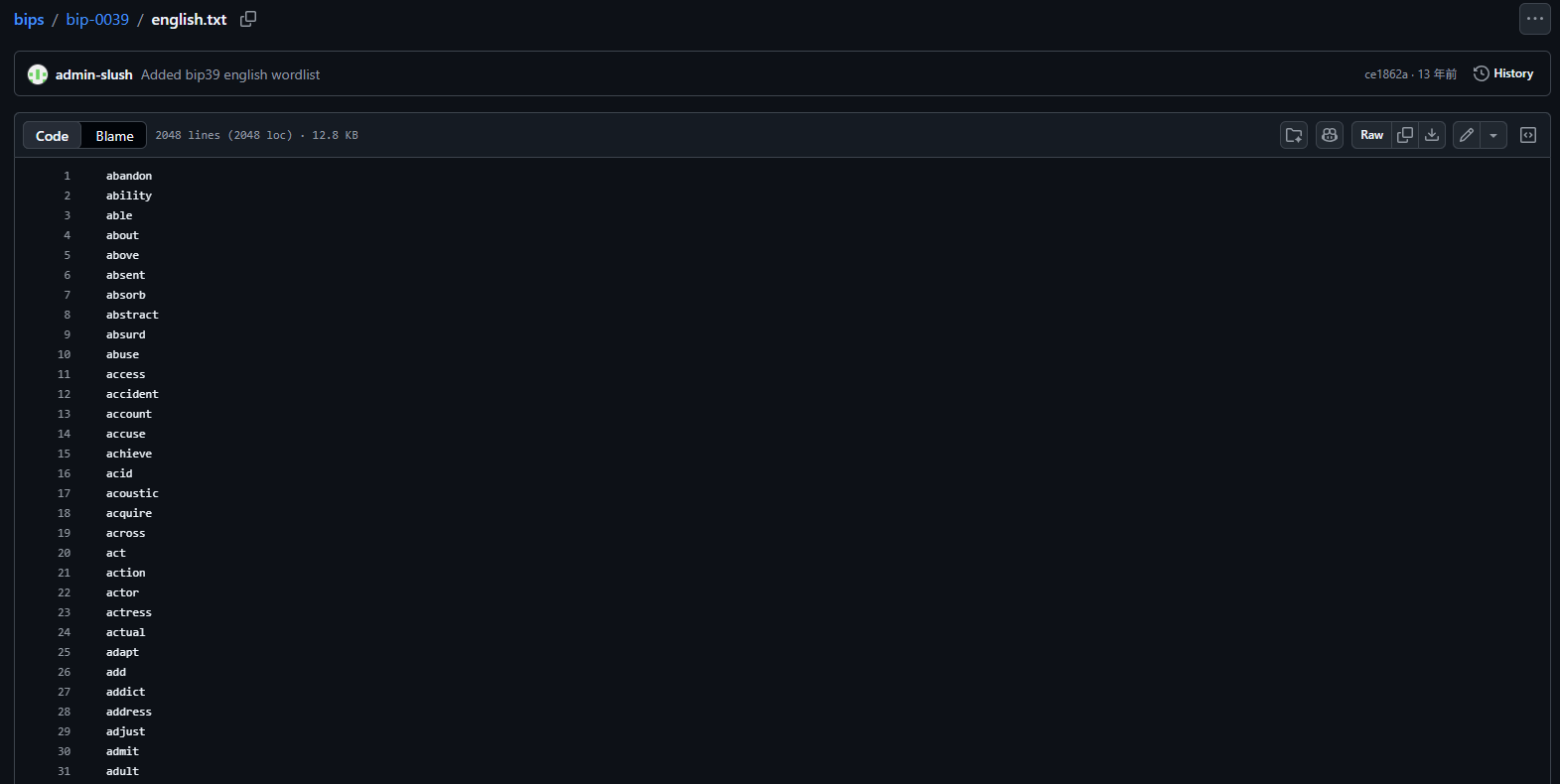
A 128-bit random number (entropy) can be converted into 12 words, and a 256-bit random number (entropy) into 24 words.
Electrum's philosophy on wordlists and how BIP39 implements it
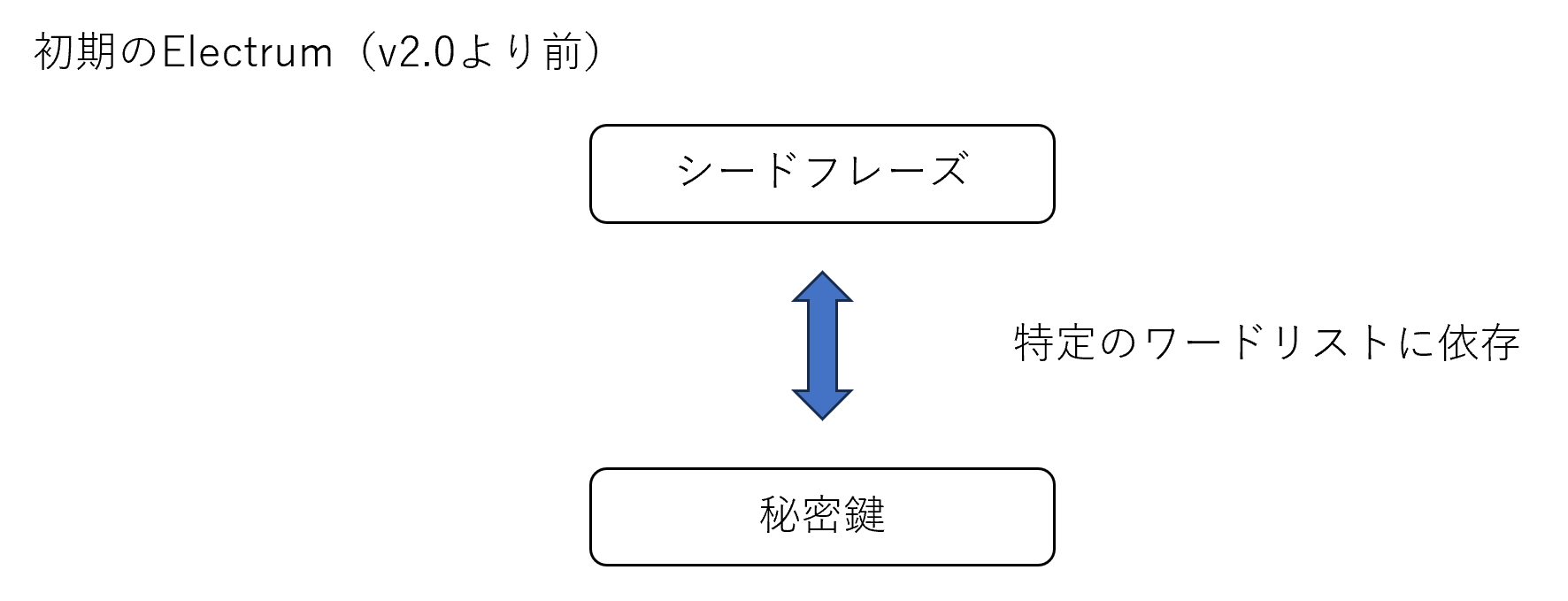
Early Electrum (before v2.0) linked the seed phrase and the private key through a two-way encoding, so its design depended heavily on a specific wordlist.
If you depend on a wordlist, wallets and similar software have to keep that specific wordlist forever. For example, if the wordlist changes in a firmware update, the wallet may end up showing a "0 balance."
Having learned from this, Electrum recommended that key and address derivation should not depend on the wordlist, and BIP39 was implemented following that recommendation.
💡
Electrum also uses exactly the same wordlist as BIP39 to derive a seed phrase from entropy. In other words, there's no problem with having a wordlist when deriving a seed phrase from entropy.
What Electrum argues is that by designing things so the wordlist isn't consulted when the seed phrase is used, changes to the wordlist or its loss stop being a problem.
What Electrum argues is that by designing things so the wordlist isn't consulted when the seed phrase is used, changes to the wordlist or its loss stop being a problem.
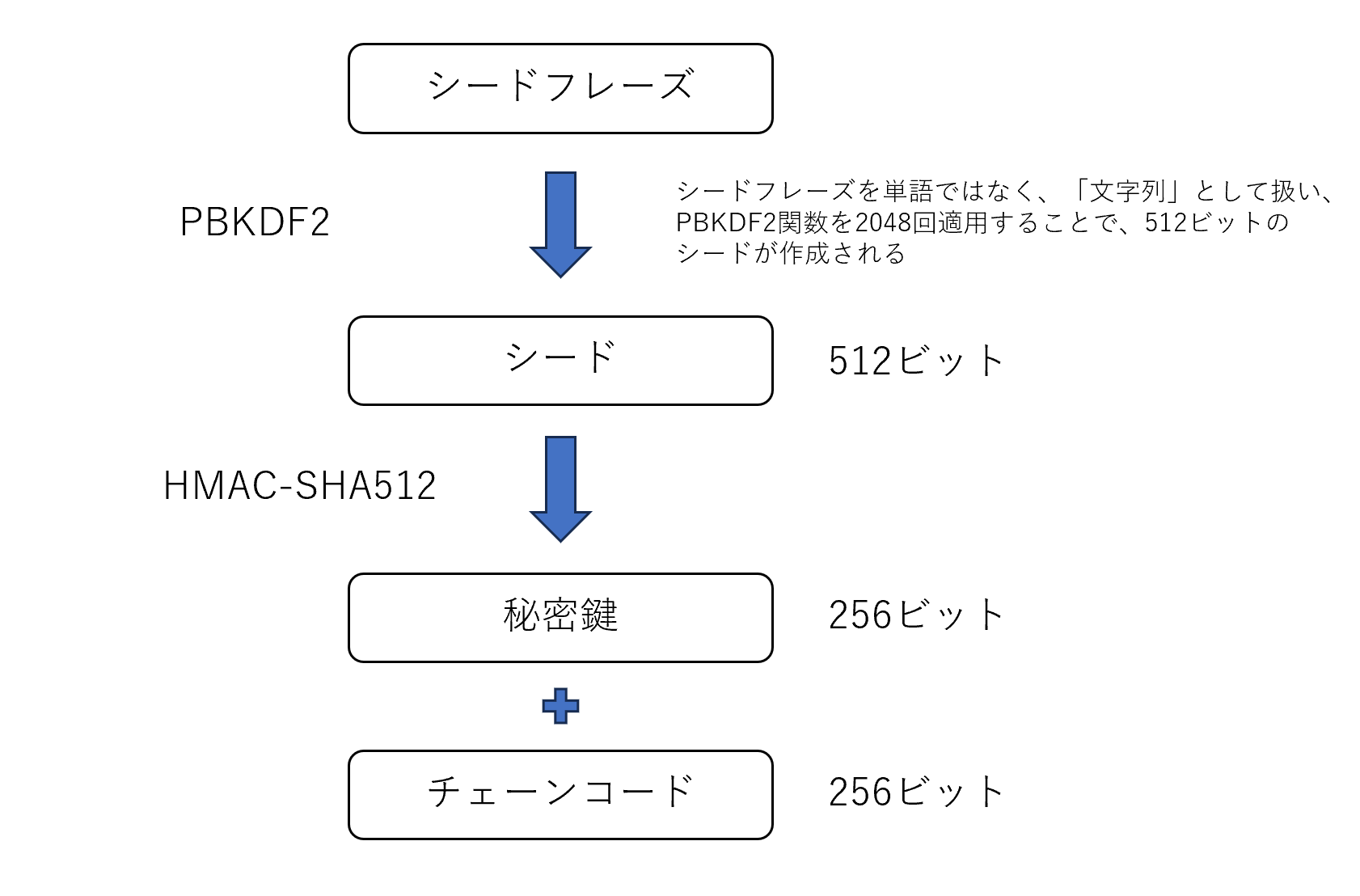
Following Electrum's recommendation, BIP39 feeds the seed phrase into the function as a "string" rather than as "word index numbers," and generates a 512-bit seed (key). So not only can a 12–24 word string like "solution truth expose ..." be used, but so can a meaningless string like "abcdefg." As a result, no wordlist is needed at the point where the seed is generated.
💡
Real wallet software performs checksum verification, so a standalone string like "abcdefg" would normally be rejected as an invalid seed phrase. The point is that PBKDF2, as a function, can take any string.
However, BIP39 needs the wordlist to verify the checksum. Specifically, it uses the wordlist to work backward to the binary value of the entropy and then checks the checksum. This means that every time you restore from a seed phrase, you need the wordlist that was used to generate it.
Voegtlin points out that this clearly contradicts the recommendation and undermines the very goal of wordlist independence.
Electrum also has a way to check whether a seed phrase is valid: it hashes the 12-word string (HMAC-SHA512) and checks the first 2–3 characters of the hash (hexadecimal, 8–12 bits). So no wordlist is used during verification. I'll go into the details later in "Reason 2: No version number is included."
On top of that, BIP39 specifies a separate wordlist for each language, which makes the wordlist dependency problem even worse.
For example, a wallet that only stores the English wordlist can't verify the checksum of a Japanese or Italian seed phrase; to support them, it has to store the Japanese and Italian wordlists too. With Electrum, by contrast, even a wallet that only stores the English wordlist can restore seed phrases in multiple languages, as long as it has an input UI for those languages.
In addition, if a wallet automatically detects the language of a seed phrase, a phrase that happens to consist only of words shared by the English and French lists (100 words) could be misidentified, causing the checksum to fail. Critics also point out that every time a new language list is added, all existing wallets end up lacking support for it.
So the argument goes: if you've designed key derivation from the seed phrase to be wordlist-independent, isn't it pointless unless you go all the way and make checksum verification during restoration wordlist-independent too, rather than implementing it halfway?
Reason 2: No version number is included
Since v2.0, Electrum has been designed to include a "version number" in the seed phrase that indicates which scheme should be used to derive addresses.
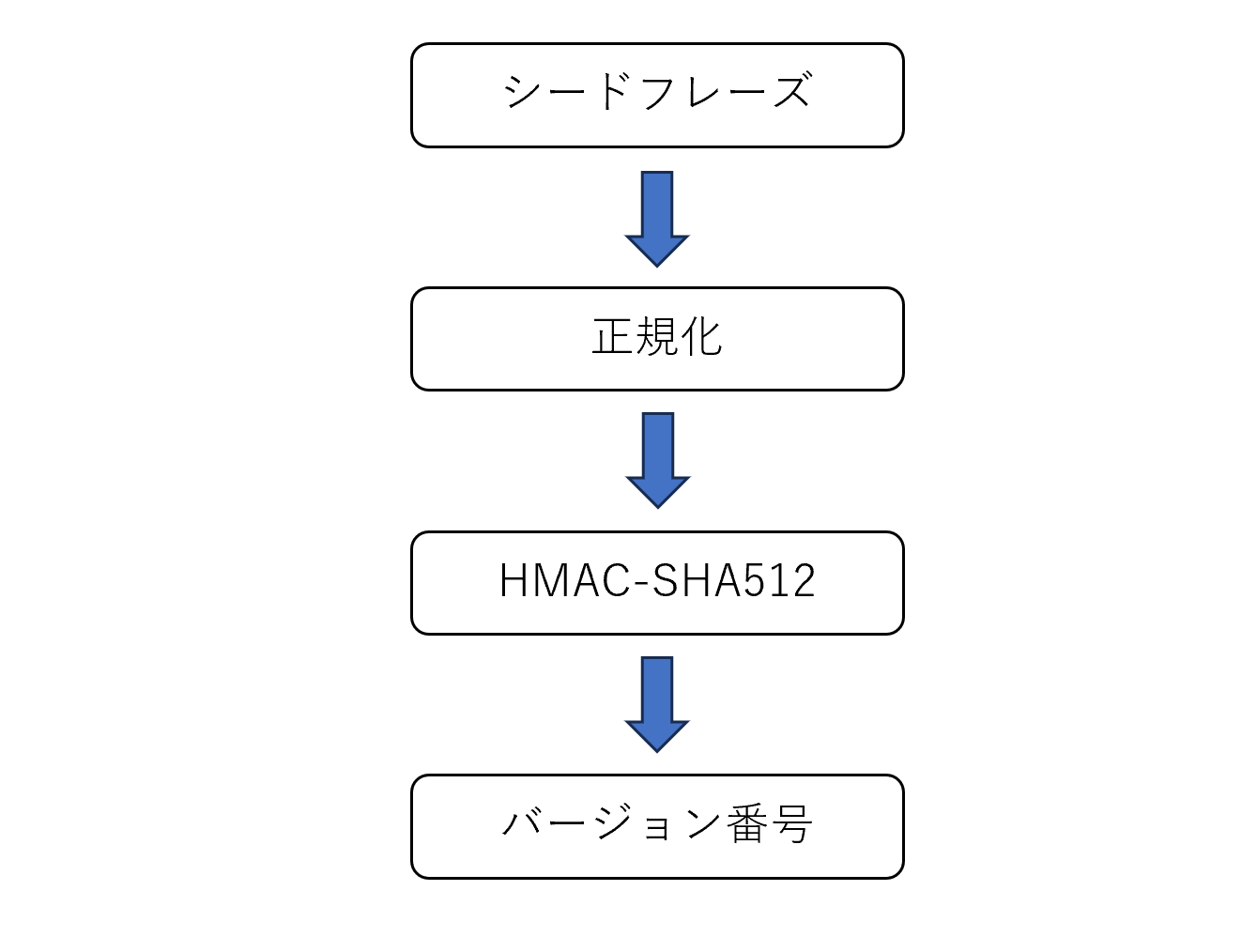
Specifically, the seed phrase (12 words) string is hashed, and the version can be verified by checking the prefix (the leading value). At the same time, this also works as an integrity check on the seed phrase itself (acting as a checksum: a correct seed phrase produces a registered version number).
Below is a table of the version numbers.
| Version number | Type | Description |
|---|---|---|
| 0x01 | Standard | P2PKH and multisig P2SH wallets |
| 0x100 | Segwit | SegWit: P2WPKH and P2WSH wallets |
| 0x101 | 2FA | Two-factor authentication wallets |
💡
To the entropy police
If the seed phrase is manipulated so that the version number comes out as a specific value, some of you may worry that this reduces entropy.
According to the official explanation,
Electrum acknowledges a downside: because of the version number, an attacker testing candidate seed phrases can immediately discard invalid ones without performing the expensive key derivation. However, an operation called "key stretching," which applies the hash function many times, reportedly adds about 11 bits of strength.
In other words, Electrum's standard 12-word seed phrase has the equivalent of 132 bits of entropy, and 2,048 rounds of key stretching add 11 bits. Even after subtracting the 12 bits of entropy taken up by the version number (Segwit), the effective strength is 131 bits.
Also, knowing the version number does not shrink the search space for the seed phrase, so there's no need to worry about it lowering security.
BIP39, on the other hand, does not include a version number in the seed phrase. (The information it contains is entropy + checksum.)
Without a version number, the software can't tell how keys and addresses should be generated from the seed phrase, so Electrum's point is that restoring a wallet requires scanning every address format, which is inefficient.
Also, if a new wallet has dropped support for older address formats, there remains a risk that entering the seed phrase will show a "0 balance" because that format isn't implemented.
With a version number, even if support has been dropped, the software can recognize that the version number doesn't match, so it shows "unsupported wallet" instead of "0 balance." This is said to reduce the risk of users seeing a 0 balance, mistakenly thinking they've lost their funds, and panicking.
This problem was later addressed by BIP380, which stores a string that identifies the address type (a descriptor) separately from the seed phrase. BIP380's mediawiki page also contained text criticizing Electrum's implementation, suggesting that introducing a version number was a layer violation (key derivation and script identification should be kept separate).
You can see how differences in philosophy have led the two implementations to part ways.
Summary
Electrum implemented its seed phrase scheme before BIP39, and drawing on that experience, its developer, Voegtlin, criticizes BIP39 on two points.
First, while BIP39 claims "wordlist independence," it still ends up using the wordlist for checksum verification. Second, because the seed phrase contains no version number, restoration can be inefficient, and misleading displays such as "0 balance" could confuse users.
I hope criticisms like these have given you a glimpse of how Electrum and BIP39, though both deal with "seed phrases," are implemented on the basis of different design philosophies.
In terms of adoption, BIP39 seems to be in the lead, but I think users should simply use whichever wallet they prefer, with these philosophical differences in mind.
Also, as the recent ColdCard incident shows, I recommend not concentrating your funds in a single wallet, but spreading them across several different wallets.