Bitcoin FUD Explained: 12 Common Myths and the Facts

This article was translated from Japanese with AI. Read the original (日本語) · Report a translation issue
Even now, in its 17th year, Bitcoin continues to face the same criticisms and misconceptions over and over again.
"It's bad for the environment." "It's used by criminals." "It's a pyramid scheme." "It'll eventually go to zero." Claims like these are known as FUD (Fear, Uncertainty, Doubt), and they are one of the biggest obstacles to understanding Bitcoin properly.
In this article, we take 12 of the most common pieces of FUD about Bitcoin and look at what's actually true in each case.
If you've just started getting interested in Bitcoin, or you've been unsettled by negative opinions from people around you, we hope this gives you what you need to judge for yourself with a clear head.
What Is FUD?
FUD is an acronym formed from Fear, Uncertainty, and Doubt.
The term originally came from the IT industry, where it described negative campaigns against competing products. In the context of Bitcoin, it refers to poorly grounded criticism and negative claims based on misconceptions.
What makes FUD tricky is the way it takes a partial truth and stretches it into a verdict on the whole. Let's go through the 12 most common examples one by one.
FUD #1: Bitcoin Is Bad for the Environment
The claim is that "Bitcoin mining consumes huge amounts of electricity and is causing environmental destruction." This may well be the piece of FUD you hear most often.
Reality: You have to look at where the energy comes from and what it's used for
It's true that mining consumes electricity. However, the share of renewable energy used has been rising year after year, and some studies put it at over 50%. Efforts to redirect surplus power and flare gas (associated gas from natural gas production) into mining are also advancing, and mining is drawing attention as a way to make productive use of energy that would otherwise simply be wasted.
It's also essential to compare this with the energy consumption of the traditional financial system: maintaining bank branch and ATM networks, running massive data centers, and even printing and transporting banknotes. Rather than singling out Bitcoin's electricity use in isolation, it's important to compare it with the existing system as a whole.
We cover the relationship between mining and energy, as well as the debate over the environmental impact of data centers, in more detail in the articles below.
データセンターは電力だけでなく「水」も消費しているのか? | ビットコインマイニングとの関係
AIの計算を行うデータセンターについて、大量の水資源を消費しているという批判があります。この記事では、データセンターによる水資源の利用や地域環境への影響を評価し、ビットコインマイニングにも同じ批判が寄せられた場合に正しく判断するための材料を提示します。
 加藤 規新

FUD #2: Bitcoin Is Used for Crime
The criticism is that "Bitcoin is highly anonymous and has become a breeding ground for money laundering and crime." Early impressions, such as its use on the dark web, still linger.
Reality: It's easier to trace than cash
Bitcoin's blockchain makes the entire transaction history public. It is "pseudonymous," not "anonymous": once an address can be linked to a person, every past transaction can be traced.
Thanks to the improving technology of blockchain analysis firms, there are many cases of law enforcement tracing Bitcoin transactions and arresting criminals. Illicit use is said to account for only a tiny fraction of all cryptocurrency transactions, and the scale is orders of magnitude smaller than money laundering in fiat currency (cash).
While criminal funds are easy to trace, protecting your own privacy also matters. The article below is a useful resource on the relationship between chain analysis and privacy.
チェイナリシスは何を見ている?ビットコイン送金のプライバシー漏洩ポイントと守り方
ビットコイン送金のプライバシーはどこまで見られている?チェイナリシスなど解析企業が使う関連付け手法と、一般ユーザーが取れる具体的な対策を解説します。
加藤 規新
FUD #3: Bitcoin Gets Hacked
This is the fear that "Bitcoin can be hacked and stolen." News coverage of past exchange hacks has had a big influence here.
Reality: The network itself has never been tampered with
The key distinction here is that what got hacked was not the Bitcoin network (the protocol) but the services around it, such as exchanges and wallet services.
Since it went live in 2009, Bitcoin's blockchain has never once been tampered with. Its uptime exceeds 99.99%, making it one of the most robust computer networks in the world.
The Mt. Gox incident (2014) and the DMM Bitcoin incident (2024) were exchange security problems. Just as a bank being robbed doesn't mean there's something wrong with how the Japanese yen works, these hacks say nothing about Bitcoin itself.
To protect your own assets, managing your private keys properly is essential. We explain how to store your seed phrase in the article below.
【決定版】シードフレーズの安全な保管方法|NG例から分散管理まで
ビットコインのシードフレーズの安全な保管方法を、やってはいけないNG例(デジタル保存)から、紙/金属への手書き記録・物理分散・PIN保護の基本までわかりやすく解説。さらに不安な人向けにパスフレーズ、マルチシグ、シャミア秘密分散の強化策を紹介し、リスクに強い現実的な運用設計を提案します。
三倉 大司
FUD #4: Bitcoin Is a Pyramid (Ponzi) Scheme
The criticism goes: "Bitcoin is a system where early participants profit from the money of those who join later, so it's the same as a pyramid or Ponzi scheme."
Reality: It doesn't fit the definition of a Ponzi scheme
A Ponzi scheme is a fraud in which money from new investors is used to pay "returns" to existing ones. Bitcoin has no operator, and nobody is promising any returns.
Every transaction is transparently recorded on the blockchain, and there is no mechanism that automatically distributes new participants' money to existing participants.
Bitcoin's price is determined by supply and demand in the market. This is the same market principle that governs stocks and gold.
💡
A Ponzi scheme collapses once its operator disappears, but Bitcoin has kept running for more than 17 years without its creator, Satoshi Nakamoto.
FUD #5: Bitcoin Has Nothing Backing Its Value
The criticism is that "Bitcoin has no substance and nothing backing it. It's like thin air." Unease about not being able to physically hold it may also play a part.
Reality: It's backed by math, energy, and a decentralized network
First of all, today's fiat currencies don't have any clear backing either. Since the Nixon Shock of 1971, the major currencies have left the gold standard, and the value of fiat currency depends on the creditworthiness of the issuing country.
What supports Bitcoin's value is the mathematical scarcity of its 21 million coin supply cap, the enormous computing resources (energy) poured into mining, and the network effect of tens of thousands of nodes spread across the globe.
FUD #6: A 51% Attack Will Be the End of Bitcoin
This is the fear that "if someone controlled the majority of the network's computing power, they could take over Bitcoin." The more technical knowledge you have, the more this point may concern you.
Reality: The cost is astronomical, and even a successful attack gains almost nothing
A 51% attack is an attempt by a single entity to control the majority of the hashrate and use it to confirm fraudulent transactions. It's possible in theory, but the hashrate is currently at an all-time high, and the cost of assembling enough computing power to exceed it would be astronomical.
Even if such an attack succeeded, the most it could achieve is a double spend of the attacker's own transactions. It could not seize other people's bitcoin or change the supply cap. On top of that, once an attack came to light, the price would fall, destroying the value of the attacker's own holdings and equipment. Spending enormous sums on an attack simply doesn't pay off economically.
In addition, Bitcoin is a decentralized network whose rules are upheld by the consensus of its participants. Even if someone attempted an illegitimate change, the chain would split if the community refused to accept it, and the side that keeps the legitimate rules would survive.
We explain how forks and consensus work in more detail in the article below.
フォークする権利と、ビットコインの価値
本稿の読者の中にどれくらい視聴者がいらっしゃるかわかりませんが、今月からビットコイナー反省会のレギュラーになりました。先日の放送で視聴者から寄せられた質問に「国家等が51%攻撃して不正なトランザクションを含むチェーンを伸ばしたらハードフォークするのか?」というものがありました。 これは表面的には国家による攻撃ベクトルの検討、あるいはノードがトランザクションやブロックをどのように扱うかについての質問ですが、この質問への回答を考えるとビットコインの本質に突き当たるように感じたので今日はビットコインでなぜフォークが発生するのか、そしてフォークできることがなぜ本質的に重要なのかについて書きます。 💡ちなみに冒頭の質問に対する私の回答をまとめると「不正なトランザクションが含まれるのであれば正常なノードは認めないから国家のノードがハードフォークした形になる」になります。 Don’t Trust, Verify ビットコイナーがよく使うスローガンで一番有名なフレーズかもしれないDon’t Trust, Verifyというものがあります。和訳は「信用せず検証すべし」、でしょうか。 ビット
加藤 規新
FUD #7: Quantum Computers Will Break Bitcoin
The concern is that "once quantum computers become practical, Bitcoin's cryptography will be easily cracked." It comes up every time there's news about progress in quantum computing.
Reality: Today's machines are far from powerful enough, and it's a challenge for the entire internet
Breaking Bitcoin's elliptic curve cryptography is said to require millions of qubits, whereas current technology is at the level of a few thousand. Moreover, this problem isn't unique to Bitcoin: it applies to all digital security, including online banking and e-commerce.
Standardization of post-quantum cryptography is already underway internationally, and quantum resistance is being actively discussed for Bitcoin as well. Just as SegWit and Taproot were introduced in the past, Bitcoin can be upgraded as needed.
A particularly common misconception is that quantum computers are all-powerful parallel computing machines. We'd encourage you to start by getting an overview of what quantum computers actually are.
量子コンピュータとは?万能な並列計算機ではない5つの理由
量子コンピュータは「並列計算マシン」ではありません。測定で1つの答えしか得られない、ノークローン定理、量子干渉の仕組みなど、5つの理由から量子コンピュータの本質を解説。万能な計算機という誤解を解きます。
三倉 大司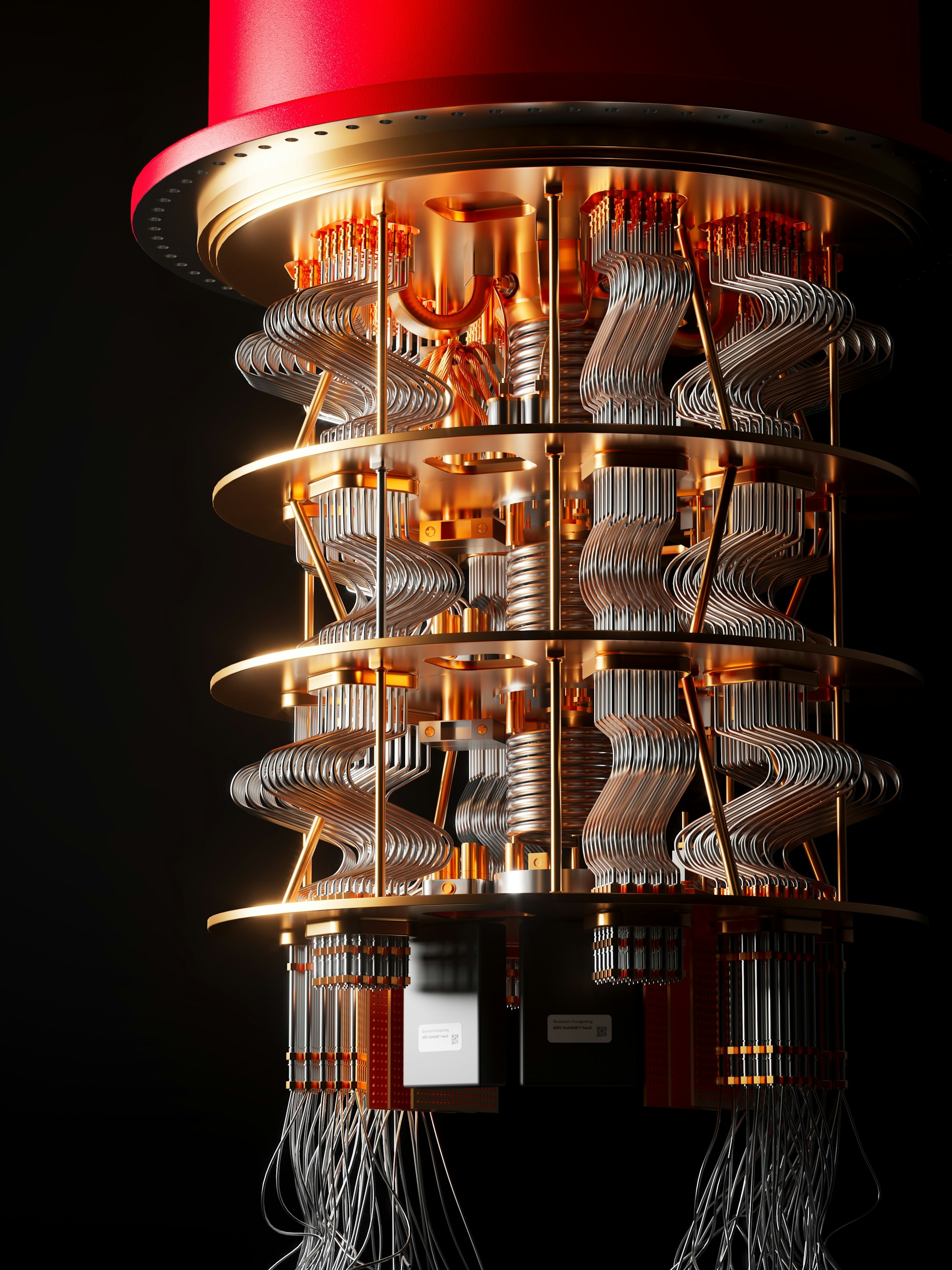
FUD #8: If Governments Ban Bitcoin, It's Over
This is the fear that "if governments make Bitcoin illegal, it will become unusable." China's total ban is often cited.
Reality: Completely shutting down a decentralized network is extremely difficult
China made cryptocurrency trading entirely illegal in 2021, but people have kept using it through VPNs and P2P trading since the ban. Bitcoin is open source and decentralized, so as long as you have an internet connection, you can send transactions from anywhere in the world.
Looking at developments around the world, from the US approval of Bitcoin ETFs and the EU's MiCA regulation to oversight by Japan's Financial Services Agency (FSA), developed countries are moving toward bringing Bitcoin into their regulatory frameworks rather than banning it. Even if one country bans it, it's unrealistic for every country to follow suit, and countries that ban it end up handing innovation and economic opportunity to others.
FUD #9: Bitcoin Is Tulip Mania
The claim is that "Bitcoin is tulip mania all over again, and its value will eventually go to zero." It resurfaces every time the price rises or falls.
Reality: It has recovered every time with higher lows, unlike a typical bubble
It's true that Bitcoin has suffered drops of 70–80% several times in the past. But classic bubbles like tulip mania or the South Sea Bubble never recovered after they burst. Bitcoin, by contrast, has set a higher low in each cycle and gone on to reach new highs.
Since the approval of spot Bitcoin ETFs in 2024, major asset managers such as BlackRock and Fidelity have entered the market, and Bitcoin can be considered to have entered a phase different from a speculative bubble.
Incidentally, in the Netherlands, waste heat from Bitcoin mining is being used to grow tulips. Given how often Bitcoin is compared to tulip mania, I find it an amusing initiative.
マイニング排熱の活用事例 | 家庭用マイニングヒーターは採算が取れるのか?
ビットコインのマイニングで発生する排熱を、産業用途や家庭用に活用している事例を紹介。排熱を他の用途に使うことでマイニングの収益性を改善できることを、実際の計算とともに解説しています。
加藤 規新
FUD #10: You Can't Actually Pay with Bitcoin
The argument is that "transfers are slow and fees are high, so it's impractical as an everyday means of payment." People often point out that you can't buy a cup of coffee with Bitcoin.
Reality: The Lightning Network has made small payments practical
If you look only at the base layer (on-chain), there's some truth to this. But the Lightning Network, a Layer 2 technology, makes near-instant transfers with extremely low fees possible.
In fact, the major payments company Square (Block) began rolling out Bitcoin payments using the Lightning Network in November 2025, putting in place the infrastructure for more than 4 million merchants to accept Bitcoin. Processing fees are reportedly free until 2027, which gives merchants a big advantage: a payment method that costs less than credit cards.
In Switzerland, too, shops and ATMs that support Bitcoin payments are spreading.
With infrastructure developing as it is today, the "you can't use it" FUD is arguably a bit outdated. Bitcoin payments, both receiving and paying, are open to everyone.
We introduce concrete examples of how Bitcoin can be used in the article below.
【初心者向け】ビットコインの使い道まとめ|satsで今すぐできる体験9選
ビットコイン(sats)の使い道を紹介。ライトニングネットワーク対応の決済サービスやギフトカード購入など、ウォレットに眠ったままのsatsを活用する具体的な方法を解説します。
ごっつ
FUD #11: Bitcoin Is Controlled by a Few Whales
The criticism is that "a handful of large holders (whales) own huge amounts of bitcoin and can manipulate the market. In the end, it's an unfair system."
Reality: They can influence the price, but they have no power to change the rules
The data does show that Bitcoin ownership is skewed to some extent.
However, holding a lot of bitcoin doesn't give anyone the power to change Bitcoin's protocol (its rules). The rules are upheld by the consensus of nodes (network participants).
Large holders may affect the market price, but they can't change the supply cap or censor transactions. This is fundamentally different from stocks, where major shareholders can influence how a company is run.
We look at the fairness of Bitcoin from a different angle in the article below.
ほんの一握りの人たちが大量所有するビットコインは公平な貨幣にはなり得ない?
「1%の『鯨』がビットコインの9割以上を所有する」 「ビットコインは格差を拡大する。」 主流メディアや二流クリプトメディアでよく見られる主張です。彼らの主張の根拠は「ビットコインの9割以上が上位1%のアドレスに集中している」というデータで、これを基に「富の分配」という視点でビットコインは重大な欠陥を抱えると結論づけています。 本コラムでは、11月2日付のCoin Metrisのニュースレター「Revisiting the Myth of Bitcoin Ownership Concentration」を参考に、ビットコインディストリビューションの最新状況を確認するとともに、メディアの主張の真偽を検証します。 *************** ビットコインはネットワークローンチ以来の全トランザクションを記録する台帳がインターネット上に公開されており、トランザクション履歴やアドレス残高は誰でも無料で自由に閲覧、分析できます。この利用可能なデータ量と透明性は、ビットコインと既存金融商品を隔てる大きな特徴の一つです。 公開データによると、発行済みの1,890万BTCのうち、99%が残
練木 照子
FUD #12: Bitcoin Will Eventually Be Replaced by a Better Cryptocurrency
The claim is that "Bitcoin is old, early-generation technology, and its role will end once faster, more feature-rich cryptocurrencies come along."
Reality: Its network effect and decentralization are hard to replace
Trustworthiness as money can't be measured by technical specs alone. The network effect Bitcoin has built up over more than 17 years (its users, miners' computing power, developer community, payment providers, services, and other infrastructure) is not something newer projects can easily catch up with.
Bitcoin is also fundamentally different from most other cryptocurrencies in that it has no particular leader or operator, and in that it has stood the test of time for more than 17 years.
Since technical improvements can be built as additional layers, like the Lightning Network, the robustness and stability of the base layer are precisely Bitcoin's strength. We dig into Bitcoin's trustless design philosophy in the article below.
Bitcoinとトラストを考える:トラストレスという理想の行方
Bitcoinにおける「トラスト」とは何かについて、その概念を整理しながら考察します。 初期のBitcoinが掲げていた、フルノード運用やセルフカストディを重視する姿勢がどのような背景から生まれ、どのように変化してきたのかについても振り返ります。
押川 拓夢
Conclusion: How to Deal with FUD
We've gone through 12 pieces of FUD, and what they have in common is a way of thinking that stretches a partial truth into a verdict on the whole.
- It consumes electricity → so it's bad for the environment
- An exchange got hacked → so Bitcoin is dangerous
As these examples show, leaving out the context leads straight to a negative conclusion.
One reason FUD spreads so easily is that Bitcoin has no particular leader or operator. A company would push back against false claims, or in some cases even take the matter to court, but Bitcoin has no such mechanism.
The job of spreading accurate information falls to each and every person who understands Bitcoin.
We hope this article serves as a starting point for doing your own research and thinking for yourself, without being misled by FUD.