OpenSats Grants: How to Get Funded for Bitcoin Development

This article was translated from Japanese with AI. Read the original (日本語) · Report a translation issue
This article introduces OpenSats, a nonprofit that supports the development of freedom tech such as Bitcoin and Nostr by awarding grants.
OpenSats is a public charity that uses donations to fund grants for Bitcoin-related software development, education, and research that help advance Bitcoin adoption.
Plenty of Japanese Bitcoiners working as engineers probably share the same complaint: "I love Bitcoin, but I can't find a Bitcoin-related job." I've also seen many of them settle for jobs at Web3 companies and then regret it because of the clash in values and culture. (I've been through the same thing myself.)
In this article, I want to introduce OpenSats grants as one way to earn an income while contributing to Bitcoin, whether as a Bitcoin Core developer or by building other Bitcoin-related software.
What Is OpenSats?
OpenSats is a public charity whose goal is to fund Bitcoin-related education and research so that the Bitcoin community can remain sustainable.
OpenSats
OpenSats is a 501(c)(3) public charity that aims to support and maintain a sustainable ecosystem of funding for free and open-source projects and contributors, especially bitcoin-related projects and projects that help bitcoin flourish.

It supports projects such as the following:
- Bitcoin software development
- Improvements to existing free and open source software
- Bitcoin education
- Research on Bitcoin-related topics
OpenSats places great weight on open source, and being an open source project is a hard requirement. For research and education projects outside software development, the materials must be published as open source.
OpenSats also supports Nostr-related projects, not just Bitcoin ones.
A Fund Built on Donations
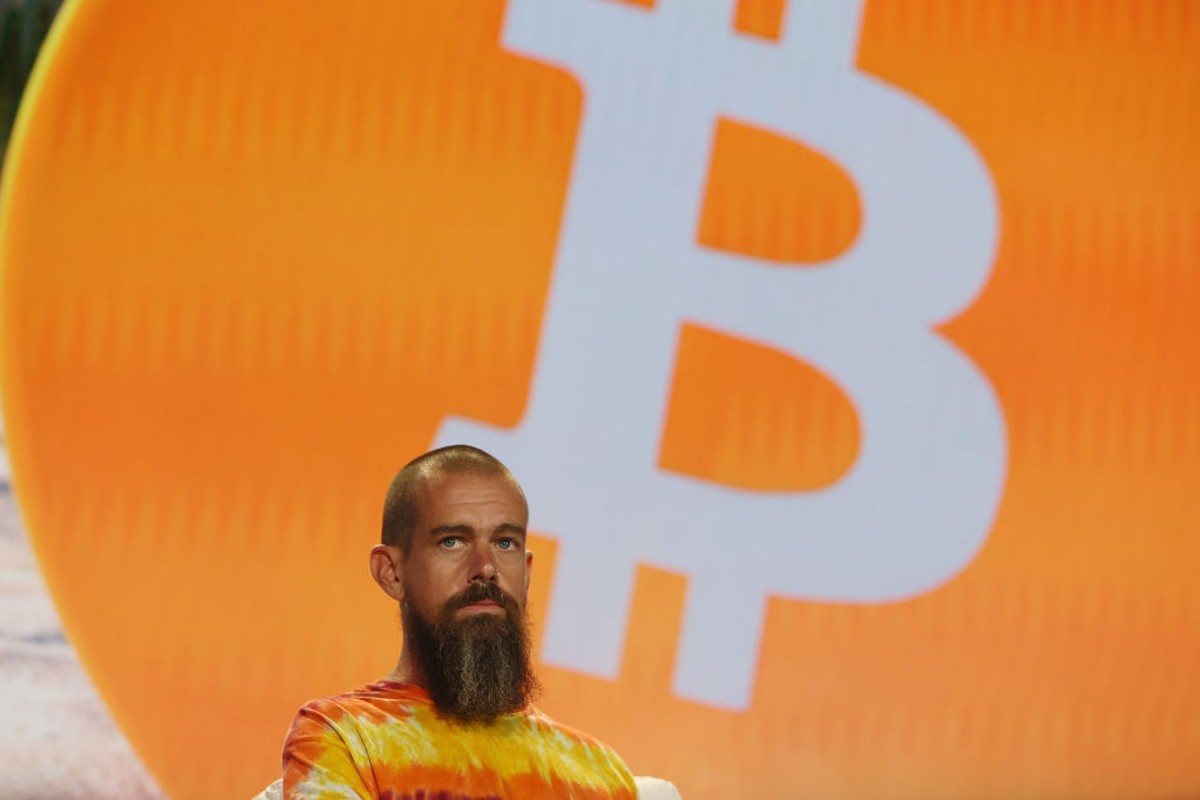
OpenSats's funds come from donations by the public, and anyone can donate to OpenSats in bitcoin. Twitter co-founder Jack Dorsey was reported to have donated $10 million in the past.
ビットコインを「ネットのネイティブ通貨」に、ドーシーが13億円寄付 | Forbes JAPAN 公式サイト(フォーブス ジャパン)
Twitter(ツイッター)の共同創設者ジャック・ドーシーは非営利団体OpenSatsに1000万ドル(約13億円)を寄付する。ビットコインとソーシャルネットワークの未来を真剣に考えていることの表れだ。このほど寄付を発表したドーシーは、寄付…
 Michael del Castillo
OpenSats itself also runs on donations, but donations to the funds for Bitcoin-related projects and donations to OpenSats's operating budget go to separate destinations, so every donation to the project funds goes to the projects. OpenSats does not take a fee or use project funds to cover its operating costs.
From Application to Approval at OpenSats
Whether a project is accepted is decided based on the application materials and an interview.
Grant Selection - OpenSats
Our mission is to support and maintain a sustainable ecosystem of funding for free and open-source projects and contributors. Our focus is Bitcoin.
There are two types of support: long-term and short-term. The exact duration varies by project, but some projects receive long-term support spanning several years. Even with short-term support, you may be able to receive funding again by reapplying after your contract ends.
OpenSats lists the following three points as key criteria for selection:
- Contributions that advance Bitcoin adoption and would be hard to fund otherwise
- Software, tools, and educational content released free of charge and as open source
- A willingness to share the experience of being funded with the community and contribute to educational efforts
If you look into OpenSats, you'll also find Japanese-language articles by people who were actually accepted, describing their application process.
Once accepted, you can receive the grant money in bitcoin.
The Review Process

Step 1: Application review
As a first screening, the project and the applicant's abilities and areas of expertise are reviewed based on the written application. If you pass, you move on to the next step.
Step 2: Interview
The specifics of the project are examined in an interview with OpenSats staff and subject-matter experts.
Step 3: Expert analysis and evaluation
People with specialist knowledge analyze whether the project is feasible and whether the applicant has the ability to carry it out, and then evaluate the project.
Step 4: Final decision
Based on the reviews in Steps 2 and 3, OpenSats judges whether the applicant can deliver the project, and acceptance is decided by approval from a majority of the OpenSats board.
Step 5: Grant agreement and mentoring
After a grant agreement is signed, OpenSats staff provide ongoing mentoring on the project's progress and how the funds are used, working hand in hand with you until the project is finished or the contract ends.
Four Examples of Projects Funded by OpenSats
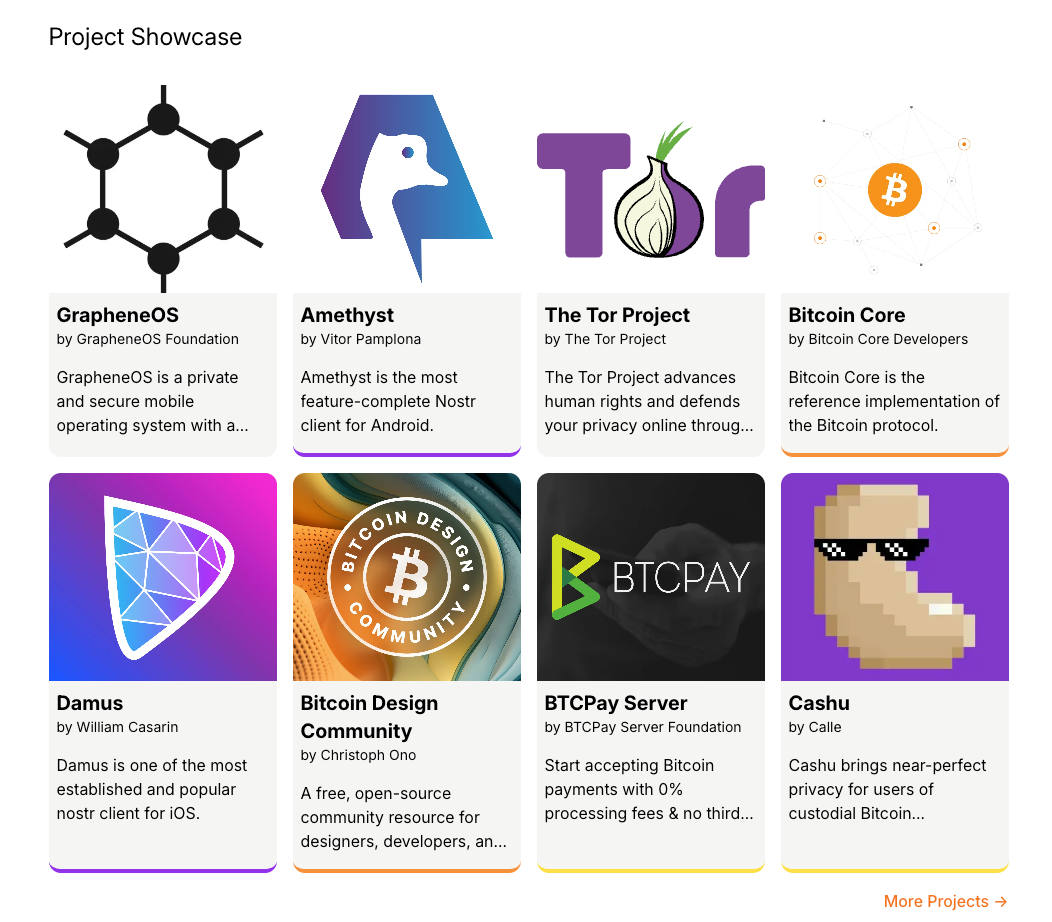
Here are a few projects that OpenSats has funded. I've picked well-known ones, but the list of grantees also includes niche efforts I had never even heard of, which shows how broad OpenSats's support is.
You can see every project OpenSats has funded on its website.
OpenSats | Project Showcase
1. Bitcoin Core
Work related to Bitcoin Core is also eligible for grants.
In this category, OpenSats has funded not only maintenance of the Bitcoin Core source code and contributions to protocol research and development, but also related libraries, Lightning service development, and educational programs.
2. Bitcoin Dev Kit: A Library for Wallet Development
Open source library development is also eligible. Bitcoin Dev Kit (BDK), a handy library for building wallets and working with Bitcoin node APIs, receives support from OpenSats.
With BDK, you can seamlessly build cross platform mobile wallets
We are building native API’s for C, Swift, Java & Kotlin so you can easily integrate Bitcoin in your preferred programming language on mobile.

3. Zeus / Sparrow Wallet: Open Source Software Wallets
Development of open source software (OSS) wallets is also eligible. Wallets such as Zeus, which lets you connect to and operate a Lightning node, and Sparrow Wallet, which lets you build advanced transactions, receive support from OpenSats.
4. Damus / Amethyst: Nostr Client Implementations
Damus and Amethyst are social media client implementations that follow the Nostr protocol standards. Damus is popular as an iOS app, while Amethyst is a client for Android, and both are open source.
分散SNSとしてのNostr
豊かな知識とともに。
 加藤 規新

Nostr-related projects are also eligible for OpenSats support. OpenSats keeps separate funds for Nostr and for Bitcoin; experts in each area take part in the review, and grants are paid out of the fund that corresponds to the project.
The Problem: Few Applications from Japan
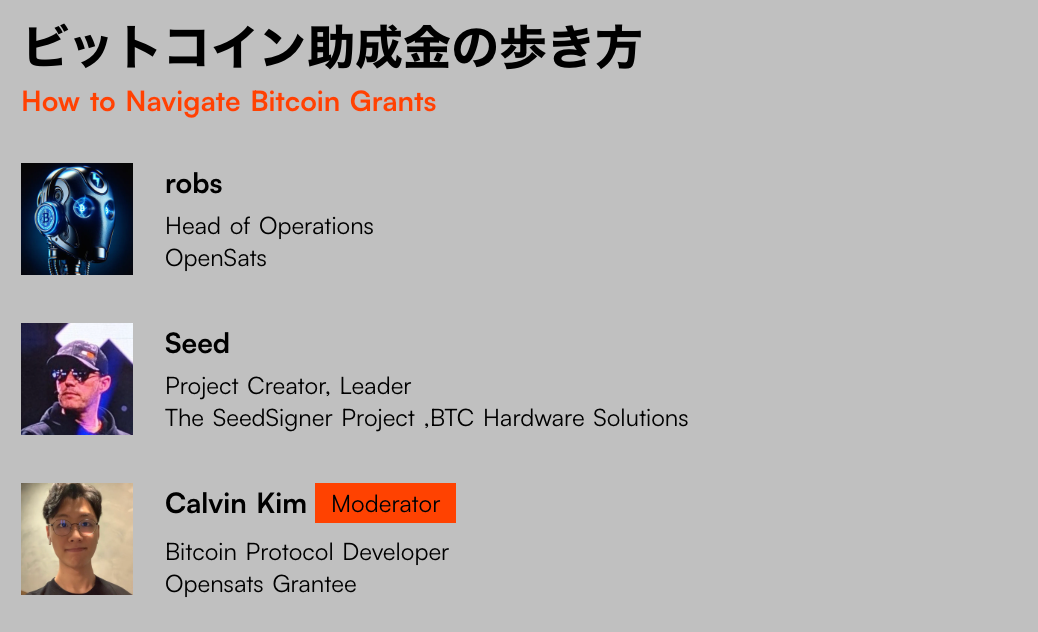
At Dev Day, a tech conference held the day before BITCOIN JAPAN 2025 (which took place on November 23, 2025), there was also a session on OpenSats titled "A Traveler's Guide to Bitcoin Grants."
The speakers were robs on behalf of OpenSats, along with two open source developers: Seed, project lead of SeedSigner, and Calvin Kim, a Bitcoin protocol developer who researches and develops Utreexo, a technique for compressing the size of the UTXO set.
The session covered what it was actually like to go through the application process described above, what prompted the speakers to apply, and how OpenSats is putting effort into supporting not just development projects but educational ones too. Looking at the funded projects, educational media and similar efforts have indeed been receiving grants frequently in recent rounds. (Example: Fourth Wave of Education Grants)
What struck me during the session was robs's concern that "there are lots of Bitcoiners in Japan, yet few of them apply." He speculated that Japanese Bitcoiners, even when they have more than enough skill, may hold back thinking "there's no way I'd get accepted," and so never end up applying.
Conclusion: OpenSats Supports the Future of Freedom Tech
In this article, I explained OpenSats, which provides grants for Bitcoin and Nostr projects, and walked through the application process and examples of funded projects. I also touched on the concern among OpenSats staff that few applications come from Japan.
Services built around freedom tech such as Bitcoin and Nostr are expected to be open source so that they don't become centralized, which makes it hard to earn money from them as a business.
In my own area of interest, self-sovereign identity (SSI), I've seen many projects run into the difficulty of balancing ideals and revenue: some ran out of money and collapsed, while others were acquired and had their principles twisted.
Organizations like OpenSats make it possible to sustain technology development that serves the public good without depending on short-term monetization, and that is enormously valuable to society.
I think OpenSats is a great fit not only for people building Bitcoin-related projects as a hobby but also for students who want to become researchers. Holding back would be a waste, so if you're on the fence, I recommend just giving it a try.
Contributing to the Bitcoin community by donating to OpenSats may also pay off for your future self.
Once my own research direction is settled, I plan to apply as well and write about the experience.
Update: January 30, 2026
When this article was first published, it listed SeedSigner as an example of a project funded by OpenSats.
However, Seed of the SeedSigner project posted the following, which made it clear that the SeedSigner project and its members do not receive support, so I have corrected the article.
Zero of these funds have gone to the SeedSigner project, likely the most widely used permissionless cold storage tool. OpenSats does a lot of good and does not owe our project or our contributors anything, however most people I talk to assume we are receiving support from them. https://t.co/kNVFjT0Uwx
— Seed (@sesi_the_man) January 29, 2026
Being displayed as a showcase project ironically doesn’t mean that a project has received any grants, nor apparently that a project is eligible for grants. To my understanding it was used as a mechanism for pass through donations from other entities for a time.
— Seed (@sesi_the_man) January 30, 2026