2026 Bitcoin Predictions: Capital Controls and Quiet Progress

This article was translated from Japanese with AI. Read the original (日本語) · Report a translation issue
We're a little way into the new year now. How is everyone doing?
As has become my annual tradition, I'll look back on my predictions for 2025 and then share my predictions for this year.
• Checking last year's predictions
• Prediction 1: Block's BTC payment product catches on, and others follow
• Prediction 2: Japan tightens capital controls further
• Prediction 3: No soft fork proposal, but improvements that benefit Layer 2 continue
• Bonus: Bitcoin price prediction
Checking last year's predictions
Let's start by checking how the predictions from last year's article turned out.
2025年の予想と昨年の答え合わせ
2024年最後の記事では一年間を通して印象的だった出来事を振り返りました。 2024年の振り返り早いものでもう2024年も末となりました。今年も恒例の振り返り記事を書こうと思います。 今年はビットコインが4回目の半減期を迎え、アメリカではマイクロストラテジーがおびただしい量のビットコインを購入していたり、トランプ次期大統領の当選にも深く関わった可能性があるなど、どんどんスケールの大きな話になってきました。それと同時に、「通貨」としてのナラティブが「資産」というナラティブの影に隠れてしまい、今後その認識の違いが規制面などでビットコインの本質的なアダプションにとって困難を招いてしまうおそれも少し感じてしまうほどとなっています。 そんな1年を通して印象的だった5つのテーマを振り返ります。なお、2024年初の予想の答え合わせは来年最初の記事で行います。 ・「ビットコインL2」ブームが爆発 ・ライトニングより手軽なレイヤー2の模索が進む ・Bitcoin Tokyo 2024カンファレンスが開催 ・アメリカの存在感がさらに増大ビットコイン研究所加藤 規新 今日は毎年恒例となっている予想記事で
 加藤 規新
Last year's predictions article
Lightning adoption accelerates rapidly in Japan → △ (partly right)
Unfortunately, I can't say Lightning adoption in Japan accelerated rapidly. As I see it, the main reason is that, even now, not a single exchange in Japan supports Lightning deposits and withdrawals.
If bitbank had released Lightning deposits and withdrawals as it announced, many users would have access to Lightning by now, and we might even have seen businesses starting to sell to those users over Lightning. Of course, it's also possible that wouldn't have happened.
Not all the news was bad, though. Sales at UseBitcoin, an online store that accepts only Lightning as payment, grew substantially, and, as I've mentioned several times on this site, there are now more ways to build non-custodial Lightning wallets, such as Spark and Arkade. Spark in particular has started to be adopted by several wallets.
Bitcoinとトラストを考える:トラストレスという理想の行方
Bitcoinにおける「トラスト」とは何かについて、その概念を整理しながら考察します。 初期のBitcoinが掲げていた、フルノード運用やセルフカストディを重視する姿勢がどのような背景から生まれ、どのように変化してきたのかについても振り返ります。
押川 拓夢
Oshikawa's article gives a good overview of how Lightning wallets and their trust models have evolved. It also links to plenty of related articles, so please take a look.
A bit of self-promotion: more than 5,000 users have received bitcoin through Yap Island. I expect this momentum to carry on into this year. If more and more people start using it, I hope that will in turn make it easier for exchanges to adopt it.
💡
Overseas exchanges that fully comply with regulations manage to support Lightning deposits and withdrawals, so I can't think of any rational reason why Japanese exchanges can't.
Discussions of a Bitcoin ETF, tax reform and the like move forward rapidly in Japan → ◎ (spot on)
This went further than I expected (my impression is that much of it came in a last-minute rush at the end of the year). Broadly, it comes down to two things: bringing crypto under the Financial Instruments and Exchange Act (FIEA), Japan's securities law, and tax reform. This isn't my area of expertise, so I may be wrong, but the prevailing view seems to be that the FIEA amendments will take effect in 2027 and the tax changes will apply from 2028. Last-minute rush or not, the government still moves slowly.
The details don't seem to be finalized yet, but I can only hope that applying the FIEA to Bitcoin doesn't make it harder to use as a means of payment or as money. As for taxes, I think a system in which the tax rate changes depending on where you sell will make a lot of things very complicated. It's hard to judge whether all this is a net positive or a net negative for how Japanese people engage with Bitcoin. (Capital gains tax rates are also trending upward, so the burden may not come down as much as people expect.)
💡
I think Japan should take some time to sort out and simplify all the rules that keep getting more complicated every year...
Self-custody is effectively banned in some developed country → × (missed)
I'm glad this dark prediction missed. As of now, there doesn't seem to be any developed country that bans self-custody by individuals. That said, AML regulations on so-called VASPs/CASPs were tightened, especially in Europe.
Bankruptcies among publicly listed mining companies finally resume → × (missed)
This prediction was way off. If anything, many listed mining companies used their data centers to pivot into listed AI data center companies, and some have seen their share prices rise quite a bit. Mining profitability has fallen sharply, and there were reports that miners are in such a tough spot that Bitmain can't sell its ASICs at list price, but at least the listed mining companies seem to be able to raise capital by pivoting to AI.
You can read the news here (Yahoo Finance).
Bonus: Bitcoin price in the $70,000–$120,000 range → ◎ (spot on)
It was so spot on that it surprised even me. That said, the bubbly markets I cited as my reasoning just kept going (AI-related stocks in particular were something else), and rather than inflation flaring up again worldwide, it was really only Japan that was in bad shape. It was a strange turn of events in which Bitcoin was practically the only thing whose price stayed calm.
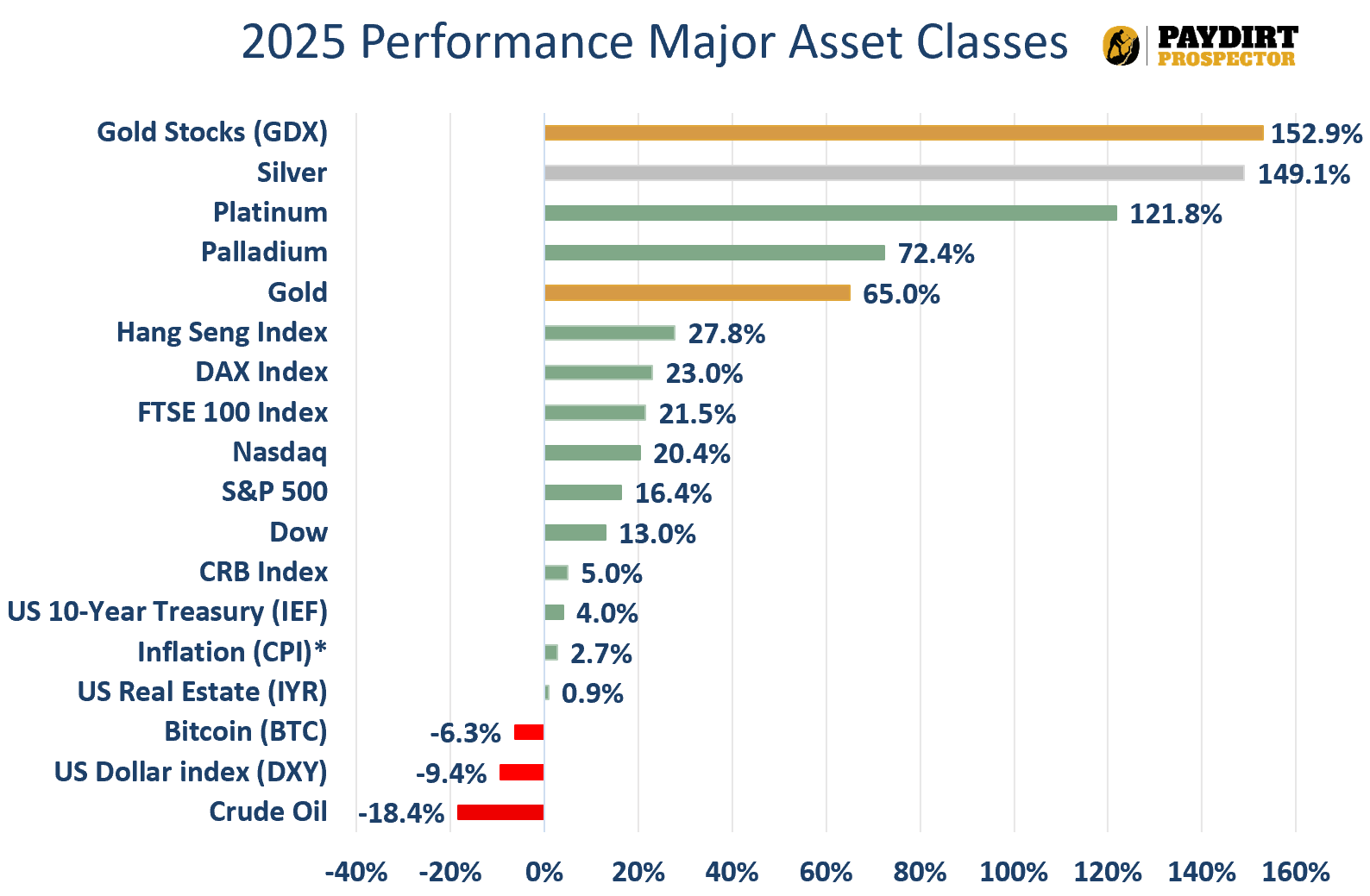
Still, the rise in some commodities such as precious metals toward the end of the year may be a sign of the inflation to come.
Prediction 1: Block's BTC payment product catches on, and others follow
The Bitcoin payment product for Square terminals that Block launched in the US late last year will become popular. Specifically, what I'm looking forward to in 2026 is less an increase in Bitcoin payments than the feature that lets merchants automatically convert up to 50% of their sales into bitcoin.
米ブロック社(Block, Inc.)の戦略|ビットコインを「日常的に使える通貨」へとする挑戦
ジャック・ドーシー率いる米ブロック社(Block, Inc.)のビットコイン戦略を徹底解説。主力サービスCash AppやSquareを用いたビットコイン決済普及活動、マイニングやハードウェアウォレット開発まで担うエコシステムの全貌とは。
ごっつ
One of the mechanisms by which Bitcoin evolves from a "store of value" into a "medium of exchange" is demand on the seller's side: "I want bitcoin, so I want to be paid in it." Since Bitcoin is widely recognized as a store of value (especially in the US), I think this Square feature could prove quite popular.
If the demand really is there, more and more payment companies will try to replicate that success. Unfortunately, in Japan, the regulations on crypto exchange businesses stand in the way, so this feature isn't available even to merchants who use Square.
Prediction 2: Japan tightens capital controls further
Inflation persists in Japan, yet the Bank of Japan (BOJ) and the government remain reluctant to raise rates. I think they'll have no choice but to raise them further to defend the currency. We're already at the point where we should consider the risk that even rate hikes won't fix the weak yen. The available countermeasures are cutting fiscal spending (reducing social insurance contributions), raising taxes, and restricting flight from the yen, but the first is politically difficult and there's only limited room for tax increases.
That would make it necessary to stop the flow of yen being sold for foreign currencies, in other words, money flowing out of the country, which likely means stronger capital controls. This could mean, for example, excluding foreign stocks from NISA (Japan's tax-advantaged investment account program), or, in an extreme case, restricting how much money can be taken out of the country (China, for example, has such a system).
Japan already keeps its citizens fenced in with a certain degree of capital controls. For example, it's difficult to open an account at a major foreign brokerage from Japan, and, closer to home, overseas cryptocurrency exchanges are shut out and online casinos are blocked. The stated purpose is user protection, but the real aim is probably to keep track of taxable assets and make money flows transparent (to counter money laundering and tax evasion).
Given this trend, I think it's wise to keep in mind how a stateless asset like Bitcoin might come to be treated, and to hold yours in self-custody. Readers will know what happened to Bitcoin in China.
💡
Of course, even if a wall is forced up through capital controls, I don't think it can stop the flow of money, and sooner or later it will give way.
Prediction 3: No soft fork proposal, but improvements that benefit Layer 2 continue
Discussion of technologies that could become the next soft fork, whether covenants or quantum resistance, has been progressing steadily all along. Proposing a soft fork has always taken a lot of courage; Jeremy Rubin, for example, quit Bitcoin development after his OP_CTV proposal met fierce backlash.
OP_CTVとソフトフォーク導入方法
先週は寄稿をお休みさせていただいたので前回から間隔が空いてしまいましたが、その間にビットコインの世界は一大論争が巻き起こっています。本稿でも何度か登場している独創的なビットコイン開発者、Jeremy Rubin氏が自身の提案するOP_CTVという機能のソフトフォークによる導入をSpeedy Trial方式で目指すと発表したのです。 ところが同じくSpeedy Trial方式で導入されたTaprootと異なり、まだユーザーやビットコイン開発者の中でOP_CTVに対して広く支持が得られていないこと、Speedy Trial自体がソフトフォークの導入方法として好ましくないことが意見の対立につながっています。 今日はOP_CTVの概要と論争となっているポイントを整理し、個人的な意見も交えながら現在の論争がビットコインの将来にどのような影響を与えうるかを考察します。 TAPROOT導入時のおさらい Taprootの導入にあたって、2017年にユーザーの大半が支持したSegwitの導入にマイナーが抵抗したことを踏まえ、導入に際してマイナーに依存しないソフトフォークのアクティベーション方法
加藤 規新
I think last year's memorable Knots controversy reinforced this tendency. On social media, some Bitcoin Core developers were flooded with an enormous amount of slander and personal attacks. A cancel culture that gangs up on any change to Bitcoin people dislike even slightly has gained acceptance among some Bitcoin maximalists, and that itself is an obstacle to improving Bitcoin.
In 2026, I don't expect any soft fork proposal likely to win broad acceptance to be formally put forward. However, small improvements that benefit many Layer 2s, Ark among them, such as improvements to mempool policy, will continue.
💡
Of course, a culture that pushes back against changes it doesn't understand also helps protect Bitcoin in some ways. But it's often the changes that don't matter much that spark the biggest firestorms.
Bonus: Bitcoin price prediction in the $70,000–$120,000 range
I can't think of any reason for things to get especially heated this year, so I expect a range not much different from last year's. The lower bound has some basis: I think the market will pay attention to the area around the previous cycle's high, roughly half of the latest all-time high. If financial markets around the world collapse, I don't think it would stop there, but I sense that coming every year and it never happens, so I've half given up.
The upper bound doesn't have much basis, but I set it around the all-time high because I think Bitcoin ETFs and treasury companies have made it harder than before to break through the high. Part of me wants it to blast off, but I suspect that would first require a big crash. What I'd really like to see is a scenario where treasury companies dump their bitcoin and people rediscover the value of holding spot, but that's a tough one too.
With that, I look forward to another year with you all!